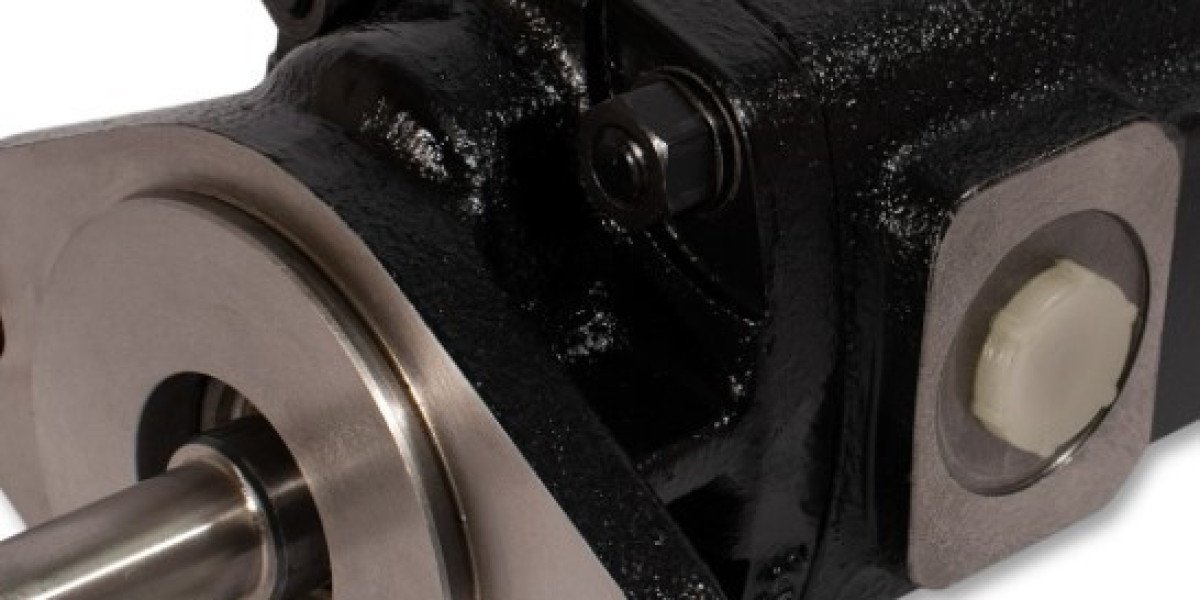

Selecting a hydraulic pump is not simply about choosing the highest available pressure rating. A High Pressure Gear Pump should match the circuit’s flow demand, drive speed, fluid conditions, and working pressure, while the right High Pressure Gear Pump can help equipment maintain predictable hydraulic output under demanding loads. For machinery manufacturers and system integrators, Liming-Machine provides gear pump options suited to construction equipment, industrial machinery, and other hydraulic applications.
Start With The Complete Hydraulic Circuit
A pump works as part of a larger hydraulic system, so its performance should be considered alongside valves, actuators, hoses, filters, reservoirs, and drive equipment. Selecting a model only according to pressure can create problems when the actual flow requirement or installation configuration is different.
Flow rate, displacement, rotational speed, and operating pressure should be considered together. A correctly matched pump can provide the required fluid movement without forcing other components to compensate for an unsuitable specification. This approach is especially useful when developing new machinery or replacing an existing hydraulic unit.
Leave Enough Pressure Operating Margin
Working continuously at the absolute limit of a pump can increase mechanical stress, heat generation, internal leakage, and component wear. For demanding equipment, it is therefore useful to distinguish between normal working pressure and the pump's maximum rated capability.
A suitable operating margin gives the system more room to handle temporary load changes. It can also help reduce the likelihood of continuously pushing gears, bearings, seals, and housing components toward their limits. Proper sizing should consider the real duty cycle rather than only the highest pressure appearing in a specification sheet.
Liming-Machine For Consistent Fluid Delivery
Gear pumps use meshing gears to move hydraulic fluid from the inlet toward the outlet. Their relatively straightforward construction makes them suitable for applications where fixed-displacement flow and mechanical simplicity are useful.
External gear designs generally use two gears inside a precision-machined housing, while internal gear configurations use a smaller rotor working with a larger internal gear. These structures have different flow characteristics and operating behaviors, giving engineers more than one configuration to consider when developing hydraulic equipment.
For construction machinery, agricultural equipment, hydraulic power units, presses, lifting systems, and specialized vehicles, the appropriate configuration depends on the required combination of pressure, flow, speed, space, and duty cycle.
Fluid Cleanliness Can Shape Service Life
Even a mechanically robust pump depends on suitable hydraulic fluid and effective contamination control. Abrasive particles can damage gear surfaces, bearings, wear plates, and other close-tolerance components. Contamination can increase internal leakage and gradually reduce hydraulic performance.
Filtration should therefore be planned as part of the complete system rather than treated as an optional accessory. Fluid viscosity and temperature also matter. Oil that becomes too thin may increase leakage and reduce lubrication quality, while excessively viscous fluid can increase drive resistance and create inlet-side problems during cold operation.
Designing For Easier Equipment Integration
A pump may perform well on a test bench but still be inconvenient if it does not fit the machine correctly. Mounting dimensions, shaft configuration, port arrangement, rotation direction, available installation space, and connection requirements should all be checked before procurement.
For equipment manufacturers, consistent pump dimensions and available configuration choices can simplify machine development and replacement planning. OEM production can also be useful when standard specifications do not fully match a particular hydraulic circuit.
Long-term performance ultimately depends on using the pump within its specified pressure, speed, temperature, and viscosity ranges. With appropriate system design and maintenance, gear pump technology can provide a practical combination of dependable flow, straightforward construction, and manageable servicing.For more information about hydraulic gear pumps, equipment integration, and customized manufacturing solutions, visit https://www.liming-machine.com .