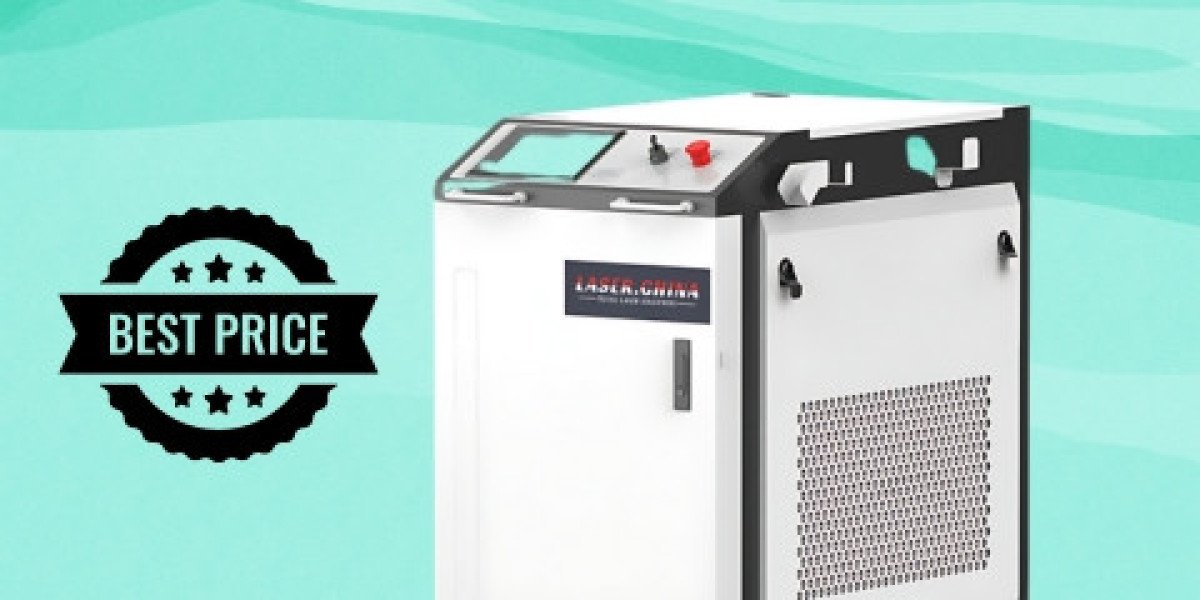

When businesses explore modern metal fabrication equipment, fiber laser welding machine price is often one of the first things they investigate. From small workshops to large manufacturing facilities, buyers want a machine that fits their production requirements, material types, and available budget.
Fiber laser welding technology is widely used for stainless steel, carbon steel, aluminum, galvanized materials, and various metal components. However, prices can vary considerably because machines are available with different laser powers, sources, cooling systems, welding heads, wire feeders, and automation options.
Understanding these factors can make it easier to compare quotations and select a suitable system.
Understanding Fiber Laser Welding Machines
A fiber laser welding machine uses a concentrated laser beam to join metal components. The laser energy is directed toward the joint, creating a controlled welding process.
Handheld models are particularly popular among fabrication businesses because the operator can move the welding gun around different shapes and components. These systems can be used for metal furniture, kitchen equipment, doors, railings, automotive components, machinery parts, sheet-metal fabrication, and general repair work.
Industrial versions can also be integrated into automated production lines where repeatable welding and higher production volumes are required.
What Determines Fiber Laser Welding Machine Price?
There is no single fixed price for every fiber laser welding machine. The final quotation depends on the machine's configuration and intended application.
Laser power is one of the most important factors. Common options include 1000W, 1500W, 2000W, and 3000W, while higher-power industrial systems are also available. As power increases, the laser source, cooling equipment, electrical components, and other supporting systems generally become more substantial.
The laser source itself also influences the quotation. Different manufacturers offer different source brands and specifications, so two machines with the same wattage may still have noticeably different prices.
Cooling equipment is another consideration. Lower-power machines may use air cooling, while machines intended for longer or heavier production cycles commonly use water-cooling systems and chillers.
Comparing 1000W, 1500W, 2000W and 3000W Machines
A 1000W fiber laser welding machine is generally considered for lighter applications and thinner materials. It can be suitable for workshops working with smaller metal components, light fabrication, decorative products, and repair applications.
A 1500W machine provides additional welding capacity and is commonly considered for general fabrication. It can be used for stainless steel products, sheet-metal work, kitchen equipment, automotive applications, HVAC components, and similar projects.
A 2000W fiber laser welding machine offers greater working capacity for businesses dealing with thicker materials or higher production requirements. It is frequently considered by professional fabrication workshops handling a mixture of materials and applications.
A 3000W machine is designed for applications where higher laser power is regularly required. Such systems are more relevant to demanding industrial work and production environments.
Actual welding thickness depends on the material, joint design, welding speed, focusing conditions, shielding gas, and machine configuration, so buyers should not select a machine based on wattage alone.
Understanding Current Price Ranges
Published 2026 market guides show substantial variation in fiber laser welding machine prices. Some handheld systems are listed from roughly US$2,500–$5,000 for entry-level 1000W machines, while 1500W and 2000W models can move into higher price brackets. More powerful 3000W systems and specialized industrial configurations can cost considerably more.
Another 2026 pricing guide places basic 1000W handheld systems around US$2,500–$5,000, 1500W systems around US$4,000–$8,000, 2000W systems around US$6,000–$12,000, and 3000W systems around US$10,000–$18,000, before considering factors such as shipping, customs, training, and additional equipment.
These figures should be treated as market references rather than fixed quotations. Manufacturer, country, configuration, taxes, shipping, warranty, and support can all change the final amount.
Why Two Machines With the Same Wattage Can Have Different Prices
It is common to find two 1500W machines advertised at very different prices. This does not necessarily mean one supplier is simply charging more.
The machines may have different laser sources, welding heads, cooling systems, electrical components, control systems, or accessory packages.
For example, one quotation may include a wire feeder, water chiller, additional nozzles, protective lenses, installation, training, and warranty support. Another quotation may cover only the basic machine.
This is why comparing the complete specification sheet is more useful than comparing only the advertised price.
The Role of the Laser Source
The laser source is one of the most important components of a fiber laser welding system. Its specifications can affect the machine's overall cost and operating characteristics.
When requesting a quotation, buyers should ask for the exact laser source brand and model rather than accepting a general description such as "high-quality fiber laser."
It is also useful to check the manufacturer's documentation, warranty terms, expected service life, and availability of replacement components.
A clear specification gives buyers a better basis for comparing different machines and suppliers.
Cooling System and Working Environment
The cooling system should also be considered when evaluating fiber laser welding machine price.
Air-cooled systems can be suitable for certain lower-power and lighter-duty applications. Water-cooled systems with dedicated chillers are commonly used for machines that need consistent temperature control during more demanding operation.
The working environment matters as well. A machine intended for occasional workshop repairs may have different requirements from one expected to operate continuously during production shifts.
Before purchasing, ask the supplier about the recommended duty cycle, ambient operating conditions, cooling requirements, and maintenance procedures.
Wire Feeder and Welding Applications
Some fiber laser welding machines include an automatic wire feeder, while others are supplied without one.
Wire feeding can be useful when the application requires filler material, larger joint gaps need to be addressed, or particular weld profiles are required. The inclusion of a wire feeder can therefore affect the overall machine quotation.
When comparing prices, check whether the wire feeder is included as standard or offered as an optional accessory.
This simple detail can make two apparently similar quotations quite different.
Handheld or Automated Fiber Laser Welding?
The choice between handheld and automated welding can also have a major effect on the investment.
Handheld machines are often selected by workshops that produce different components or require flexibility between jobs. The operator can move the welding gun manually and work with components of different shapes and sizes.
Automated systems are more suitable for businesses with repeatable production requirements. Robotic or automated platforms can be configured for consistent movement and integration with manufacturing processes.
Automation generally requires additional equipment, controls, fixtures, safety systems, and integration work, which can increase the total investment.
Consider the Complete Purchase Cost
The machine's advertised price is only one part of the purchasing decision.
A complete quotation may also involve:
- Shipping and transportation
- Customs and import charges
- Installation
- Operator training
- Protective lenses
- Welding nozzles
- Wire feeder
- Cooling equipment
- Spare parts
- Gas equipment
- Warranty support
- Technical assistance
For buyers importing equipment internationally, these additional costs should be calculated before finalizing the purchase.
How to Compare Supplier Quotations
Before selecting a supplier, request detailed quotations using the same specifications. This makes price comparisons much easier.
Check the following points:
Laser Power
Confirm whether the quotation is for 1000W, 1500W, 2000W, 3000W, or another configuration.
Laser Source
Ask for the exact manufacturer and model of the laser source.
Welding Head
Confirm the welding head type and whether wobble welding or other operating modes are included.
Cooling
Check whether the machine is air-cooled or water-cooled and whether the chiller is included.
Wire Feeder
Confirm whether the wire feeder is included in the quoted price or purchased separately.
Accessories
Ask for a complete list of included nozzles, lenses, cables, protective components, and other consumables.
Warranty and Support
Review the warranty period and find out how technical support and replacement parts are handled.
Training
Ask whether installation and operator training are included or charged separately.
Choosing a Machine According to Your Work
The right machine should be based on the work you perform most frequently rather than an occasional project.
A workshop primarily handling thin stainless-steel sheets may have different requirements from a manufacturer regularly working with thicker aluminum or carbon-steel components.
Similarly, a business producing hundreds of identical parts every day may need a different configuration from a repair shop handling many different jobs.
Before buying, prepare a list of your common materials, typical thicknesses, production volume, desired welding speed, joint types, and available electrical supply. Give this information to the supplier and request a configuration based on your actual applications.
Ask for Sample Welding Before Buying
A sample weld can provide valuable information before making a significant equipment investment.
If possible, provide the supplier with the same material and thickness used in your workshop. Ask for sample welds using the proposed machine configuration.
This allows you to examine weld appearance, penetration, joint consistency, and the overall suitability of the process for your application.
It can also help identify whether additional accessories, wire feeding, or a different power level may be necessary.
Final Thoughts
Understanding fiber laser welding machine price requires looking beyond the number shown on a quotation. Laser power, source brand, welding head, cooling system, wire feeder, automation level, accessories, warranty, installation, and technical support can all influence the final investment.
Current 2026 market references show that prices can range widely between entry-level handheld machines and advanced industrial systems.
The best purchasing process starts with your actual welding requirements. Compare machines using the same specifications, request complete quotations, verify the included equipment, and ask for sample welding when possible.
With careful comparison, businesses can identify a fiber laser welding system that matches their production requirements while keeping the equipment investment aligned with their long-term manufacturing plans.
#FiberLaserWelding #LaserWeldingMachine #FiberLaserWelder #LaserWelding #MetalWelding #WeldingMachine #IndustrialWelding











