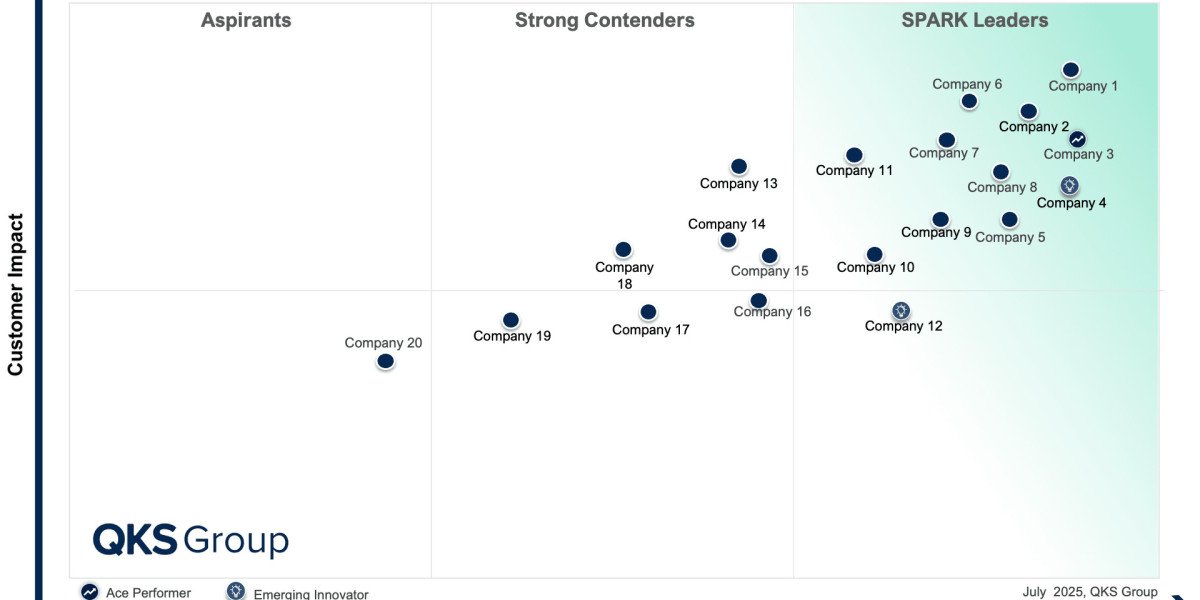

For years, Voice of Customer programs were primarily designed to collect feedback — surveys, ratings, and customer comments intended to measure satisfaction. While these mechanisms provided visibility, they often stopped short of driving meaningful operational change. Today, the Voice of Customer market is undergoing a decisive transformation: moving beyond feedback capture toward intelligence operationalization at scale.
This evolution reflects a broader shift in how organizations perceive customer data. Experience insights are no longer static measurements; they are dynamic decisioning inputs shaping business strategy, workflows, and engagement models.
The End of Passive Feedback Systems
Traditional Voice of Customer initiatives frequently suffered from structural limitations:
- Feedback trapped in reporting dashboards
- Delayed analysis cycles
- Limited integration with operational systems
- Minimal impact on real-time decisions
In modern digital environments, such latency is unsustainable. Enterprises now require systems capable of converting customer signals into immediate, actionable intelligence rather than retrospective summaries.
AI as the Foundation of Modern Voice of Customer
One of the most profound changes in the Voice of Customer landscape is the role of artificial intelligence. AI is no longer positioned as an enhancement layer — it is becoming the core engine driving insight generation, automation, and contextual engagement.
AI-driven Voice of Customer capabilities increasingly include:
- Real-time sentiment detection
- Predictive experience modeling
- Automated anomaly identification
- Intelligent workflow triggers
- Contextual recommendation systems
This transition enables organizations to interpret customer intent, detect friction, and respond proactively rather than reactively.
Operationalizing Intelligence Across the Enterprise
Modern Voice of Customer platforms are designed to integrate directly with business operations. Insights are no longer confined to CX teams; they inform decisions across marketing, sales, product development, and customer support functions.
This operational model supports:
- Immediate corrective actions
- Data-driven prioritization
- Cross-functional collaboration
- Continuous experience optimization
In effect, Voice of Customer systems are evolving into enterprise intelligence layers rather than isolated feedback repositories.
Unified Experience Platforms and the Execution Imperative
As organizations consolidate customer technologies, Voice of Customer capabilities are increasingly embedded within unified experience ecosystems. However, technology convergence alone does not guarantee value. Execution — the ability to translate insights into measurable improvements — is emerging as the defining differentiator.
Market leaders distinguish themselves by delivering:
- Actionable, decision-ready intelligence
- Intuitive cross-functional usability
- Seamless workflow integration
- Scalable analytics and automation
In this environment, ambition without operationalization yields limited returns.
Ethical AI and Trust as Competitive Differentiators
As AI becomes central to Voice of Customer platforms, ethical considerations are gaining prominence. Enterprises are scrutinizing how customer data is collected, processed, and utilized, placing greater emphasis on transparency, governance, and responsible AI practices.
Vendors best positioned for long-term leadership prioritize:
- Explainable AI models
- Bias mitigation mechanisms
- Data privacy safeguards
- Compliance-aligned architectures
Trust is rapidly becoming as important as technological sophistication.
Redefining the Role of Voice of Customer
The strategic importance of Voice of Customer is expanding. What began as a measurement discipline is maturing into a continuous intelligence function that shapes customer journeys, operational workflows, and business outcomes.
Organizations adopting advanced VoC strategies can:
- Detect experience risks earlier
- Drive faster decision cycles
- Personalize interactions more effectively
- Align customer signals with revenue and retention goals
Conclusion
The Voice of Customer market is experiencing a structural reset. The emphasis is shifting from listening to understanding, from reporting to acting, and from isolated feedback to intelligence at scale. AI-powered decisioning, cross-functional usability, and ethical data practices are no longer optional capabilities — they define platform relevance and vendor competitiveness.