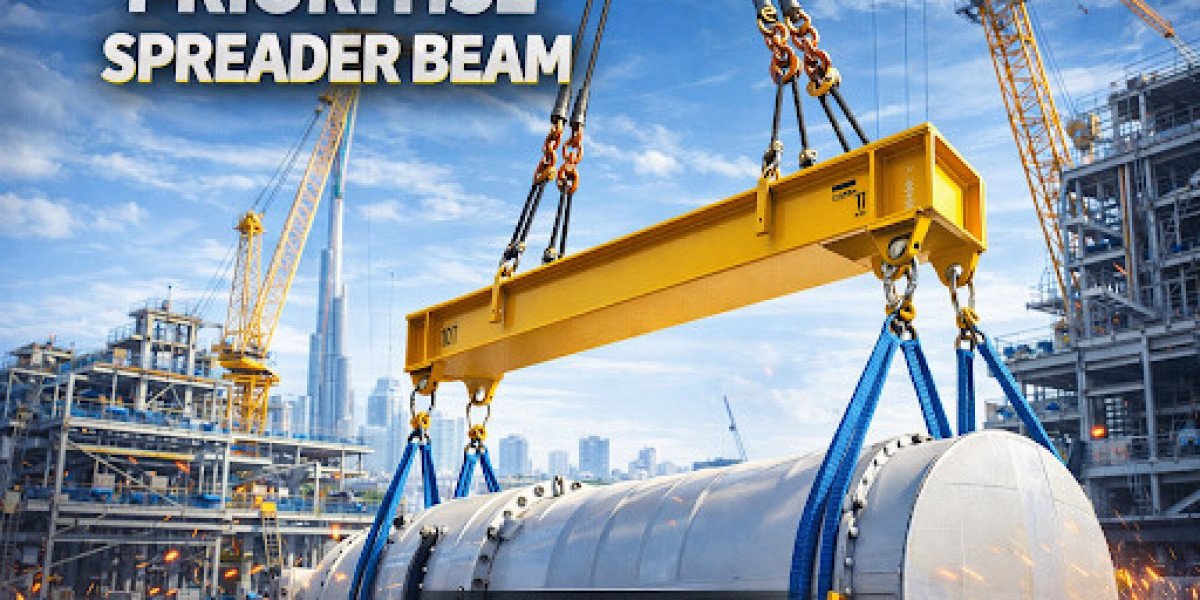

When I first worked on lifting projects in fabrication yards and construction sites, I learned quickly that not all lifting gear behaves the same under load. A Priotise Spreader Beam is one of those tools that looks simple but controls forces in a way that prevents damage and accidents.
I’ve seen steel frames twist, pipes bend, and loads slip just because the wrong beam was used. The right beam changes everything.
What a Priotise Spreader Beam Actually Does
A Priotise Spreader Beam spreads the load between two or more lifting points so weight is shared evenly.
Cause: uneven lifting force
Effect: bent loads or broken slings
Using a beam corrects this by keeping slings vertical and tension balanced.
Why Load Distribution Matters
When slings pull inward:
Corners bend
Welds crack
Center of gravity shifts
With a beam:
Load stays level
Stress points reduce
Control improves
Expert observation:
Most load failures happen at connection points, not in the middle.
Where Priotise Spreader Beam Is Commonly Used
From what I’ve seen on sites, these beams are chosen when loads are long, wide, or fragile.
Typical applications:
Precast concrete panels
Machinery skids
Steel frames
Pipes and tanks
Problem: direct sling lift causes compression
Solution: beam keeps slings apart
Result: shape stays intact
Difference Between Spreader Beam and Lifting Beam
Many people confuse these two.
A Spreader Beam works in compression.
A lifting beam works in bending.
Cause: design type
Effect: different load behavior
Spreader types rely on end connections. Lifting beams rely on structure strength.
Field insight:
Spreader designs are lighter but demand precise rigging.
How Priotise Spreader Beam Improves Safety
Safety officers often focus on cranes, but rigging causes more accidents.
Main safety benefits:
Reduced sling angle
Lower load swing
Better crane control
Predictable lift path
Cause: controlled geometry
Effect: controlled movement
I’ve seen operators relax once the beam is in place because the lift “feels” stable.
Choosing the Right Priotise Spreader Beam
Not every beam fits every job.
You must consider:
Load weight
Lifting point distance
Sling length
Headroom
Problem: undersized beam
Solution: calculate rated capacity
Result: compliant lift
Expert tip:
Always rate the beam for worst-case sling angle, not ideal position.
Real Site Example
On a refinery job, a 12-meter steel frame needed lifting. Direct sling lift caused bowing.
We switched to a Priotise Spreader Beam.
Cause: inward sling force
Effect: frame distortion
After change:
Frame stayed straight
Lift time reduced
Welding rework avoided
That single decision saved two days of correction work.
Inspection and Maintenance
A beam is not fit forever.
Checks should include:
Weld cracks
Pin wear
Deformation
Coating damage
Problem: ignored inspection
Solution: periodic load testing
Result: longer service life
Expert insight:
Paint loss often shows stress zones before metal does.
Training Makes the Difference
Equipment works only when users understand it.
Operators must know:
Correct sling positions
Load rating limits
Center of gravity
Tag line control
Cause: human error
Effect: load shift
Training reduces that gap.
Why Priotise Spreader Beam Over Ad-Hoc Solutions
Some sites improvise with pipes or fabricated bars. That’s where incidents begin.
A certified Priotise Spreader Beam:
Has load rating
Has traceability
Has tested welds
Has defined lift points
Improvised tools:
Have unknown strength
Fail without warning
Cause: uncertified equipment
Effect: unpredictable risk
Final Industry View
A Priotise Spreader Beam isn’t just metal with hooks. It’s a control tool.
It manages force.
It protects shape.
It protects people.
In lifting work, stability equals safety.
And stability usually starts with the beam.
From real sites and real lifts, that’s the lesson that keeps repeating.