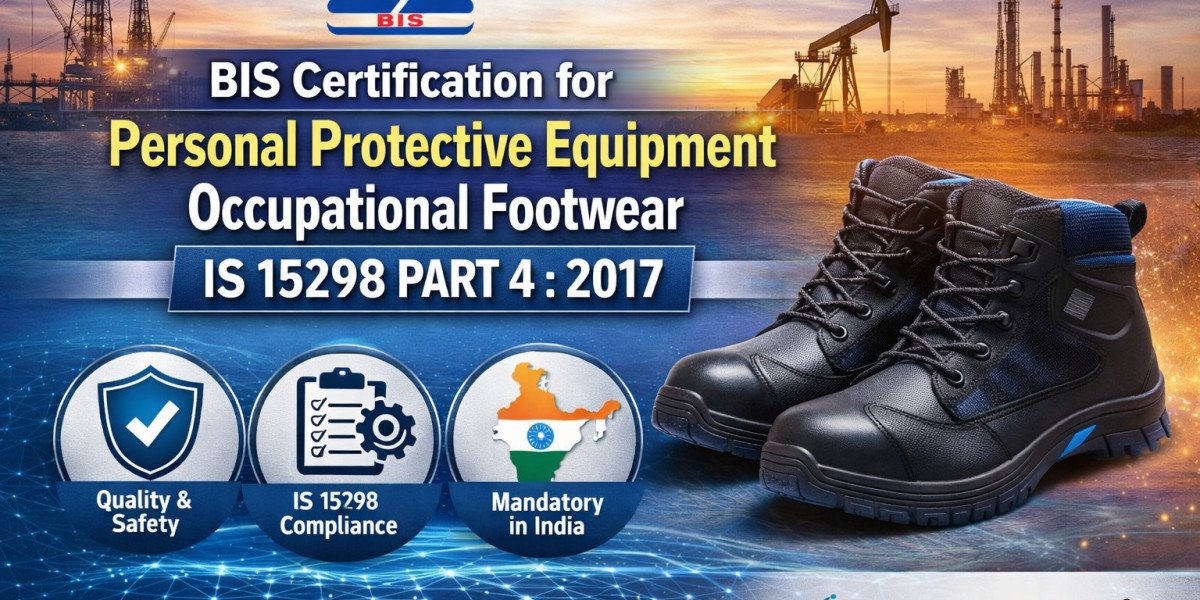

BIS Certification for Personal Protective Equipment – Occupational Footwear (IS 15298 Part 4: 2017)
Worker safety is a top priority across industries such as construction, manufacturing, mining, oil & gas, logistics, and heavy engineering. Among all personal protective equipment (PPE), occupational protective footwear plays a critical role in preventing workplace injuries caused by impact, compression, slips, chemicals, and electrical hazards. To ensure quality, safety, and performance, the Government of India mandates BIS certification for occupational footwear under IS 15298 Part 4: 2017.
This blog explains everything you need to know about BIS certification for PPE occupational footwear, including applicability, technical requirements, certification process, and its importance for manufacturers and importers.
Overview of BIS and PPE Certification in India
The Bureau of Indian Standards (BIS) is India’s national standards authority responsible for developing product standards and ensuring conformity through certification. BIS certification assures that products meet prescribed Indian Standards (IS) related to safety, quality, and performance.
Personal Protective Equipment (PPE) is classified as a mandatory certification product category, as PPE directly impacts human safety. Occupational footwear falls under IS 15298, which is aligned with international safety norms and is divided into multiple parts.
IS 15298 Part 4: 2017 specifically covers occupational footwear that provides protection against workplace hazards but does not include toe protection.
What Is IS 15298 Part 4: 2017?
IS 15298 Part 4: 2017 – Personal Protective Equipment – Occupational Footwear specifies the minimum basic and additional requirements for footwear designed to protect workers from occupational risks.
This standard applies to footwear intended for professional use where protection is required against:
Slipping hazards
Fuel oil and chemical exposure
Penetration risks
Heat and cold conditions
Electrical resistance or conductivity
Unlike safety footwear (with toe caps), occupational footwear under Part 4 does not include impact-resistant toe protection, making it suitable for environments with moderate risk levels.
Applicability of BIS Certification for Occupational Footwear
BIS certification under IS 15298 Part 4: 2017 is mandatory for:
Manufacturers of occupational footwear in India
Importers and foreign manufacturers supplying footwear to India
Suppliers participating in government or PSU tenders
PPE brands selling occupational footwear in the Indian market
Without a valid BIS license, such products cannot be legally manufactured, sold, imported, or distributed in India.
Why BIS Certification Is Mandatory for Occupational Footwear
1. Worker Safety and Injury Prevention
Certified footwear ensures adequate protection against workplace hazards, reducing accidents and long-term injuries.
2. Legal and Regulatory Compliance
Compliance with BIS standards is required under Indian safety regulations, labor laws, and procurement norms.
3. Quality and Performance Assurance
BIS certification confirms that footwear meets defined performance parameters for durability, grip, resistance, and comfort.
4. Market Access and Brand Credibility
BIS-marked products are widely accepted in industrial projects, corporate procurement, and government contracts.
Key Technical Requirements Under IS 15298 Part 4: 2017
Occupational footwear must comply with several technical and performance requirements, including:
1. Materials and Construction
Upper material strength and flexibility
Sole adhesion and durability
Resistance to tearing and abrasion
2. Slip Resistance
Tested on ceramic and steel surfaces
Performance under dry, wet, and contaminated conditions
3. Sole Properties
Fuel oil resistance
Penetration resistance (where applicable)
Heat and cold insulation (optional categories)
4. Electrical Properties
Antistatic or electrically resistant footwear requirements
5. Ergonomic and Comfort Factors
Proper fitting
Shock absorption in heel area
Breathability and moisture control
6. Marking and Labeling
Manufacturer name or trademark
Size and category
BIS Standard Mark and license number
All these parameters are verified through laboratory testing and factory inspection.
BIS Certification Process for Occupational Footwear
Step 1: Identify Applicable Standard
Confirm that the product falls under IS 15298 Part 4: 2017 and determine the applicable protection category.
Step 2: Application Submission
The manufacturer submits an application to BIS with details such as:
Product specifications
Manufacturing process
Quality control procedures
Step 3: Product Testing
Samples are tested at a BIS-recognized laboratory to verify compliance with IS 15298 Part 4 requirements.
Step 4: Factory Inspection
BIS officials conduct an on-site audit to assess:
Manufacturing infrastructure
Raw material control
In-house testing facilities
Quality assurance systems
Step 5: Grant of BIS License
Upon successful testing and inspection, BIS issues the ISI Mark license, allowing the manufacturer to affix the BIS mark on occupational footwear.
Documents Required for BIS Certification
Commonly required documents include:
Business registration or incorporation documents
Factory address proof and layout plan
Manufacturing process flow chart
Machinery and testing equipment list
Raw material test certificates
Quality control manual
Calibration certificates
Product test reports
Foreign manufacturers must also appoint an Authorized Indian Representative (AIR) to coordinate with BIS.
Timeline and Validity of BIS License
Certification timeline: Approximately 3 to 5 months
License validity: 1 to 2 years initially
Renewal: Subject to compliance and surveillance audits
Surveillance inspections: Conducted periodically by BIS
Common Challenges in BIS Certification for Footwear
Manufacturers may face challenges such as:
Understanding complex testing parameters
Delays in lab testing
Non-conformities during inspection
Inadequate documentation
Interpretation of standard clauses
These challenges can lead to delays or rejection if not handled properly.
Role of BIS Certification Consultants
Engaging an experienced BIS consultant helps in:
Correct standard identification
End-to-end documentation support
Lab coordination and sample preparation
Factory inspection readiness
Faster resolution of non-conformities
Consultancy support is especially valuable for first-time applicants and foreign manufacturers.
Conclusion
BIS certification for occupational footwear under IS 15298 Part 4: 2017 is a critical compliance requirement that ensures worker safety, product reliability, and regulatory adherence in India. As PPE directly impacts human life, the certification process involves strict scrutiny and technical evaluation.
Manufacturers and importers should approach BIS certification with proper planning, technical understanding, and professional support. Achieving BIS compliance not only fulfills legal obligations but also strengthens brand trust, market acceptance, and long-term business growth in India’s industrial safety sector.