
When we talk about electrical safety, most people think about circuit breakers, insulation, or surge protectors. But one of the most important safety elements often stays out of sight — literally underground. That’s the earthing system.
A well-designed earthing system quietly does its job every day, safely directing excess electrical energy into the ground and protecting people, equipment, and buildings. At the heart of this system is the earthing rod. Choosing the right copper rod for earthing isn’t just a technical decision — it’s a long-term safety investment.
Let’s break it down in a simple, practical way so you know exactly what to look for and why it matters.
What Makes Copper Ideal for Earthing?
Copper has earned its place as the preferred material for earthing systems worldwide — and for good reason. It conducts electricity extremely well, which allows fault current to travel quickly into the ground instead of lingering in your electrical network.
Another major advantage is copper’s natural resistance to corrosion. Since earthing rods remain buried for decades, often in damp or chemically active soil, this resistance helps maintain performance over time without frequent replacements.
In short, copper earthing rods:
Provide stable and efficient current flow
Perform reliably in a wide range of soil conditions
Offer long service life with minimal maintenance
That’s why copper is commonly used in everything from residential buildings to data centers, factories, and substations.
Understanding the Common Copper Earthing Rod Options
Before selecting a rod, it helps to know what types are available and where each one fits best.
Solid Copper Earthing Rods
These rods are manufactured entirely from copper. They offer excellent conductivity and outstanding resistance to corrosion, making them suitable for highly corrosive or coastal environments. However, they are heavier and more expensive, so they’re typically used in specialized or high-risk installations.
Copper-Bonded Steel Earthing Rods
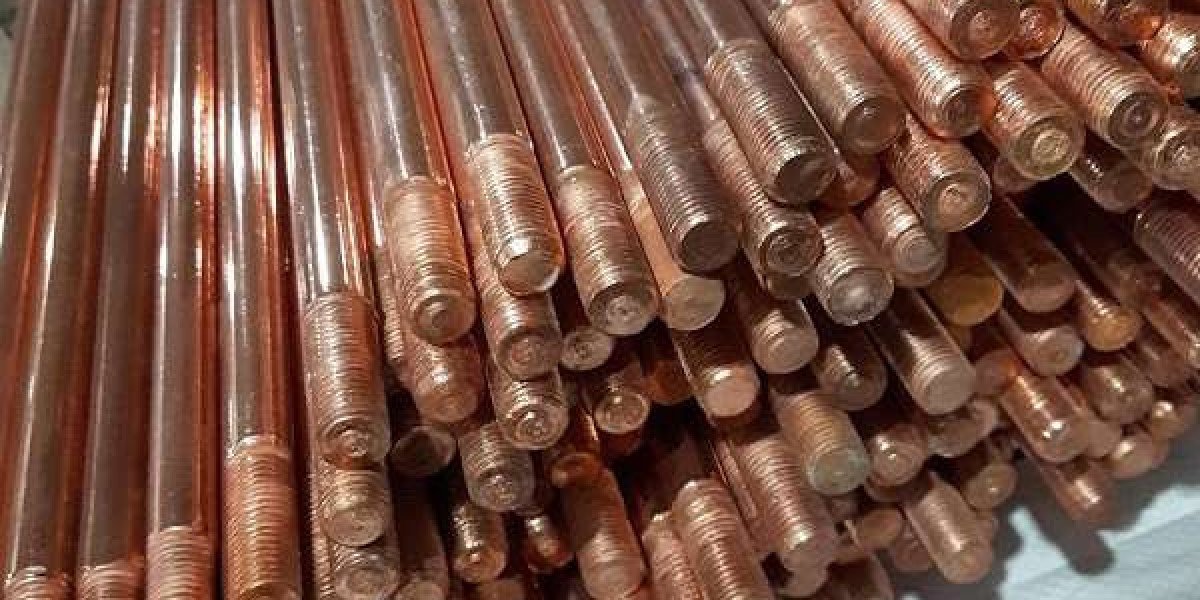
These are made with a high-tensile steel core that is permanently bonded with a thick layer of copper. This design combines strength and conductivity in a cost-effective way. Because they are easier to install and more economical, copper-bonded rods are widely used in commercial and industrial projects.
How to Choose the Right Copper Earthing Rod
Every site is different, and the “right” earthing rod depends on several practical factors. Here’s what you should evaluate before making a decision.
1. Local Soil Conditions
Soil plays a huge role in earthing effectiveness. Wet, clay-rich soil usually conducts electricity better than dry, sandy, or rocky ground.
For normal soil conditions, standard copper-bonded rods often work well
For dry or rocky areas, longer rods or multiple rods connected together may be required
In chemically aggressive soils, higher copper purity and thicker coatings become essential
Conducting a soil resistivity test gives valuable insight and helps avoid underperforming systems.
2. Rod Size and Depth
The physical dimensions of the rod directly influence earthing resistance.
Length: Longer rods reach deeper soil layers that usually retain moisture, improving conductivity
Thickness: Thicker rods offer better mechanical strength and can handle tougher installation conditions
Choosing the correct size helps ensure consistent performance without unnecessary installation challenges.
3. Quality of Copper Bonding
For copper-bonded rods, not all products are created equal. The copper layer must be thick enough to resist corrosion over time and must be permanently bonded to the steel core.
Poor-quality rods with thin plating may look fine initially but can fail prematurely once underground. Always check for product specifications and testing documentation from the supplier.
4. Strength and Installation Ease
Earthing rods must withstand driving into the ground without bending or cracking. Steel-core copper-bonded rods offer excellent mechanical strength, especially useful in hard soil or rocky terrain. Choosing a rod that installs smoothly saves both time and labor costs.
Installation Matters More Than You Think
Even the best earthing rod won’t perform well if it’s installed incorrectly. Placement, depth, and connections all influence system efficiency.
Install rods vertically whenever possible
Maintain safe distance from foundations and underground services
Use compatible connectors and conductors to prevent corrosion
Test earth resistance after installation to confirm compliance
A properly installed earthing system delivers reliability you can trust for years.
Don’t Ignore Standards and Certifications
Quality standards exist for a reason — they ensure safety, consistency, and performance. When selecting copper earthing rods, look for compliance with recognized national and international standards relevant to your region. Certified products give you confidence that the materials and manufacturing processes meet essential safety requirements.
Why Choosing the Right Supplier Matters
Beyond the product itself, the supplier plays a big role in your project’s success. A reliable supplier offers:
Verified quality and testing reports
Technical guidance based on application needs
Consistent product availability