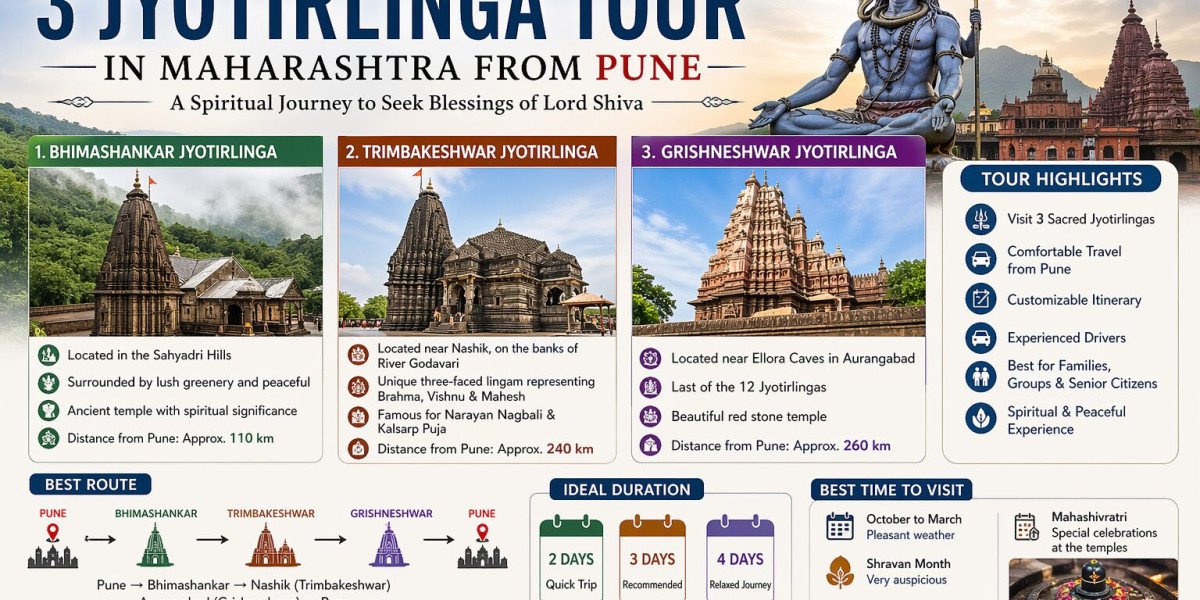

Maharashtra is known for its rich religious traditions, historical temples, and spiritual destinations. Among its many sacred places, the three Jyotirlinga temples dedicated to Lord Shiva hold special importance for devotees. Visiting the 3 jyotirlinga in maharashtra offers an opportunity to experience religious traditions, explore ancient architecture, and discover the natural beauty of different regions of the state.
The three temples are Bhimashankar, Trimbakeshwar, and Grishneshwar. Each destination has its own religious significance, history, and surroundings. Planning a journey to all three requires an understanding of their locations, road connectivity, temple arrangements, and suitable travel duration.
Understanding the Three Jyotirlingas in Maharashtra
According to Hindu religious traditions, there are twelve important Jyotirlingas dedicated to Lord Shiva across India. Three of these sacred shrines are situated in Maharashtra. Each temple attracts devotees throughout the year, particularly during the month of Shravan and important religious festivals.
1. Bhimashankar Jyotirlinga
Bhimashankar Temple is located in the Sahyadri mountain range, approximately 110 to 120 kilometres from Pune, depending on the selected route. It is surrounded by forested hills and natural landscapes, making it a destination of both religious and environmental importance.
According to Hindu mythology, the temple is associated with the story of Lord Shiva defeating the demon Bhima. Devotees visit the shrine to offer prayers and seek blessings.
The temple's traditional architecture and peaceful surroundings create a distinctive spiritual atmosphere. Bhimashankar is also associated with the origin of the Bhima River.
Visitors travelling during the monsoon should consider rainfall, fog, and road conditions. Since the temple is situated in a hilly region, starting early and allowing sufficient travel time can make the journey more comfortable.
2. Trimbakeshwar Jyotirlinga
Trimbakeshwar Temple is situated in Trimbak, approximately 30 kilometres from Nashik. It is one of the most important religious destinations in Maharashtra and is closely associated with the sacred Godavari River.
The temple has distinctive architectural features and a unique Jyotirlinga structure representing Brahma, Vishnu, and Mahesh. This religious association makes it particularly significant in Hindu traditions.
Kushavarta Kund, located near the temple, is another important pilgrimage destination. Devotees visit the area for religious ceremonies and traditional rituals.
Trimbakeshwar also receives a large number of visitors during Shravan and other auspicious occasions. Travellers should check temple schedules and arrangements before visiting, especially if they plan to participate in specific religious ceremonies.
3. Grishneshwar Jyotirlinga
Grishneshwar Temple is located near Ellora village in the Chhatrapati Sambhajinagar region of Maharashtra. It is considered the third Jyotirlinga destination in this pilgrimage circuit.
The temple is known for its traditional stone architecture, detailed carvings, and religious importance. Devotees visit throughout the year to offer prayers and participate in worship.
One interesting feature of this destination is its proximity to the famous Ellora Caves. Visitors can combine their spiritual journey with an exploration of India's historical and architectural heritage.
The temple and nearby historical attractions make this destination an important part of the Maharashtra pilgrimage route.
How to Plan a Journey Covering All Three Jyotirlingas
Planning a visit to all three temples requires proper scheduling because they are located in different geographical regions.
Travellers starting from Pune can consider the following route:
Pune → Bhimashankar → Nashik → Trimbakeshwar → Grishneshwar → Pune
A three-night and four-day itinerary can provide a relatively relaxed travel experience.
Day 1: Pune to Bhimashankar and Nashik
Start early from Pune and travel towards Bhimashankar. After completing darshan, continue towards Nashik for an overnight stay.
Day 2: Trimbakeshwar and Nashik
Visit Trimbakeshwar Temple in the morning. Spend time exploring nearby religious destinations such as Kushavarta Kund and other attractions in Nashik.
Day 3: Nashik to Grishneshwar
Travel towards Grishneshwar Temple. Complete darshan and, depending on available time, explore the nearby Ellora Caves.
Day 4: Return to Pune
After breakfast, begin the return journey to Pune. Travellers can plan suitable rest stops depending on their route and departure time.
The itinerary can be adjusted according to temple schedules, road conditions, accommodation availability, and individual travel preferences.
Transportation Considerations for the Pilgrimage
Transportation is an important factor when visiting multiple religious destinations. Travellers should consider road conditions, luggage requirements, journey duration, and the number of people travelling together.
A personal vehicle offers flexibility, while public transportation may require additional planning between temple locations.
People who prefer private road travel can compare options offered by a car rental agency in pune. Before selecting a vehicle, it is useful to consider passenger capacity, luggage space, vehicle condition, driver experience, and the overall journey distance.
For families and senior citizens, comfortable seating and sufficient rest breaks are particularly important. Travellers should also confirm whether the vehicle arrangement covers the complete itinerary and return journey.
Best Time to Visit the Three Jyotirlingas
October to February is generally considered a comfortable period for visiting these temples because of relatively pleasant weather.
The Shravan month is especially important for devotees of Lord Shiva. During this period, temples receive increased numbers of visitors, and waiting times may become longer.
Monsoon travel offers beautiful green landscapes, particularly around Bhimashankar. However, heavy rainfall and slippery roads require additional caution.
Travellers should select their dates according to weather conditions, religious preferences, and available time.
Important Travel Tips for Devotees
A few preparations can make the pilgrimage more organised and comfortable.
Check temple opening hours and special darshan arrangements before departure.
Carry comfortable footwear and suitable clothing.
Keep drinking water, medicines, and essential personal items available.
Allow extra time for traffic and temple queues.
Avoid rushing between destinations to complete darshan comfortably.
Follow temple rules and respect local religious customs.
Plan accommodation in advance during festivals and peak pilgrimage periods.
Conclusion
Visiting the 3 jyotirlinga in maharashtra is a meaningful spiritual journey that connects devotees with the religious heritage of Bhimashankar, Trimbakeshwar, and Grishneshwar. Each temple offers a different experience through its traditions, architecture, mythology, and surrounding landscapes.
Proper route planning, suitable transportation, comfortable accommodation, and awareness of temple schedules can make the journey more organised. Whether travelling with family, friends, or elderly relatives, allowing enough time for each destination helps create a peaceful and memorable pilgrimage experience. A carefully planned road journey also makes it easier to explore the cultural and historical attractions located along the route.