
Introduction
As businesses expand across international markets, managing payments becomes more complex. Companies may need to collect funds from customers in different countries, pay international suppliers, manage partner settlements, and process transactions in multiple currencies.
While moving money across borders is an important part of global business, visibility is equally important. Finance teams need to know where a payment is, whether it has been processed, when it will settle, and how it should be recorded.
Limited transaction visibility can create reconciliation problems, payment disputes, cash flow uncertainty, and unnecessary administrative work.
Modern b2b cross border payments solutions can help businesses create a more structured payment process. By improving tracking, reporting, and transaction information, businesses can gain greater control over their international financial operations.
Why Visibility Matters in International Payments
Domestic payments can often be easier to monitor because businesses deal with familiar banking systems, currencies, and settlement processes.
International transactions may involve more variables.
A company may need to monitor:
Payment initiation
Currency used
Transaction value
Payment status
Settlement status
Processing fees
Customer or supplier information
Reconciliation references
Without centralized information, finance teams may need to check different systems or manually follow up on transactions.
Better visibility allows companies to identify payment issues earlier and maintain more accurate financial records.
Common Challenges With B2B Cross Border Payments
Companies handling b2b cross border payments may experience several operational challenges.
Unclear Payment Status
Finance teams may struggle to determine whether a transaction is pending, completed, delayed, or unsuccessful.
Multiple Payment Systems
Businesses operating across different markets may use several banks or payment platforms, making transaction monitoring more difficult.
Reconciliation Complexity
Matching international payments with invoices can take significant time when transaction references or records are inconsistent.
Currency Differences
Transactions involving multiple currencies can make financial reporting and reconciliation more complicated.
Settlement Delays
Businesses need accurate information about when money will become available or when suppliers will receive their funds.
These challenges become more significant as transaction volumes increase.
How Modern Payment Solutions Improve Transaction Visibility
Modern payment solutions can bring transaction information into a more organized environment.
Instead of relying on fragmented payment records, businesses can use centralized payment infrastructure to monitor financial activity.
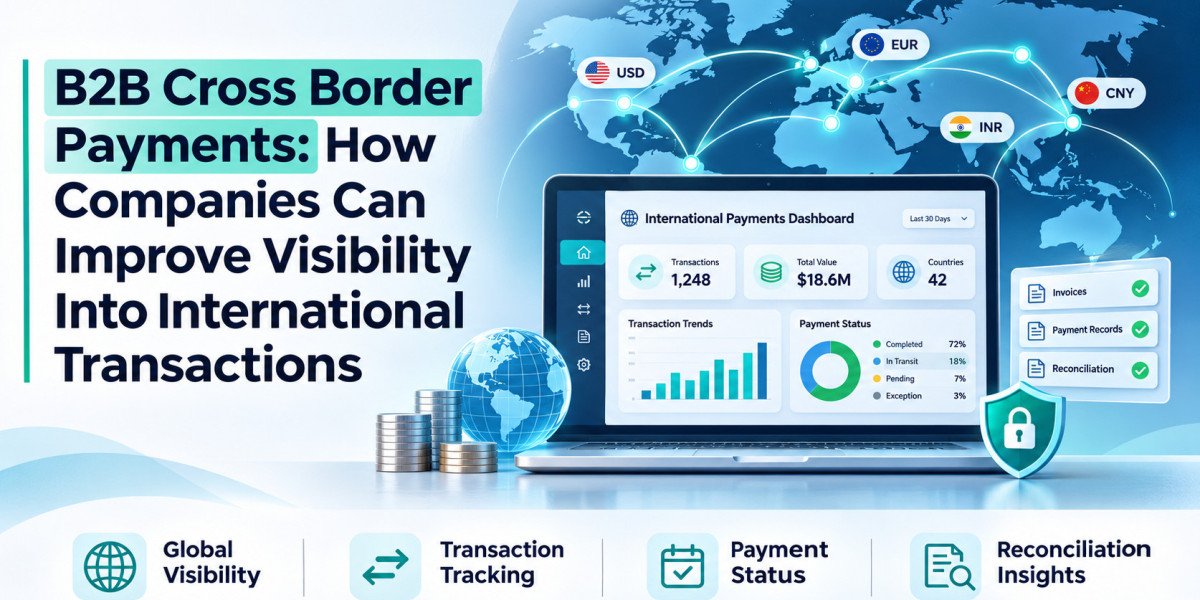
A structured system can help teams review payment information, settlement status, transaction history, and other relevant details.
Better access to payment data allows finance teams to answer important questions quickly.
For example:
Has the customer completed the payment?
Has the supplier received the funds?
Which invoice does the transaction relate to?
Has the payment settled?
Is any action required?
This level of transparency supports faster decision-making.
Centralized Tracking for Cross Border Payments
Centralization is particularly valuable for businesses managing large numbers of cross border payments.
When payment data exists across several systems, finance teams spend more time collecting information before they can analyze it.
A centralized business payment solution can help businesses organize transactions in one payment workflow.
This can simplify monitoring across customers, suppliers, markets, and currencies.
Finance teams can spend less time searching for payment information and more time managing financial operations.
Improving Payment Reconciliation
Reconciliation ensures that payment records match invoices, orders, or other financial documents.
Manual reconciliation becomes increasingly difficult as transaction volumes grow.
International transactions can add another layer of complexity because businesses may deal with different currencies, settlement dates, and financial institutions.
Modern payment infrastructure can help organize transaction data so businesses can match payments more efficiently.
Improved reconciliation can:
Reduce manual work
Lower the risk of recording errors
Improve financial reporting
Help identify missing payments
Simplify account management
Efficient reconciliation also gives management teams more confidence in financial information.
The Role of Automation
Automation can significantly improve payment visibility.
Instead of manually updating spreadsheets or checking transactions one by one, businesses can automate parts of the payment management process.
Automation may support:
Transaction recording
Payment status updates
Payment confirmation
Reconciliation workflows
Financial reporting
Notifications
Automated processes reduce repetitive tasks and help finance teams maintain more consistent records.
For companies handling high transaction volumes, this can create substantial operational benefits.
How Pay-in Services Support Payment Visibility
Businesses also need better visibility into incoming payments.
Pay-in services help companies collect funds from customers through structured payment channels.
Effective Pay-in services can support more organized payment collection by providing transaction information that businesses can use for monitoring and reconciliation.
This can help companies understand:
Who made the payment
When the transaction occurred
Which transaction relates to which customer or invoice
Whether the payment was successful
When the funds are expected to settle
Improved incoming payment visibility can also support cash flow planning.
Online Payment Solutions and Digital Transactions
As businesses move more transactions online, digital payment visibility becomes increasingly important.
Modern online payment solutions allow companies to manage transactions through websites, applications, customer portals, and other digital channels.
A well-organized online payment infrastructure can help businesses monitor transaction activity without relying heavily on manual processes.
This is particularly useful for companies that serve customers or business partners across several regions.
Digital transaction records also make financial analysis easier because businesses can maintain more structured payment information.
Better Visibility Supports Cash Flow Management
Businesses need to know when money will enter and leave their accounts.
Poor payment visibility makes cash flow forecasting more difficult.
For example, a business may expect several international payments but may not know exactly when those funds will settle.
Better visibility into business payments allows finance teams to forecast available cash more accurately.
This can help organizations plan:
Supplier payments
Payroll
Inventory purchases
Marketing expenses
Business investments
Operational costs
Improved cash flow information supports more informed financial decisions.
Supporting Stronger Supplier and Partner Relationships
International partners value predictable payments.
If suppliers constantly need to ask for transaction updates, the payment process can create unnecessary friction.
Better payment tracking helps businesses provide clearer information to partners.
Finance teams can respond to payment questions faster and reduce uncertainty around settlement status.
This can strengthen commercial relationships, particularly when companies work with important international suppliers or long-term business partners.
Payment Visibility and Financial Reporting
Accurate transaction information also improves financial reporting.
Businesses need reliable payment data for accounting, internal reporting, audits, and financial analysis.
Organized transaction records can help companies understand:
Payment volumes
Outstanding transactions
International transaction activity
Settlement trends
Payment performance
Better reporting gives management teams a clearer picture of financial operations.
Choosing the Right Business Payment Solution
Businesses should consider transaction visibility when evaluating a business payment solution.
Important capabilities to assess include:
Transaction tracking
Reporting
Settlement information
Reconciliation support
Integration capabilities
Multi-market support
Scalability
Companies should also consider whether the payment infrastructure can support their future international expansion.
A platform that works for current payment volumes should continue to perform as the business grows.
The Role of Uniteller in International Payment Strategies
Companies developing an international payment strategy should evaluate payment providers based on their operational requirements, transaction markets, integration needs, and growth plans.
Uniteller can form part of the broader consideration when businesses evaluate payment infrastructure for digital and international transaction management.
The most suitable solution should help the organization create a structured payment workflow while providing the visibility needed to manage transactions efficiently.
Conclusion
Visibility is becoming increasingly important as businesses manage more international transactions.
Efficient b2b cross border payments should provide businesses with more than the ability to transfer money. Companies also need clear transaction information, reliable reporting, improved reconciliation, and greater control over payment workflows.
Modern payment solutions, effective Pay-in services, and scalable online payment solutions can help finance teams organize international transactions more efficiently.
By selecting the right business payment solution and improving visibility across cross border payments and other business payments, companies can reduce administrative complexity and build stronger financial operations as they expand globally.