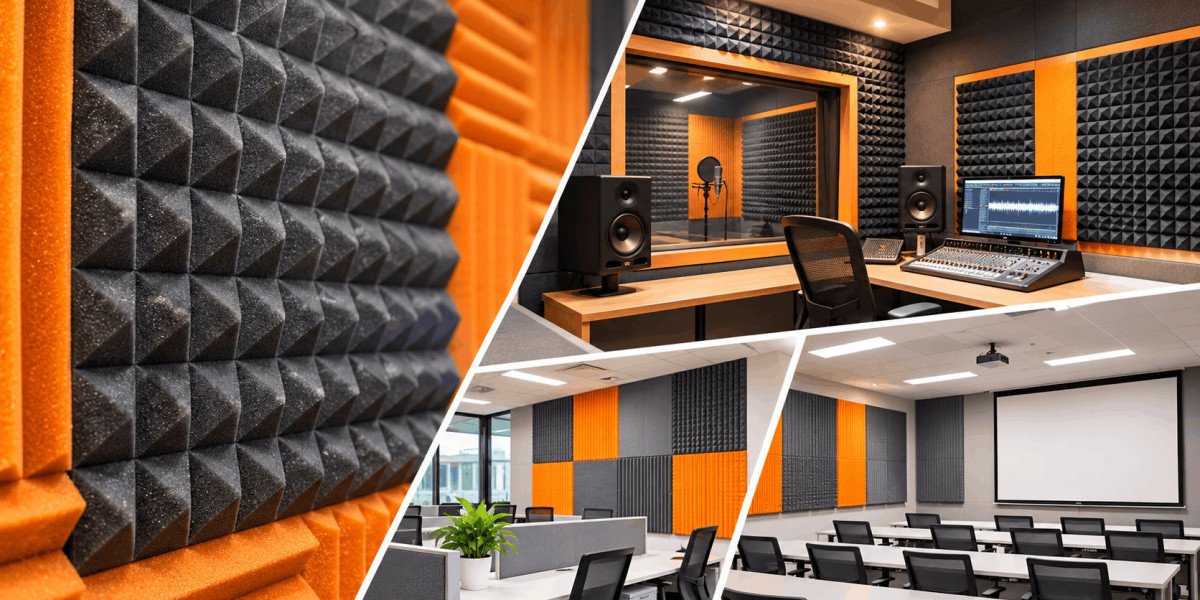

Bare walls and hard ceilings often make commercial rooms sound harsh, with echo that blurs speech and tires listeners. Acoustic Foam Panels from Ecotone Acoustic Limited provide an affordable way to tame those reflections, absorbing sound before it bounces around the room. They are lightweight, simple to install, and offered in many sizes, thicknesses, and profiles.
How Foam Works
Open-cell foam has a porous structure that traps sound waves. Friction inside the material converts their energy into a very small amount of heat, so less sound reflects back into the room. This reduces echo and shortens reverberation time. The Noise Reduction Coefficient (NRC) rates absorption, and thicker foam generally handles lower frequencies better.
Profiles for Different Needs
Flat panels give offices and meeting rooms a neat, low-profile finish. Wedge panels offer strong mid and high-frequency absorption with a uniform look. Pyramid panels add surface area that helps absorb and scatter sound, making them popular in rehearsal rooms and production areas. Studio-grade panels are designed for recording, podcast, and broadcast use.
Commercial Spaces That Benefit
- Recording, podcast, and broadcast studios
- Call centres and open-plan offices
- Conference rooms and training centres
- Music schools and rehearsal rooms
- Cinemas, auditoriums, and edit suites
- Gaming lounges and co-working spaces
Absorption Is Not Soundproofing
Foam improves sound quality inside a room but does not stop noise from passing through walls. Products sold as soundproofing foam work mainly as absorbers. For real isolation, pair foam with mass barriers, insulation, and sound-rated doors.
What to Check Before Buying
Compare NRC ratings, thickness, and density. Fire safety is critical in commercial projects, so ask for fire-retardant certification. Review colour options and mounting methods such as adhesive or clips, and request samples to judge finish and performance.
Placement Tips
Start with first reflection points and corners, where sound builds up most. Avoid over-treating, since too much foam can leave a room sounding dull while low-frequency issues remain. For larger projects, a brief acoustic assessment helps match coverage to the space.
Final Thoughts
The right profile, thickness, and placement can transform a noisy commercial space into a clear, comfortable one. For businesses that want dependable, budget-friendly sound control, choosing quality Acoustic Foam Panels is a practical upgrade that pays off every day.