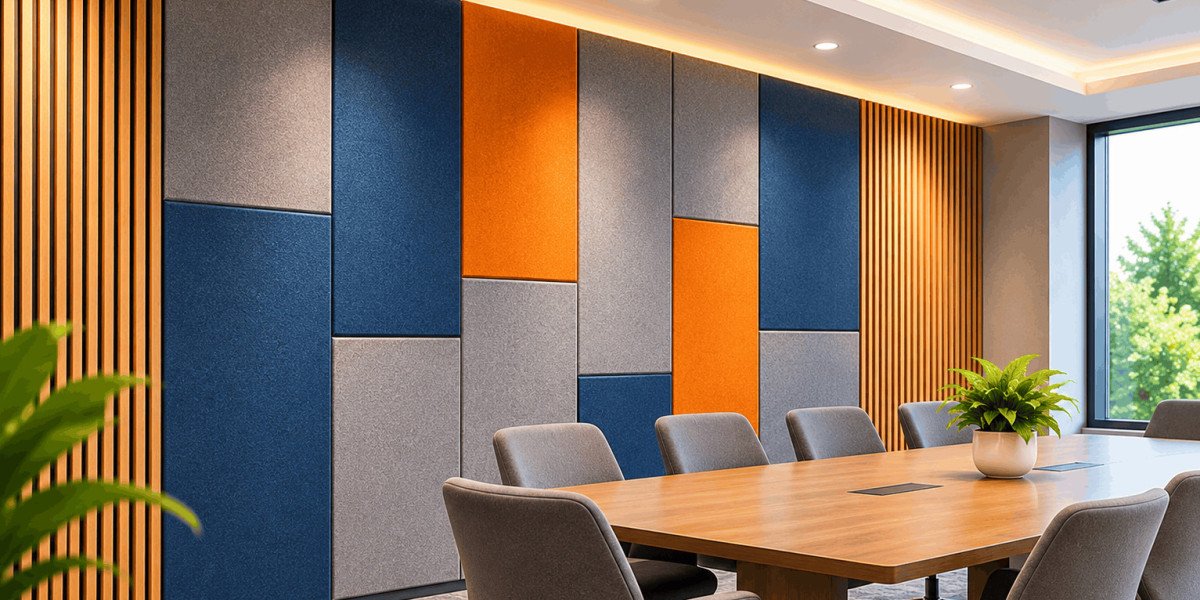

Open offices, restaurants, and training rooms with glass, concrete, and hard flooring often share one flaw: sound bounces around until conversations blur and spaces feel tiring. Acoustic wall panels from PackSound absorb that reflected sound, helping businesses create calmer, clearer rooms while keeping the interior looking sharp.
The Absorption Process
Each panel has a porous core, usually polyester fibre, glass wool, or mineral wool, covered with an acoustically transparent fabric or wood-finish facing. Sound waves enter the core, where friction converts their energy into a very small amount of heat. Less sound returns to the room, which lowers echo and shortens reverberation time.
Commercial Spaces That Benefit
- Open-plan offices and call centres
- Boardrooms, meeting rooms, and training halls
- Restaurants, cafes, and hotel lobbies
- Auditoriums, cinemas, and seminar halls
- Recording studios and podcast rooms
- Hospitals, clinics, and waiting areas
Key Performance Ratings
The Noise Reduction Coefficient (NRC) measures absorption, with values closer to 1.0 showing stronger performance. Panel thickness matters too, because thicker panels generally manage lower frequencies better. Fire certification is essential in commercial projects, so confirm it before you specify.
What Businesses Gain
Better acoustics reduce stress, ease listening fatigue, and help staff concentrate for longer. In hospitality settings, a quieter room makes conversation easier and improves guest satisfaction. Panels also double as decor, offering many colours, textures, and printed graphics that can carry brand identity. Most are lightweight, simple to install, and available with fire-retardant treatment.
Where to Install Them
Placement shapes results as much as product quality. Start with first reflection points on side walls and large flat surfaces facing noise sources. Covering roughly 15 to 25 percent of wall area often brings a noticeable improvement, though larger or louder rooms may need more. Pairing wall panels with ceiling treatments typically gives the best result.
Before You Buy
Compare NRC ratings, thickness, core density, and fire certification. Review fabric options, edge details, and mounting methods such as Z-clips, adhesive, or hanging kits. Request samples to check colour and texture under your actual lighting.
Keep in mind that panels improve sound quality within a room but do not stop noise passing through walls. Where privacy matters, combine them with insulated partitions and sound-rated doors.
Final Thoughts
Good acoustics and good design work best together. For commercial spaces that need to look refined and sound comfortable, choosing quality acoustic wall panels is a practical, long-lasting upgrade that pays off every day.