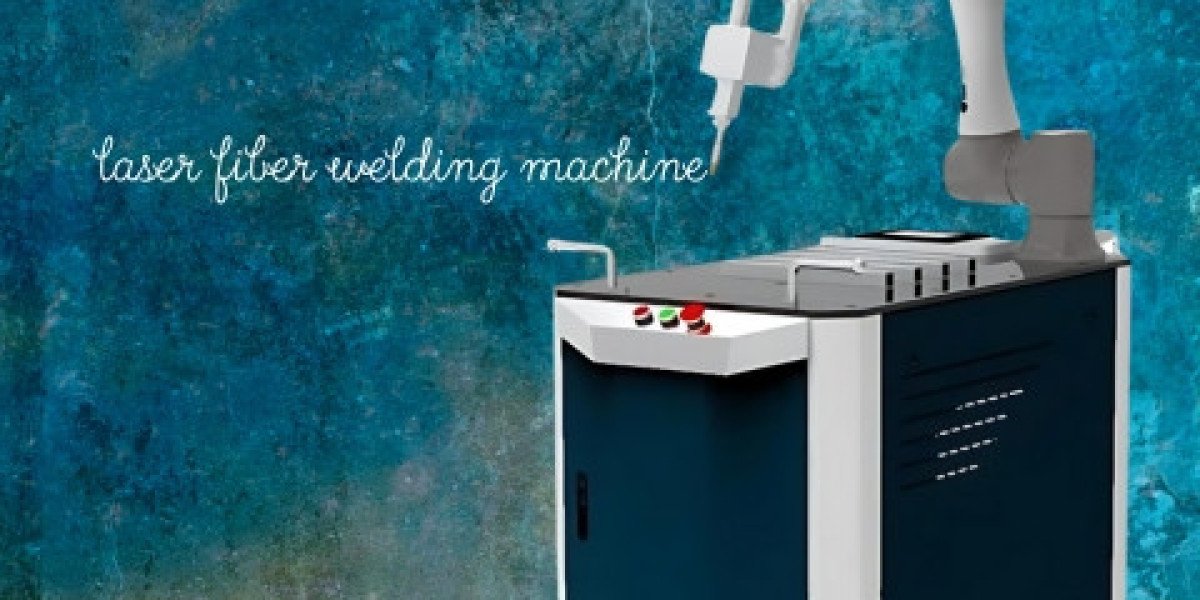

Modern manufacturing industries require reliable, accurate, and efficient welding solutions to maintain production quality. Laser technology has transformed traditional metal joining processes by providing greater control, consistent results, and improved production capabilities. A laser fiber welding machine is an advanced industrial solution designed to join different metal components using a highly concentrated fiber laser beam.
From automotive manufacturing to metal fabrication, this technology is becoming an important part of industrial production. Businesses looking to improve welding accuracy and achieve professional finishing are increasingly considering fiber laser welding equipment.
What Is a Laser Fiber Welding Machine?
A laser fiber welding machine uses a high-energy laser beam generated through fiber laser technology to melt and join metal surfaces. The laser beam is directed toward the welding area, where concentrated heat creates a strong connection between the materials.
Unlike conventional welding methods, laser welding delivers energy to a relatively small area. This allows operators to achieve precise welds while controlling heat input and minimizing unnecessary thermal effects on surrounding materials.
Depending on the machine configuration, it can be used for stainless steel, carbon steel, aluminum, and other compatible metals. The appropriate laser power, welding speed, and operating parameters depend on material thickness and production requirements.
Industrial Applications of Fiber Laser Welding
Fiber laser welding technology is widely used across different manufacturing sectors. Its precision makes it suitable for both small components and larger industrial assemblies.
In automotive manufacturing, it helps join metal panels, brackets, frames, and structural components. Electronics manufacturers use laser welding for selected metal enclosures, connectors, and precision parts where controlled heat input is important.
The technology is also valuable in kitchen equipment production, stainless steel fabrication, furniture manufacturing, and metal processing workshops. Jewelry manufacturers can use specialized laser welding systems for detailed repairs and delicate metal components.
These applications demonstrate how a laser fiber welding machine can support different production environments with varying welding requirements.
Choosing the Right Laser Welding Equipment
Selecting suitable equipment requires careful consideration of several technical factors. Laser power is one of the most important considerations because it directly affects welding depth, processing speed, and the range of materials that can be handled.
For light fabrication and thin metal sheets, lower-power systems may be sufficient. However, manufacturers working with thicker materials or demanding production schedules may require higher-power configurations.
The cooling system is another important consideration. Water-cooled machines are commonly used in industrial environments where continuous operation and heat management are essential.
Buyers should also evaluate the laser source, control system, welding head, wire-feeding compatibility, and available safety features. Reliable technical support and access to replacement parts can make a significant difference in long-term equipment operation.
Understanding the Welding Process
Before operating a fiber laser welding system, users should prepare the metal surfaces and ensure that the components are correctly positioned. Clean surfaces help reduce contamination and improve welding consistency.
The operator then selects suitable welding parameters according to the material type, thickness, and joint design. During operation, the laser beam creates a concentrated heat zone that melts the joining surfaces.
Some applications require additional filler wire to achieve the desired joint structure. Once welding is complete, the finished component should be inspected for penetration, consistency, surface appearance, and structural quality.
Proper operator training and compliance with laser safety procedures are essential. Appropriate protective equipment, safety enclosures, and ventilation should be used according to the machine manufacturer's instructions.
Why Manufacturers Are Investing in Fiber Laser Technology
Manufacturers are continuously looking for ways to improve production efficiency while maintaining consistent product quality. Fiber laser welding offers a modern approach to metal joining, particularly for businesses handling repetitive fabrication work and precision components.
Its ability to work with different metal materials makes it relevant to various industrial applications. Automated configurations can also be integrated into suitable production lines, helping manufacturers establish more controlled and repeatable welding processes.
As industrial manufacturing continues to evolve, laser welding technology is expected to remain an important option for businesses seeking modern metal-processing solutions.
Final Thoughts
A laser fiber welding machine is a valuable investment for manufacturers looking to modernize their metal fabrication operations. Understanding laser power, material compatibility, cooling requirements, and application needs is essential when selecting the right equipment.
Whether you operate a small fabrication workshop or a large manufacturing facility, choosing a suitable fiber laser welding system can help improve production consistency and support future business growth. Working with an experienced equipment supplier ensures access to appropriate technical guidance, installation support, and after-sales service.
#LaserFiberWeldingMachine #FiberLaserWelding #LaserWeldingTechnology