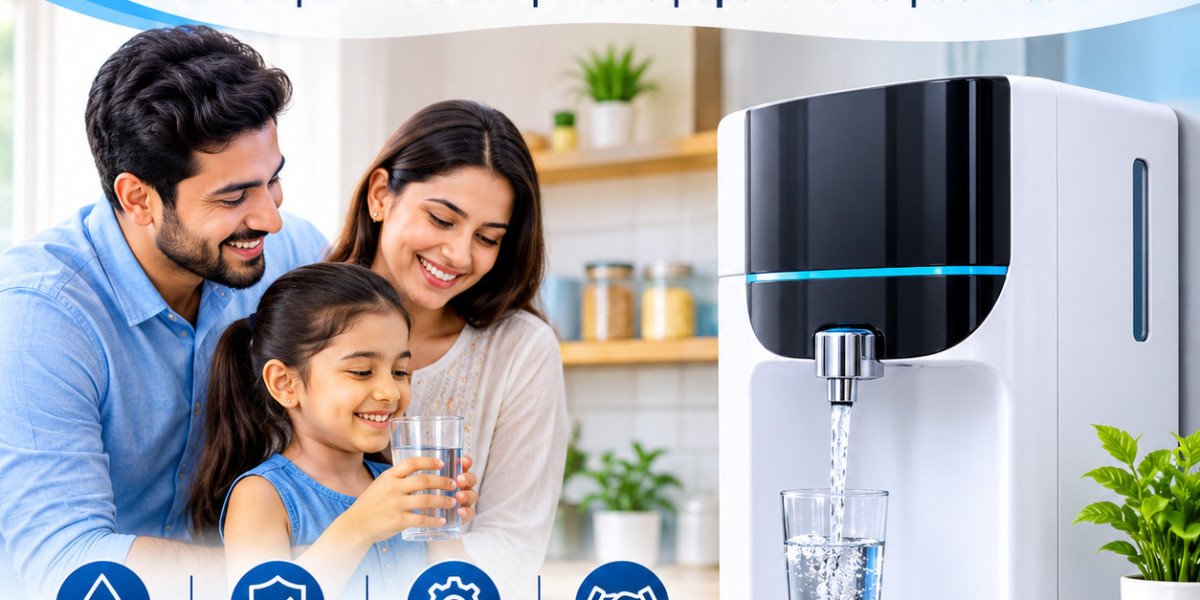

Water is something most households use throughout the day, from drinking and cooking to making tea and washing food. Because water quality can vary from one location to another, paying attention to changes in taste, smell, and appearance can help you identify when your current filtration setup may need attention.
A purifier is not simply an appliance for the kitchen. It can become an important part of a home's overall water-management routine. If you are considering a new water purifier, understanding the signs that point toward better filtration can help you make a more informed decision.
1. Your Drinking Water Has an Unusual Taste
A noticeable change in taste is one of the easiest signs to identify. Water may develop a metallic, salty, bitter, or chlorine-like taste depending on its source and the substances present in it.
Taste alone cannot determine whether water is unsafe, but a persistent change is worth investigating. Testing the water can help identify whether filtration or another treatment method is required.
2. There Is an Unpleasant Odour
Clean drinking water should generally have little or no noticeable smell. A strong chlorine-like, earthy, or unusual odour may indicate an issue with the source, storage tank, plumbing, or treatment process.
Activated carbon filtration can help with certain odours and tastes, but the correct solution depends on what is causing the problem.
3. Water Leaves Excessive Deposits
White marks on taps, kettles, utensils, and bathroom fixtures can sometimes be associated with hard water or high concentrations of dissolved minerals.
If your household regularly experiences scale buildup, it may be useful to test the water before choosing a purification system. Some households may require a treatment solution specifically designed to address hardness rather than a conventional drinking-water filter.
4. You Notice Frequent Filter Changes
Filters have a limited service life. If a filter becomes clogged unusually quickly, it may indicate that the incoming water contains a significant amount of suspended material or that the purification system is not correctly matched to the water source.
Instead of repeatedly replacing filters without investigating the cause, consider testing the water and reviewing the purifier's specifications.
5. Your Water Source Has Changed
Changes in water supply can also change filtration requirements. A household that previously used treated municipal water may later rely on borewell water, tanker water, or another source.
Different sources can have different characteristics. For example, groundwater can contain higher concentrations of dissolved minerals in some areas.
When the source changes, reassessing your purification setup is a practical step.
6. You Are Considering an RO System
Reverse osmosis is a useful purification technology for particular water-quality conditions. A modern RO Water Purifier can combine reverse osmosis with other stages, such as sediment and activated-carbon filtration.
However, RO should not be selected solely because it is popular. It is better to understand the water quality first and determine whether RO is actually suitable for the household.
7. You Have Never Tested Your Water
One of the most useful steps homeowners can take is to understand the quality of their water.
A basic water test can provide information about parameters such as TDS, hardness, pH, and microbial quality. Depending on the source and local conditions, additional testing may be appropriate.
The results can help you choose a purification method based on actual requirements rather than assumptions.
How to Choose the Right Filtration Setup
Once you understand the water quality, compare different technologies and product specifications. Consider:
Water source and quality
Required purification technology
Storage capacity
Filter replacement frequency
Maintenance costs
Electricity requirements
Water wastage
Availability of replacement parts
Household consumption
A purifier should solve a specific water-quality requirement rather than simply provide the largest number of filtration stages.
Don't Forget Regular Maintenance
Even a high-quality purification system requires maintenance. Filters, membranes, and other components need to be inspected and replaced according to the manufacturer's recommendations.
The storage tank should also be cleaned periodically, particularly in systems where purified water is stored for later consumption.
Good maintenance helps the purifier perform as intended and supports consistent water quality.
Final Thoughts
Changes in taste, odour, deposits, filter performance, or water source can all be reasons to reassess your home's filtration setup. However, these signs do not automatically mean that you need an RO system.
The smartest approach is to test the water, understand the underlying issue, and then select a purification technology that matches the results. With the right system and regular maintenance, households can create a more reliable approach to everyday drinking-water filtration.