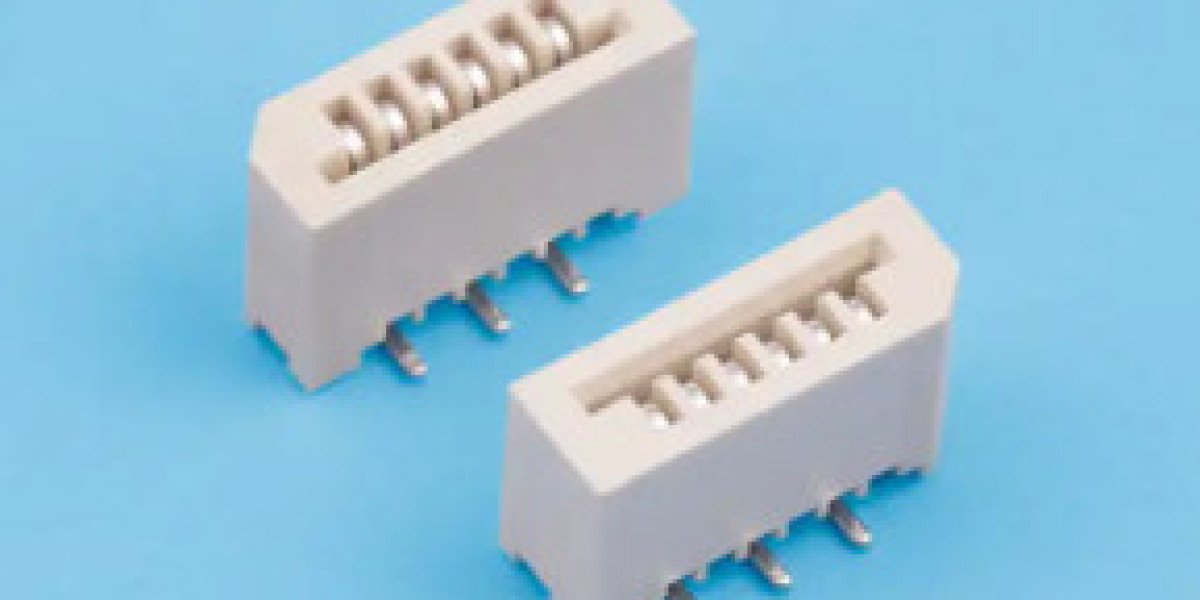

Board to Board Connector selection is an important part of electronic product development. The chosen component influences circuit arrangement, internal dimensions, electrical transmission, and assembly procedures. For purchasing teams, a product description alone may not provide enough information for a reliable decision. A structured evaluation process helps engineers and buyers compare technical requirements, communicate with manufacturers, and prepare suitable components for future production.
Understand the Application Requirements
Start by identifying the equipment in which the component will be installed. Consumer electronics, industrial control units, communication devices, and embedded systems may have different structural and operating conditions.
Consider the available installation space, operating temperature, expected vibration, and maintenance frequency. A compact electronic module may require a low-profile structure, while industrial equipment may need additional mechanical support.
Buyers should also explain whether the connection will remain assembled throughout normal operation or need to be separated during maintenance. This information helps determine the appropriate product structure and expected mating durability.
Confirm Contact Quantity and Arrangement
The contact configuration should correspond with the actual circuit design. Before requesting a quotation, engineers should identify the number of signal, power, and grounding positions required by the application.
A suitable arrangement can help simplify circuit planning and reduce unnecessary design adjustments. Buyers should also consider whether additional positions may be needed for future product revisions.
Prepare the following details:
Required contact quantity
Contact pitch and row arrangement
Signal and power distribution
Grounding requirements
PCB footprint dimensions
Available installation space
Providing these details together makes technical communication more efficient and gives the manufacturer a clearer basis for product evaluation.
Measure the Available Installation Space
Physical dimensions can influence the entire electronic assembly. Buyers should check product length, width, height, mounting position, and the distance between the two circuit boards.
The assembled height deserves particular attention. It must account for the component itself, PCB thickness, nearby electronic parts, and enclosure clearance. Components such as capacitors and inductors may occupy space around the installation area.
Mechanical drawings can help engineers identify possible conflicts before sample evaluation. If the product has strict dimensional requirements, buyers should provide the latest drawing revision and clarify which measurements cannot be changed.
Evaluate Electrical Specifications
Electrical performance should be assessed according to the actual operating conditions. Important parameters include rated voltage, current capacity, contact resistance, insulation resistance, and dielectric strength.
For power applications, engineers should consider current distribution across individual contacts. The expected load, operating temperature, and circuit arrangement may all affect the selection process.
High-speed applications require additional attention to signal integrity. Impedance, crosstalk, insertion loss, and return loss may influence transmission quality. These factors should be reviewed alongside PCB routing and the complete signal path.
Buyers should provide realistic operating data rather than relying solely on general catalogue descriptions. This helps the manufacturer assess whether the proposed specifications are appropriate for the intended equipment.
Check Materials and Environmental Suitability
Material selection can influence conductivity, insulation, durability, and environmental performance. Buyers should request information about the contact base material, plating finish, and insulating housing.
The operating environment should guide this assessment. Temperature changes, humidity, vibration, and repeated mating may affect long-term performance.
For products used in demanding conditions, buyers should clarify the relevant material requirements and testing standards before confirming an order. It is also useful to ask whether material specifications can remain consistent during repeat production.
Arrange Sample Evaluation
Samples provide an opportunity to verify whether the selected model matches the actual design. Engineering teams can use them to assess physical fit, installation convenience, and electrical performance.
A practical testing process should include:
Comparing dimensions against the approved PCB drawing
Checking the assembled height and enclosure clearance
Inspecting contact alignment and mating operation
Testing electrical continuity
Evaluating performance under expected operating conditions
Any issue should be recorded and communicated before mass production. If a design adjustment is required, the updated drawing and revised sample should undergo another evaluation.
Keeping approved samples, drawings, and inspection records can also help purchasing teams manage future orders with consistent requirements.
Review Customization and Supply Arrangements
Some projects require adjustments to contact quantity, dimensions, mounting structures, or material specifications. Buyers should identify mandatory requirements and distinguish them from optional preferences.
Production arrangements are equally important. Confirm sample schedules, manufacturing lead times, quality inspection procedures, packaging details, and delivery expectations before placing an order.Clear documentation can reduce misunderstandings between engineering, purchasing, and manufacturing teams. Buyers should also evaluate how effectively a supplier responds to technical questions and handles specification changes.For electronic manufacturers seeking practical connection solutions, wendaelectronics provides product information and support for different application requirements. Buyers can review available models, discuss project specifications, and learn more about its electronic product range by visiting https://www.wendaelectronics.com/