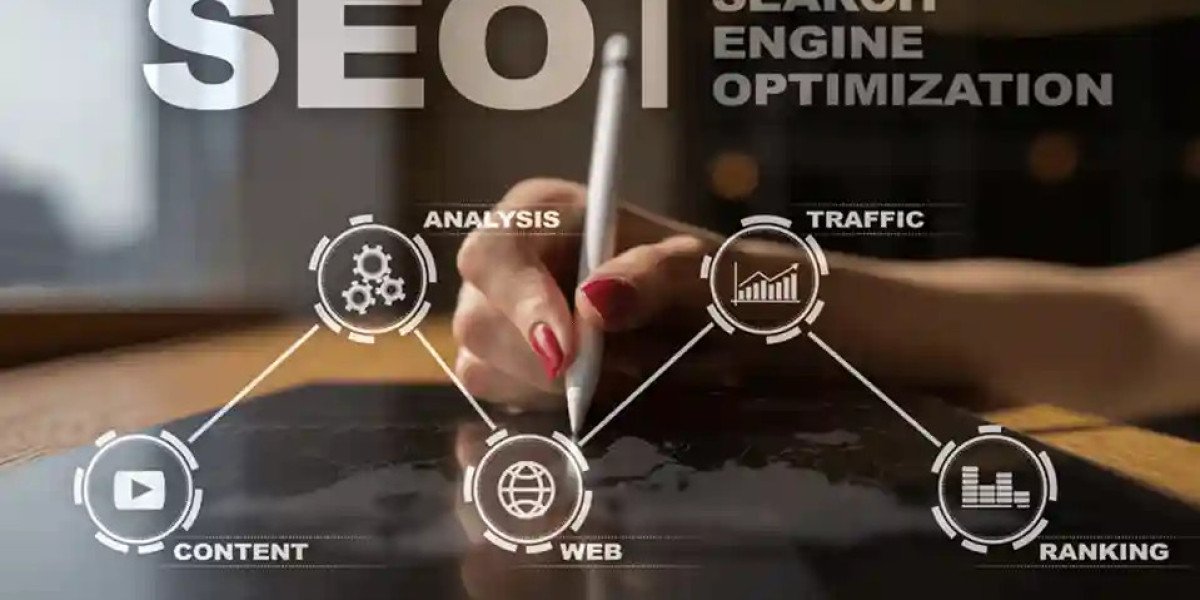

Today's digital marketplace is more competitive than ever. Businesses across almost every industry are investing in their online presence to attract customers, promote their services, and increase sales. As more companies compete for attention in search results, simply having a website is no longer enough. Businesses need a clear strategy to make their websites discoverable and remain relevant to their target audiences.
Search engine optimization plays an important role in achieving this goal. Through keyword research, technical improvements, valuable content, and strategic link building, professional SEO services help businesses strengthen their search presence and compete for relevant organic traffic.
However, maintaining visibility is not just about reaching the first page of Google. It also involves understanding customer needs, responding to changes in search behavior, and providing a better online experience than competing websites.
Understanding Competition in Search Results
Every industry has businesses competing for the same audience. Whether a company offers digital marketing, financial services, healthcare, home improvement, or e-commerce products, potential customers usually have several options to consider.
When users search for a product or service, search engines evaluate many factors to determine which pages are relevant and useful. Businesses with well-optimized websites, helpful information, and strong online credibility may have better opportunities to appear for relevant searches.
For example, a company offering web development services may compete with dozens of agencies targeting similar keywords. If its website contains only a basic homepage and a short service description, it may struggle to demonstrate its expertise or address specific customer requirements.
Professional SEO services help businesses understand their competitors, identify search opportunities, and develop strategies that make their websites more useful and relevant.
Instead of copying competing websites, businesses can identify content gaps, improve their service information, and communicate their unique strengths.
Keyword Research Helps Businesses Reach the Right Audience
Keyword research is one of the foundations of an effective SEO strategy. It helps businesses discover the search terms potential customers use when looking for information, comparing solutions, or purchasing services.
In competitive markets, targeting only broad keywords can make it difficult for smaller businesses to gain visibility. These keywords often have strong competition and may not always attract visitors with clear purchasing intentions.
SEO professionals analyze search volume, keyword difficulty, relevance, and search intent to identify suitable opportunities.
For instance, a business offering accounting services may find it difficult to compete for a broad keyword such as "accounting services." However, it may discover more specific opportunities related to small business bookkeeping, tax preparation, or financial reporting services.
These targeted searches can attract a more relevant audience because they reflect specific customer needs.
A well-developed keyword strategy also considers different stages of the buying journey. Informational keywords help businesses reach people researching a problem, while commercial and transactional keywords can connect them with users comparing or seeking services.
This approach helps companies build visibility across multiple relevant searches rather than depending on a single keyword.
Creating Content That Gives Businesses a Competitive Advantage
Content is an important part of how businesses communicate their expertise and attract organic traffic. In crowded markets, publishing generic articles is unlikely to create a meaningful advantage.
Companies need content that provides useful information, answers customer questions, and offers insights that competing websites may not cover effectively.
For example, a cybersecurity company could publish detailed guides about common security risks, data protection practices, and business security planning. These resources can help readers understand important issues while demonstrating the company's knowledge.
Professional SEO services support content planning by identifying relevant topics, analyzing search intent, reviewing competing pages, and organizing information into a clear structure.
Businesses can develop different types of content, including:
Educational blog posts that answer common customer questions.
Detailed service pages explaining specific solutions.
Industry guides covering important topics.
Case studies demonstrating genuine business experience.
Frequently asked questions addressing customer concerns.
Comparison articles helping users evaluate available options.
The focus should remain on accuracy, originality, and usefulness. Publishing large quantities of repetitive content simply to target keywords may not provide lasting value.
Consistently creating helpful resources can make a business more useful to its audience and support its long-term organic visibility.
Technical SEO Keeps Websites Search-Friendly
A website may contain excellent content, but technical problems can make it difficult for search engines to discover and understand important pages.
Technical SEO focuses on improving the structure, accessibility, and performance of a website. It helps ensure that search engines can crawl relevant pages and that visitors can navigate the website without unnecessary difficulties.
Common technical SEO activities include reviewing XML sitemaps, checking robots.txt settings, resolving crawl errors, fixing broken links, managing redirects, and identifying duplicate content.
Website speed and mobile usability are also important considerations. A slow or difficult-to-use website can frustrate visitors, particularly when competing businesses provide a smoother experience.
For example, an online store may offer competitive products and prices, but customers could leave if product pages load slowly or the checkout process is confusing.
SEO services help identify these weaknesses through technical audits and recommend improvements based on their potential impact.
Although technical optimization does not guarantee higher rankings, it creates a stronger foundation for search visibility and website usability.
Building Website Authority Through Quality Backlinks
In competitive industries, website credibility can influence how well a business performs in organic search. Backlinks are links from external websites that point to a company's pages. Relevant and editorially earned backlinks can help search engines discover content and may contribute to a website's authority.
However, successful link building is not about collecting as many backlinks as possible. Relevance, quality, and the context of a link are important considerations.
For example, a marketing agency may earn relevant backlinks by contributing expert articles to industry publications, sharing original research, participating in professional discussions, or creating resources that other websites find useful.
Professional SEO services can support these activities through competitor backlink analysis, guest posting outreach, digital PR, and relationship-based link building.
Businesses should avoid relying on spammy directories, automated link schemes, or large numbers of irrelevant backlinks. These tactics may create unnecessary risks and do not establish genuine industry credibility.
A consistent approach to earning relevant links can help businesses strengthen their online presence and compete more effectively in their markets.
Local SEO Helps Businesses Compete in Specific Locations
Not every business needs to compete nationally or internationally. Many companies depend on customers from particular cities, neighborhoods, or service areas.
Local SEO helps these businesses improve their visibility when nearby customers search for relevant products or services.
For example, a car repair garage in Dubai may want to reach people searching for automotive repair in Al Quoz. Optimizing its service pages, maintaining accurate business information, and managing its Google Business Profile can help improve its local search presence.
Important local SEO activities include maintaining consistent business details, creating relevant location pages, collecting genuine customer reviews, and ensuring that contact information is easy to find.
Businesses should also provide useful information about their services and the areas they actually serve. Creating multiple low-quality location pages with nearly identical content is unlikely to provide meaningful value.
A well-maintained local presence can help businesses become easier to discover and evaluate when customers are looking for nearby solutions.
Improving User Experience to Retain Potential Customers
Search visibility brings visitors to a website, but a positive user experience helps them explore its offerings and take action.
When users visit a website, they expect clear information, simple navigation, readable content, and accessible contact options. If these elements are missing, potential customers may leave and explore competing websites.
Professional SEO services often include reviewing website structure, navigation, mobile usability, content organization, and landing-page performance.
For example, a software company should make it easy for visitors to understand its products, explore features, compare plans, and request a demonstration.
Clear headings, descriptive page titles, relevant internal links, and well-organized content can make information easier to access.
Businesses should also ensure that important actions, such as requesting a quote or contacting a sales team, are straightforward.
A better user experience supports the overall marketing strategy because improvements can benefit visitors regardless of how they arrive at the website.
Adapting to Changes in Search Behavior
Search engines and online discovery methods continue to evolve. Customers increasingly use conversational queries, voice search, and AI-powered tools to research products and services.
Businesses that depend on outdated optimization techniques may struggle to keep their content aligned with changing search expectations.
Traditional SEO remains essential, but companies can also consider Answer Engine Optimization (AEO) and Generative Engine Optimization (GEO) as complementary approaches.
AEO focuses on making information useful for systems that provide direct answers, while GEO focuses on helping content and brand information become understandable and potentially referenceable in generative AI search experiences.
Businesses can prepare by answering common questions clearly, publishing accurate information, organizing content logically, and demonstrating genuine expertise.
For example, a healthcare provider could create educational pages explaining available services, common treatment questions, and appointment procedures. The information should be accurate, professionally reviewed where appropriate, and easy for visitors to understand.
No strategy can guarantee inclusion in every AI-generated response. However, useful content and a strong technical foundation can help businesses adapt to changing discovery experiences.
Monitoring Competitors and Measuring SEO Performance
Staying visible in a competitive market requires ongoing analysis. Search rankings can change as competitors publish new content, improve their websites, earn backlinks, or adjust their strategies.
SEO services help businesses monitor these changes and identify areas where their own websites can improve.
Competitor analysis may involve reviewing keyword gaps, backlink profiles, content quality, page structure, and the search terms driving visibility to competing websites.
This information can reveal opportunities that a business may have overlooked. For example, a competitor may rank for several valuable service-related searches that the business has not yet addressed with dedicated content.
Performance measurement is equally important. Google Search Console provides information about impressions, clicks, search queries, and page performance in Google Search. Google Analytics can help evaluate visitor behavior and track conversions when properly configured.
Businesses should monitor organic traffic, qualified leads, conversion rates, and revenue where reliable attribution is available. These indicators provide a clearer picture of whether SEO is supporting actual business objectives.
Regular reporting helps companies understand what is working, identify weaknesses, and make informed decisions about future optimization.
Final Thoughts
Maintaining visibility in competitive markets requires more than publishing a website and targeting a few popular keywords. Businesses need a consistent strategy that combines relevant keyword research, valuable content, technical SEO, quality backlinks, and a positive user experience.
Professional SEO services help companies identify opportunities, understand competitors, and improve their websites according to customer needs and changing search behavior.
Organic growth takes time, and rankings cannot be guaranteed. However, businesses that invest in continuous improvement can build a stronger foundation for search visibility, customer trust, and lead generation.
Rather than focusing only on short-term ranking improvements, companies should treat SEO as an ongoing part of their digital strategy. A useful, technically sound, and credible website gives a business a better opportunity to remain discoverable and compete for customers over the long term.
Read More Read More Read More Read More Read More Read More Read More
Read More Read More Read More Read More Read More Read More Read More
Read More Read More Read More Read More Read More Read More Read More
Read More Read More Read More Read More Read More Read More Read More
Read More Read More Read More Read More Read More Read More Read More
Read More Read More Read More Read More Read More Read More Read More
Read More Read More Read More Read More Read More Read More Read More
Read More Read More Read More Read More Read More Read More Read More







