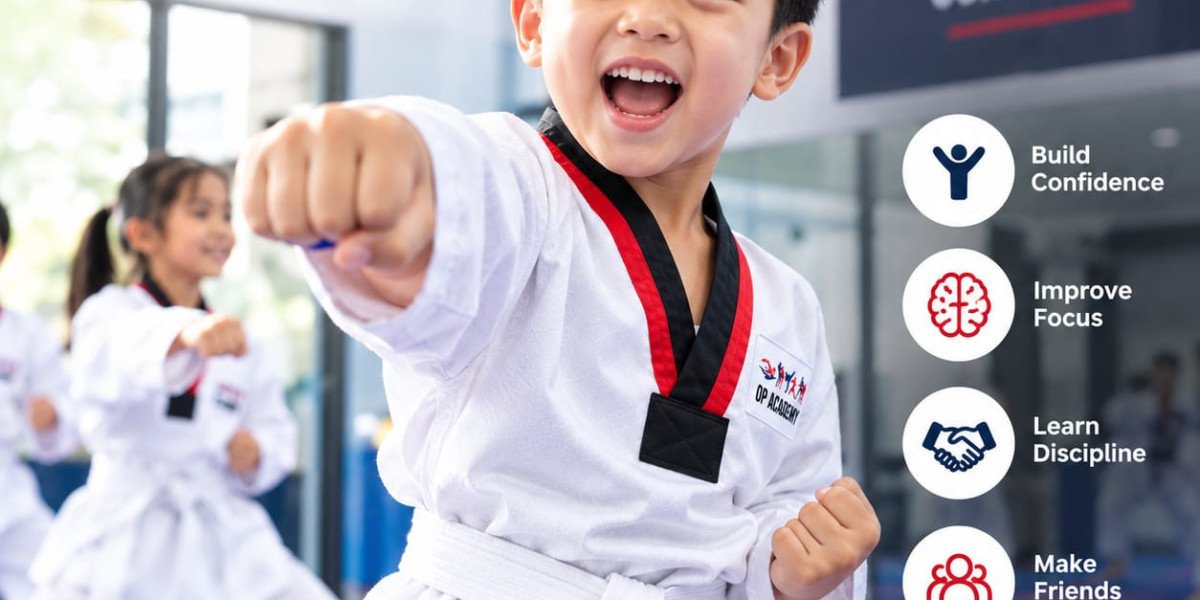

Starting a new activity can be exciting for children, but it can also bring a little nervousness, especially when they have never attended a martial arts lesson before. Some children cannot wait to try their first kick, while others prefer to watch what happens before joining in. For parents considering taekwondo classes for kids singapore, understanding what happens during the first few sessions can make the decision much easier. A good introduction should allow children to become familiar with the training environment, understand basic instructions, and discover that learning Taekwondo is a process built through practice, not something they must master immediately.
At OP Academy, children can explore Taekwondo through structured training designed for different age groups and experience levels. The programme introduces fundamental movements, physical coordination, discipline and martial arts etiquette while allowing students to develop progressively. Rather than expecting beginners to perform complicated techniques straight away, the learning journey starts with the foundations. This gives parents a clearer idea of what their child can experience and helps young learners approach a new activity with greater confidence.
Your Child’s First Taekwondo Lesson Is About More Than Kicking
Many children become interested in Taekwondo after seeing impressive kicks, demonstrations, or martial arts competitions. However, the first lesson usually involves much more than performing techniques. Children need to understand where to stand, how to listen to their instructor, how to follow simple instructions, and how to move safely around other students.
These introductory experiences are important because martial arts training requires awareness and self-control. Children learn that they should not perform techniques randomly or use their movements to disturb others. Instead, every exercise has a purpose, and listening carefully helps them understand how to perform it correctly. These early habits create a foundation for more advanced training later.
Getting Comfortable With the Training Environment
A child entering a martial arts class for the first time may need time to observe the instructor and other students. This is perfectly normal, particularly for younger learners who are still becoming comfortable with unfamiliar environments. A welcoming introduction, clear instructions, and age-appropriate activities can help reduce the pressure of trying something new.
Parents should avoid comparing their child’s first session with children who have already attended several months of training. Every learner starts with a different level of coordination, confidence and familiarity with physical activities. The objective is to help the child participate at a suitable pace and gradually become more comfortable.
Learning Basic Movements Before Advanced Techniques
The foundations of Taekwondo include basic stances, simple kicks, hand techniques, blocking movements and footwork. These movements help children understand balance, body positioning and coordination. Repeating the fundamentals may appear simple, but it is an important part of learning correct technique.
For younger children, basic movement exercises can also help develop motor skills and body awareness. Older beginners may be ready to work on combinations and more structured patterns as their coordination develops. A progressive approach allows children to build understanding rather than rushing through techniques they have not yet mastered.
How Parents Can Prepare Their Child Before the First Class
Preparation does not need to be complicated. In fact, children are more likely to enjoy their first experience when parents explain what to expect without making the activity sound like a test or competition. Let them know that they will meet an instructor, learn some new movements and practise alongside other students.
Encourage Curiosity Instead of Performance Pressure
Tell your child that it is perfectly acceptable not to know everything during the first lesson. They do not need to perform the highest kick or remember every instruction immediately. What matters is being willing to listen, participate, and try again when something feels difficult.
Parents should also avoid using martial arts as a threat or punishment for behaviour. Taekwondo should be introduced as a positive opportunity to learn new skills, develop self-control and enjoy physical activity. Children respond better when they understand that the experience is about personal development rather than being forced to prove themselves.
Prepare Suitable Clothing and Essentials
Before attending, check with the academy about its uniform requirements, footwear policy, and any equipment needed for beginners. Children should arrive in comfortable clothing suitable for the introductory session, with a water bottle and enough time to settle in. Parents should also inform the instructor about relevant injuries or physical limitations before training begins.
Arriving a little early can make a difference. It gives children time to become familiar with the surroundings, meet the instructor, and understand where the class will take place. A relaxed arrival is often much better than rushing through the door just as training begins.
How Children Gradually Develop Through Regular Practice
The first lesson is only the beginning. With regular attendance, children have more opportunities to remember techniques, understand instructions, and recognise how different movements work together. Progress may appear in small details, such as maintaining balance for longer, following a sequence more accurately or remembering to wait for instructions before starting an exercise.
From Simple Instructions to Greater Independence
Young beginners often start by learning basic commands and following demonstrations. As they become familiar with class routines, they may need fewer reminders about where to stand, how to prepare for an exercise and when to take their turn. These experiences encourage independence through repeated practice.
From Individual Practice to Learning With Others
Taekwondo also introduces children to a shared learning environment. Students may practise movements individually, work in pairs or participate in group activities depending on the lesson. They learn to respect personal space, cooperate with classmates and recognise that everyone progresses at a different speed.
Understanding That Mistakes Are Part of Learning
A child may struggle to remember a movement or lose balance while practising a new technique. These moments are normal in skill development. When children receive constructive guidance and are encouraged to try again, they can learn that mistakes are not a reason to give up.
Choosing the Right Beginner Programme at OP Academy
Parents searching for taekwondo classes for kids should consider whether the programme matches their child’s age, readiness and experience. OP Academy’s published programme information includes Little Tigers for ages 4–6, junior training for ages 7–12 and further development opportunities for teenagers aged 13 and above.
Younger learners can focus on basic movements, coordination and positive training habits. Junior students can gradually explore combination techniques, Poomsae, fitness and introductory self-defence, while older students may work towards more advanced techniques and conditioning. The appropriate class should always be confirmed with the academy based on current arrangements and the child’s individual needs.
Frequently Asked Questions About a Child’s First Taekwondo Class
Does My Child Need Previous Martial Arts Experience?
No. Beginners can start by learning the fundamental movements and class routines. Previous experience is not necessary to begin a suitable introductory programme.
What If My Child Is Shy During the First Lesson?
Some children need time to observe before participating confidently. Parents can discuss their concerns with the instructor and ask how beginners are supported during their first few sessions.
How Long Does It Take to Learn Basic Taekwondo Techniques?
There is no fixed timeline because children learn at different speeds. Regular attendance, practice, individual readiness, and the complexity of each technique all influence progress.
Should Parents Stay and Watch the Lesson?
This depends on the academy’s arrangements and the child’s age. Ask OP Academy about its visitor and parent observation policy before attending.
Start Your Child’s Taekwondo Journey With OP Academy
A child’s first martial arts experience can become the starting point of a rewarding new interest. Give your little one the opportunity to explore movement, learn respect, practise discipline and experience the satisfaction of improving one skill at a time. If you are looking for taekwondo classes for kids in Singapore that introduce children to structured martial arts training, OP Academy is ready to help you explore a suitable programme. Visit OP Academy’s Taekwondo Classes for Children or call +65 9106 6242 to enquire about beginner classes, age groups, available locations and enrolment. Let your child’s first step become the beginning of something positive, active and full of possibilities.