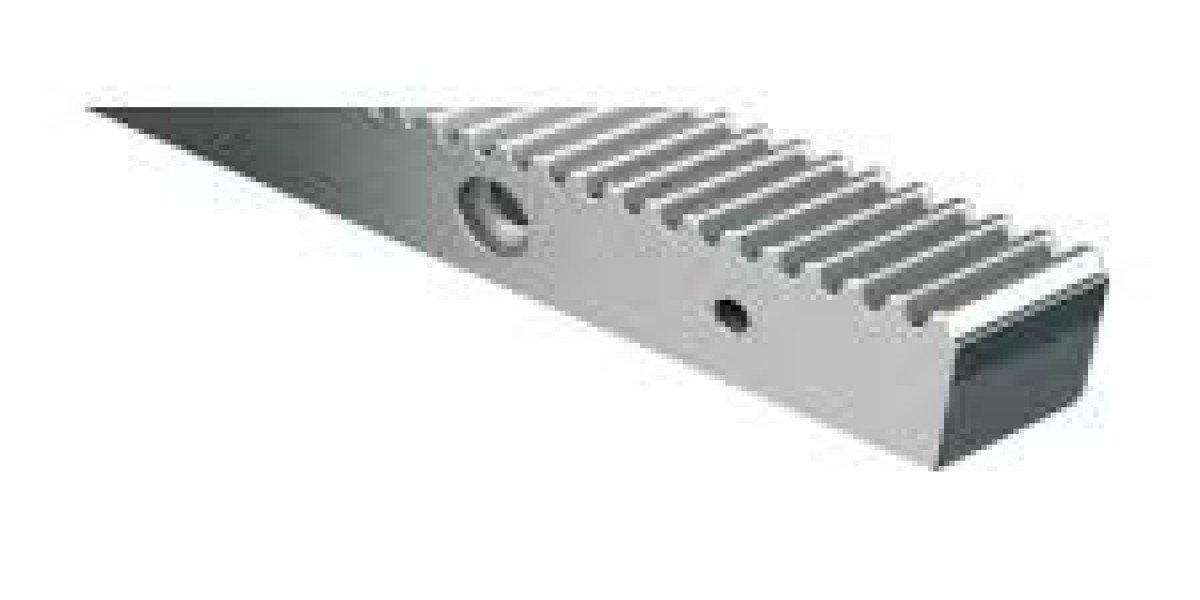

The performance of an industrial linear drive depends on the interaction between tooth geometry, material characteristics, surface quality, and installation accuracy. A properly manufactured Helical Gear Rack can support progressive engagement with a mating pinion, making it useful for machinery that requires controlled linear movement and repeatable positioning. Zhejiang Yuchen Transmission Technology Co., Ltd. considers these engineering factors throughout product development and manufacturing.
Material selection is one of the first decisions affecting the finished component. Carbon steel and alloy steel offer different combinations of strength, toughness, machinability, and response to heat treatment. The selected material must meet the mechanical demands of the application while remaining suitable for the intended machining and finishing processes. Evaluating these characteristics early helps reduce manufacturing difficulties and supports consistent production quality.
Helical tooth geometry creates an angled relationship between the tooth line and the rack's longitudinal direction. As the mating pinion moves, engagement develops progressively across the working surfaces. This arrangement can help distribute contact more gradually and support smoother force transmission. Nevertheless, the actual result depends on tooth-profile accuracy, consistent spacing, alignment, and the characteristics of the mating gear.
Machining transforms the prepared blank into the required tooth structure. Depending on the design, manufacturing may involve milling, shaping, cutting, or other precision operations. The condition of the tooling, rigidity of the machine, positioning of the workpiece, and stability of the process all influence the resulting geometry. Maintaining control during tooth generation creates a foundation for subsequent thermal treatment and finishing.
Heat treatment can improve resistance to wear and repeated contact. Processes such as carburizing, quenching, and tempering may be selected according to the material and operating requirements. These treatments can establish a hardened working surface while retaining suitable internal toughness. Since thermal processing may affect dimensions, post-treatment inspection is important for determining whether corrective finishing is required.
Grinding and other precision finishing operations help refine the tooth surfaces. Controlled material removal can improve profile consistency and reduce surface irregularities. This is particularly important when the contact relationship between the rack and pinion must remain predictable over repeated movement cycles. Zhejiang Yuchen Transmission Technology Co., Ltd. considers finishing requirements together with the earlier machining and heat-treatment stages to help maintain the intended geometry.
Surface condition also affects friction and lubrication. Repeated contact between transmission components creates local mechanical stresses, and irregular surfaces may influence wear patterns or lubricant behavior. A controlled finish can help establish more consistent contact conditions, but it must be supported by appropriate lubrication, alignment, and installation practices. The complete assembly determines how effectively the finished surfaces perform in service.
Inspection systems help verify the results of each manufacturing stage. Tooth profile, spacing, straightness, mounting dimensions, and surface characteristics may all require evaluation. Digital measurement equipment can capture dimensional information and help identify deviations from design requirements. By reviewing these results over time, manufacturers can identify recurring variations and refine machining or finishing procedures.
Digital engineering tools connect product design with production execution. Three-dimensional modeling can define tooth geometry and assembly relationships before manufacturing begins. Computer-aided manufacturing translates design information into machining operations, while inspection results provide feedback about the finished component. Zhejiang Yuchen Transmission Technology Co., Ltd. can use this integrated approach to support coordination between engineering, production, and quality assurance.
The intended application must guide the final component selection. Automated positioning equipment, CNC machines, robotic systems, packaging lines, and material-handling mechanisms may impose different demands on load behavior, movement frequency, and accuracy. Operating speed, duty cycle, mounting rigidity, environmental conditions, and lubrication all affect transmission performance. Evaluating these factors together helps ensure that component characteristics match the broader equipment design.
Noise and vibration can develop when tooth contact is inconsistent or mounting alignment is incorrect. Accurate machining and surface finishing help maintain the intended contact pattern, while suitable assembly practices reduce avoidable mechanical disturbances. In equipment with frequent positioning cycles, consistent engagement can contribute to predictable movement and a more stable operating environment.
Long-term performance also depends on maintenance. Regular lubrication, alignment verification, contamination management, and periodic inspection help control wear and identify developing problems. Maintenance requirements should reflect the actual operating environment rather than relying on a generic schedule. This allows equipment operators to preserve transmission performance while addressing the conditions most likely to affect the assembly.
By coordinating material engineering, tooth geometry, machining, thermal treatment, finishing, and inspection, Zhejiang Yuchen Transmission Technology Co., Ltd. supports the development of industrial transmission components for different mechanical applications. When these factors are matched to the operating environment, a Helical Gear Rack can contribute to progressive engagement and repeatable linear motion. Additional product information is available at https://www.yc-rack.com/product/spur-gear-rack/.