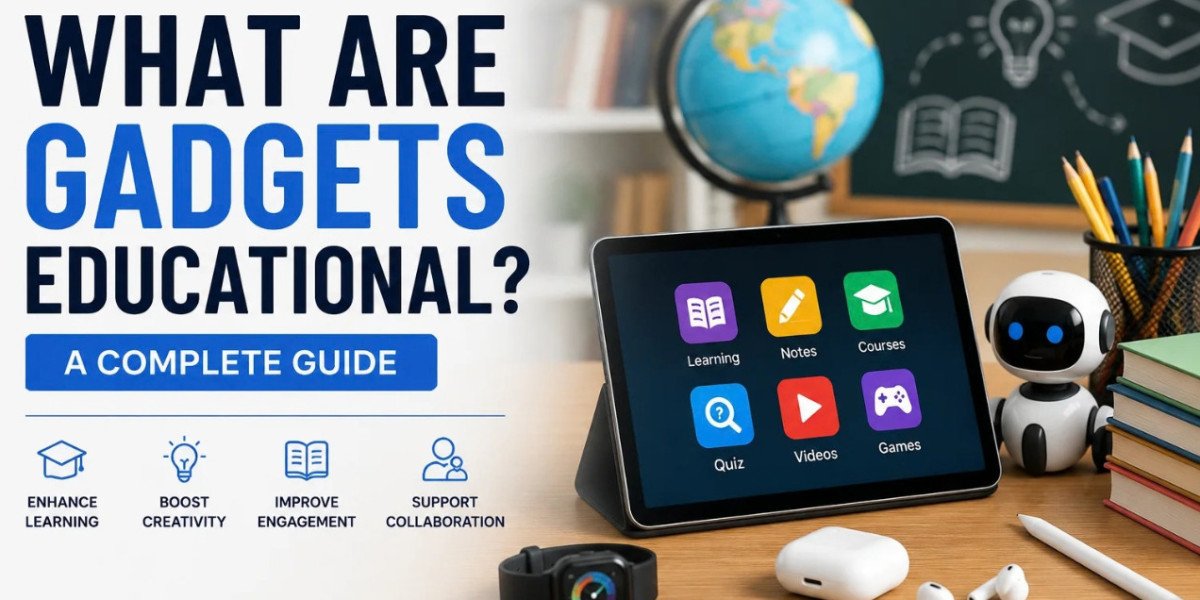

Technology is changing how students learn, how teachers deliver lessons, and how classrooms operate. From digital textbooks and online assignments to interactive displays and educational applications, modern devices offer new ways to make learning more accessible and engaging. When used thoughtfully, these tools can help learners understand difficult concepts, organize their work, and participate more actively in lessons.
Gadgets Education is an important part of modern learning because it connects traditional teaching methods with practical digital solutions. Students can use technology to research topics and complete assignments, while teachers can explain concepts through videos, presentations, and interactive exercises. The right gadgets can support both classroom learning and education at home.
Why Are Educational Gadgets Useful?
Educational gadgets help students and teachers access information, communicate, and complete learning tasks more efficiently. They can also support different learning preferences, allowing students to read, listen, watch demonstrations, or practice skills using digital resources.
For example, a student who struggles to understand a scientific concept may benefit from an educational video or interactive simulation. A teacher can use a digital presentation to explain the same concept to an entire class.
However, technology works best when it supports clear learning goals. Gadgets should complement textbooks, classroom discussions, practical exercises, and independent thinking rather than replace them.
Best Educational Gadgets for Students
1. Laptops for Research and Assignments
Laptops are among the most versatile educational devices. Students can use them to attend online classes, prepare presentations, write reports, research information, and access learning platforms.
When choosing a laptop, consider battery life, performance, storage, screen quality, and the software required for your studies. Students who mainly write assignments and browse educational websites may not need the same specifications as those studying programming, engineering, or graphic design.
2. Tablets for Digital Learning
Tablets offer a lightweight way to read e-books, review lecture notes, watch educational videos, and organize study materials. Some models support digital pens, making it easier to annotate documents, draw diagrams, and solve mathematical problems.
Their portability makes them useful for students who want to carry digital learning materials without bringing several heavy books.
3. Headphones for Focused Study
Headphones help students listen to lectures, attend virtual meetings, and follow recorded lessons without unnecessary distractions. Models with built-in microphones are particularly useful for online discussions and presentations.
Comfort matters when using headphones for extended periods, so choose a suitable fit and maintain a safe listening volume.
4. Scientific Calculators
Scientific calculators are useful for mathematics, physics, chemistry, and other subjects that involve complex calculations. Depending on the course, students may need features for statistics, trigonometry, or advanced mathematical operations.
Before purchasing one, check the requirements of your school, college, or examination board.
Useful Gadgets for Teachers
1. Projectors
Projectors allow teachers to display presentations, diagrams, videos, and educational resources to an entire class. They can make lessons more visual and help students follow explanations more easily.
A projector is especially useful when teaching large groups or demonstrating material that is difficult to show on a small screen.
2. Interactive Smartboards
Interactive smartboards combine digital displays with tools that allow teachers to write, draw, highlight information, and interact with educational applications. They can support collaborative exercises and make classroom discussions more engaging.
Teachers should select systems that are compatible with their existing equipment and easy to use during everyday lessons.
3. Document Cameras
Document cameras display physical materials on a larger screen. Teachers can use them to demonstrate handwritten calculations, textbook diagrams, science experiments, and practical tasks.
They are particularly helpful when students need to observe each step of a process closely.
How to Choose the Right Gadgets for Education
Before investing in educational technology, consider the needs of students and teachers.
Learning purpose: Identify the specific problem the device should solve.
Budget: Compare useful features, durability, and long-term value.
Ease of use: Choose devices that are simple to operate and maintain.
Compatibility: Check whether the gadget works with existing software and classroom equipment.
Accessibility: Consider screen readability, audio support, and other features that help different learners.
Digital safety: Use secure applications, protect personal information, and establish healthy screen habits.
Schools and families do not need to purchase every available device. A few carefully selected gadgets can provide meaningful benefits when they match real educational needs.
Final Thoughts
Educational technology can make learning more flexible, interactive, and organized. Laptops, tablets, headphones, scientific calculators, projectors, smartboards, and document cameras each serve different purposes for students and teachers.
The real value of Gadgets Education comes from choosing useful tools and integrating them into effective teaching and study routines. For more practical explanations, educational information, technology guidance, and answers to everyday questions, GlobalsMean is a helpful resource for students, teachers, and curious readers.