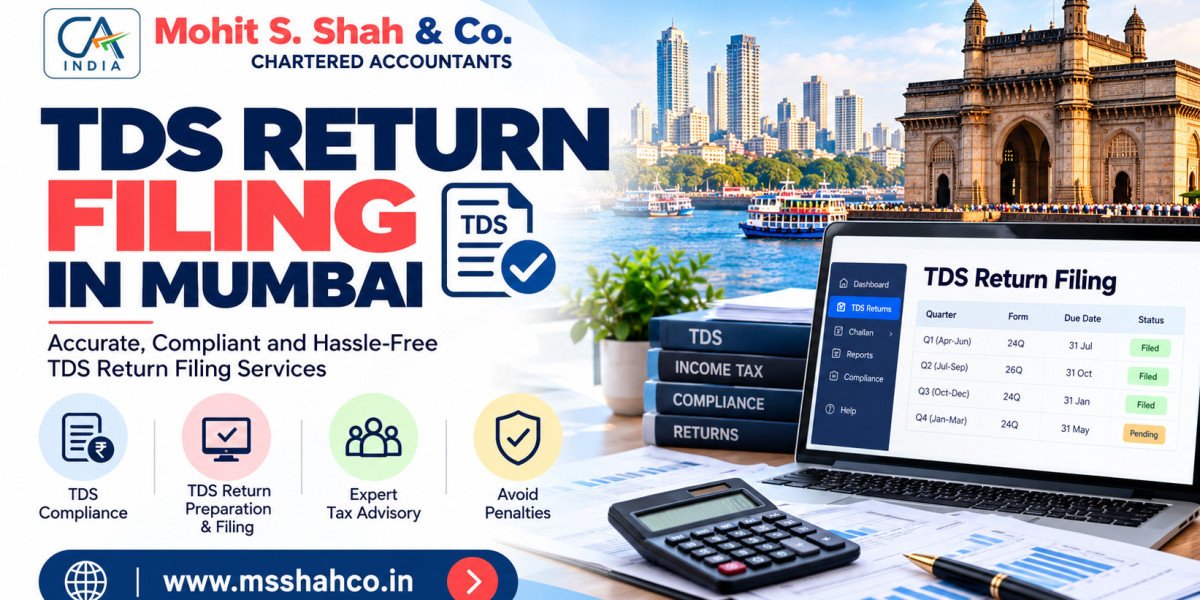

Tax Deducted at Source (TDS) is an important part of India's taxation system. It requires businesses, employers, and other specified deductors to deduct tax when making certain payments and deposit it with the government within the prescribed timelines. Filing TDS returns accurately is essential for maintaining tax compliance, avoiding penalties, and ensuring that the deducted tax is correctly reflected in the recipient's tax records.
For businesses, salaried professionals, startups, and established companies, TDS Return Filing in Mumbai is an important compliance responsibility. With multiple payment categories, quarterly filing requirements, and changing tax regulations, managing TDS can become complicated without proper accounting and professional guidance.
Mohit S. Shah & Co provides accounting, taxation, and compliance support to help businesses and professionals manage their tax-related responsibilities efficiently. Understanding the TDS filing process can help you maintain accurate records, reduce errors, and meet important deadlines.
What Is TDS Return Filing?
TDS return filing is the process of submitting details of tax deducted at source to the Income Tax Department. These returns generally include information about the deductor, deductees, payments made, taxes deducted, and taxes deposited with the government.
Whenever a business or individual makes certain payments covered under applicable TDS provisions, they may be required to deduct tax at the prescribed rate. Examples include salary payments, professional fees, contractor payments, rent, interest, and other specified transactions.
After deducting and depositing the tax, the deductor must file the applicable TDS statement within the relevant due date.
Accurate TDS Return Filing in Mumbai helps ensure that the tax deducted from payments is properly reported and that recipients can verify eligible TDS credits through their tax records.
Why Is TDS Return Filing Important?
Timely TDS filing is important for several reasons.
1. Maintaining Tax Compliance
Businesses must follow applicable income tax provisions and fulfil their TDS obligations. Filing the correct statements within the prescribed timelines helps maintain compliance and reduces the risk of avoidable defaults.
2. Avoiding Late Filing Fees and Penalties
Late filing or incorrect reporting can result in additional financial consequences under applicable tax laws. For example, Section 234E of the Income-tax Act, 1961, provides for a late filing fee of ₹200 per day, subject to the amount of TDS deductible or collectible. Other consequences may apply depending on the nature of the default.
Professional assistance can help businesses track deadlines, reconcile payments, and submit accurate returns.
3. Ensuring Correct TDS Credit
Employees, contractors, consultants, and other recipients may rely on TDS information to claim eligible tax credits. Incorrect PAN details, mismatched amounts, or reporting errors can create difficulties when recipients check their tax statements or file income tax returns.
4. Improving Financial Record Management
Maintaining organised TDS records makes it easier to reconcile expenses, payments, tax deductions, and bank transactions. It also supports accounting reviews, audits, and internal financial reporting.
5. Supporting Business Growth
As a business expands, the number of employees, vendors, consultants, and financial transactions may increase. A structured TDS compliance process helps businesses manage these responsibilities without unnecessary administrative delays.
Who Needs TDS Return Filing Services in Mumbai?
TDS obligations depend on the type of payment, the applicable legal provisions, and the status of the deductor. Businesses and professionals who may require TDS compliance assistance include:
Private Limited Companies: Companies making salary, contractor, rent, or professional fee payments.
Small and Medium Enterprises: Businesses that need support with bookkeeping, tax deduction calculations, and quarterly statements.
Startups: Growing businesses establishing their accounting and compliance processes.
Partnership Firms and LLPs: Entities that make payments covered by TDS provisions.
Employers: Organisations responsible for deducting and reporting TDS on salaries.
Consultants and Professional Firms: Businesses making payments for professional or technical services.
Property Owners and Businesses: Persons responsible for TDS on specified rent or property-related transactions where applicable.
Not every payment automatically attracts TDS. The applicable threshold, rate, exemption, and deduction requirements should be checked before making a deduction.
Types of TDS Returns
Different TDS statements apply to different categories of payments. The commonly used forms include:
Form 24Q – TDS on Salary
Form 24Q is used for reporting tax deducted from salary payments. Employers must report relevant salary and deduction information in accordance with the applicable rules.
Form 26Q – TDS on Payments Other Than Salary to Residents
Form 26Q generally covers specified payments to residents other than salary, including certain professional fees, contractor payments, rent, interest, and other transactions subject to TDS.
Form 27Q – TDS on Payments to Non-Residents
Form 27Q is generally used to report TDS on specified payments to non-residents, including applicable payments to foreign companies, subject to the relevant provisions and exceptions.
Form 27EQ – TCS Statement
Form 27EQ relates to Tax Collected at Source (TCS). TCS is different from TDS, although both involve tax collection or deduction at the source of a transaction.
Selecting the correct statement and reporting the relevant information accurately are important steps in the compliance process.
Step-by-Step Process for TDS Return Filing in Mumbai
A systematic approach can make TDS compliance more manageable.
Step 1: Identify Applicable TDS Provisions
Review the nature of payments made during the relevant quarter. Determine whether TDS applies and identify the relevant section, threshold, and rate.
Step 2: Calculate the TDS Amount
Calculate the amount of tax to be deducted according to the applicable provisions. Consider relevant exceptions, declarations, certificates, and other legally permitted adjustments where applicable.
Step 3: Collect Deductee Information
Maintain accurate information for each recipient, including their name, PAN, payment details, deduction amount, and other information required for the applicable statement.
Incorrect or missing PAN information can result in reporting problems and may affect the applicable deduction rate.
Step 4: Deposit TDS with the Government
Deposit the deducted tax within the prescribed due date using the applicable payment procedure. Retain challan details and payment confirmation for reconciliation.
Step 5: Reconcile Payments and Records
Compare the TDS ledger, accounting records, payment challans, and deductee details. This step helps identify discrepancies before filing.
Step 6: Prepare and Submit the TDS Statement
Prepare the relevant quarterly statement in the prescribed format, validate the information, correct any identified errors, and submit it through the applicable filing system.
Step 7: Check Filing Status and Correct Errors
After submission, verify the filing status and address any applicable processing errors or defaults. If a correction statement is required, ensure that it is prepared and submitted accurately.
Following these steps can improve the accuracy and consistency of TDS Return Filing in Mumbai.
TDS Return Filing Due Dates
TDS statements are generally filed quarterly. For many commonly applicable quarterly TDS statements, the usual due dates are:
| Quarter | Period | General filing due date |
|---|---|---|
| Q1 | April–June | 31 July |
| Q2 | July–September | 31 October |
| Q3 | October–December | 31 January |
| Q4 | January–March | 31 May |
These dates are general references for commonly applicable TDS statements and may differ for specific forms, notified extensions, or changes in law. TDS deposit deadlines are separate from return filing deadlines. Businesses should verify the current requirements for the relevant financial year before submitting a return.
Common TDS Return Filing Mistakes to Avoid
Even minor errors can lead to notices, correction requirements, or delays in processing. Businesses should pay attention to the following issues:
Incorrect PAN details: Verify deductee information before submitting the statement.
Wrong deduction rates: Apply the rate prescribed for the relevant payment and circumstances.
Challan mismatches: Ensure that tax payment details match the amounts reported in the statement.
Missed deadlines: Maintain a compliance calendar for deposits and quarterly returns.
Incorrect payment classification: Identify the appropriate TDS section and return form.
Incomplete accounting records: Keep invoices, payment vouchers, ledgers, and supporting documents organised.
Failure to correct defaults: Review processing information and address discrepancies promptly.
Working with an experienced tax professional can help businesses establish a consistent process for preventing and resolving these issues.
Benefits of Professional TDS Return Filing Services
Professional support can be useful when an organisation has multiple employees, regular vendor payments, several TDS categories, or limited in-house accounting resources.
Accurate Documentation
A structured review of payment records, challans, PAN information, and accounting entries helps improve reporting accuracy.
Timely Compliance
A planned compliance calendar helps businesses prepare the required information before the due date rather than waiting until the last moment.
Reduced Administrative Work
Outsourcing selected compliance activities can allow business owners and finance teams to focus on operations, customer service, and business development.
Assistance With Corrections
If an earlier statement contains errors, professional assistance can help identify the discrepancy and determine the appropriate correction procedure.
Better Financial Organisation
Consistent documentation and reconciliation help maintain reliable tax records for future reference, financial reviews, and audits.
Why Choose Mohit S. Shah & Co for TDS Return Filing in Mumbai?
Choosing an accounting and tax professional who understands business compliance requirements can help simplify routine tax responsibilities.
Mohit S. Shah & Co supports businesses and professionals with accounting, taxation, audit, and advisory requirements. When managing TDS compliance, businesses benefit from an organised approach that prioritises accurate records, appropriate reporting, and timely submission.
Whether you are a small business owner, an employer, a partnership firm, or an established company, professional guidance can help you understand your obligations and manage filing requirements more efficiently.
A suitable TDS compliance process should be based on your business structure, payment categories, transaction volume, and applicable tax provisions. This helps ensure that the filing process is practical and aligned with your specific requirements.
Frequently Asked Questions About TDS Return Filing in Mumbai
1. What is TDS return filing?
TDS return filing is the submission of information about tax deducted at source, including details of deductees, payments, deductions, and tax deposits, to the Income Tax Department.
2. How often must TDS returns be filed?
TDS statements are generally filed quarterly. The applicable deadlines depend on the statement type and any relevant notifications or extensions.
3. What happens if a TDS return is filed late?
Late filing may attract a fee under Section 234E and other consequences where applicable. The exact impact depends on the circumstances and applicable law.
4. Can errors in a TDS return be corrected?
Yes. Where permitted, a correction statement can be filed to rectify eligible errors in a previously submitted statement. The correction process depends on the type of error and the statement's status.
5. Which documents are required for TDS return filing?
Common requirements include PAN details, deductee information, payment records, TDS calculations, challan details, and accounting records. Additional information may be necessary depending on the return type.
6. Why should businesses seek professional TDS assistance?
Professional assistance can help with identifying applicable provisions, reconciling records, preparing statements, meeting deadlines, and addressing filing discrepancies.
Conclusion
TDS compliance is an essential responsibility for businesses and other persons required to deduct tax at source. Accurate calculations, complete documentation, timely tax deposits, and correct quarterly statements help reduce avoidable compliance issues and maintain reliable financial records.
For businesses seeking TDS Return Filing in Mumbai, working with a professional accounting and taxation firm can make the process more organised and manageable. Mohit S. Shah & Co can be contacted to discuss your TDS filing requirements and other accounting or tax compliance needs.
Contact Mohit S. Shah & Co
For assistance with TDS return filing and related accounting or taxation services, contact the firm using the details below.
Company: Mohit S. Shah & Co
Address: 6, 2nd Floor, Anant Building, 217, Shamaldas Gandhi Marg, Princess Street, Marine Lines (East), Mumbai – 400 002
Phone: +91-9821462283
Email: officeofmohit@gmail.com