
Climate commitments are no longer just statements in corporate sustainability reports. Organizations are increasingly expected to measure their carbon footprint, demonstrate progress toward emissions reduction, and provide reliable sustainability information to stakeholders. However, managing emissions across global operations, complex supply chains, and multiple business units remains a significant challenge. Without accurate data and a clear understanding of their environmental impact, enterprises can struggle to identify reduction opportunities and turn sustainability targets into measurable outcomes. This is why Enterprise Carbon Management Software is becoming an important technology investment for organizations pursuing decarbonization and long-term business resilience.
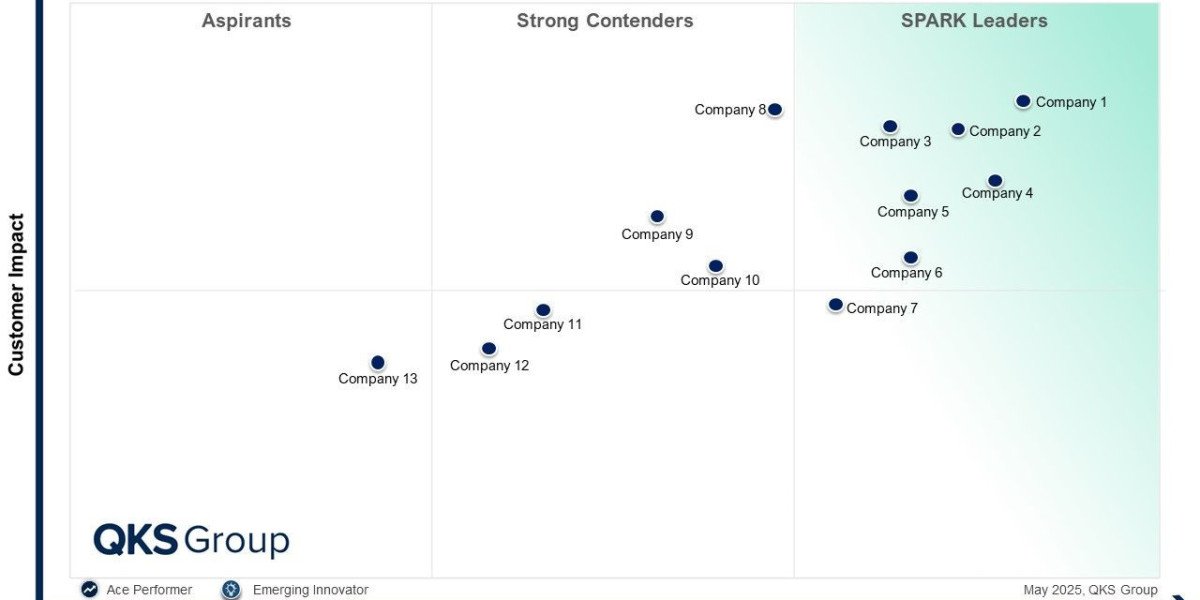
QKS Group's SPARK Matrix™: Enterprise Carbon Management Software (ECM), Q2 2025, provides a comprehensive analysis of the global market, covering emerging technology trends, market dynamics, vendor capabilities, competitive differentiation, and future opportunities. The research helps technology vendors understand the competitive landscape while enabling enterprise buyers to assess solutions according to their business and sustainability requirements.
Click Here For More Information: https://qksgroup.com/market-research/spark-matrix-enterprise-carbon-management-software-ecm-q2-2025-8922
What Is Enterprise Carbon Management Software?
Enterprise Carbon Management (ECM) software is a comprehensive suite of tools that helps organizations measure, monitor, report, and reduce greenhouse gas emissions across their operations and supply chains. These platforms consolidate emissions-related information from multiple sources, including energy consumption, manufacturing operations, transportation, procurement, facilities, and supplier activities.
According to Sanjay Kumar, Analyst at QKS Group, ECM software helps large organizations manage carbon emissions, achieve decarbonization and net-zero goals, and comply with relevant standards, protocols, and regulations. The platforms also provide customization, flexibility, and scenario modeling while tracking emissions across operations and supply chains.
Unlike disconnected spreadsheets and manual reporting processes, modern carbon management platforms provide centralized data management, automated calculations, reporting capabilities, and analytical tools. This enables sustainability teams to identify emissions hotspots, establish reduction targets, track progress, and communicate performance more effectively.
Why Is the Enterprise Carbon Management Market Growing?
One of the primary drivers of adoption is the increasing importance of sustainability in corporate strategy. Enterprises are integrating environmental objectives into business planning, operational management, procurement, and investment decisions. Carbon emissions data helps leadership teams understand environmental risks and identify opportunities to improve resource efficiency.
Regulatory and stakeholder expectations are also influencing technology investment. Organizations operating across multiple jurisdictions may need to address different disclosure requirements, reporting frameworks, and emissions accounting methodologies. Carbon management platforms can help centralize relevant information, maintain audit trails, and improve reporting consistency. However, organizations must still verify that their selected platform supports the specific regulatory requirements applicable to their operations.
Supply chain emissions represent another major challenge. A company's environmental footprint can extend beyond its direct operations to purchased materials, transportation, supplier activities, product use, and disposal. These indirect emissions are commonly associated with Scope 3 reporting and can be difficult to quantify because the necessary information is distributed across external partners.
Enterprise carbon management solutions help organizations collect supplier data, apply emissions factors, identify data gaps, and improve visibility into value-chain emissions. This supports more informed procurement decisions and helps sustainability teams prioritize engagement with suppliers that offer meaningful reduction opportunities.
Check SPARK Plus Study Here: https://qksgroup.com/sparkplus?market-id=475&market-name=enterprise-carbon-management-software
Key Technology Trends Shaping Carbon Management Software
1. AI-Powered Carbon Analytics
Artificial intelligence and advanced analytics are improving how organizations interpret emissions data. AI-enabled capabilities can help identify unusual energy consumption patterns, highlight potential data inconsistencies, and identify areas where additional investigation may be useful.
Predictive analytics can also support scenario planning by helping organizations estimate how operational changes, energy sourcing decisions, or supplier transitions may affect future emissions. These capabilities can strengthen decision-making when supported by reliable source data and appropriate validation.
2. Automated Carbon Accounting and Reporting
Manual data collection can slow sustainability reporting and increase the risk of inconsistent calculations. Enterprise platforms increasingly support automated data ingestion, emissions-factor management, calculation workflows, and standardized reporting.
Automation helps sustainability teams reduce repetitive administrative work and focus more attention on emissions reduction initiatives. It also supports traceability by connecting reported figures with underlying records, calculation methods, and documented assumptions.
3. Scope 3 and Supplier Emissions Visibility
Measuring supply chain emissions requires collaboration between sustainability, procurement, finance, operations, and external suppliers. Carbon management platforms are increasingly designed to support supplier engagement, data collection, emissions estimation, and performance monitoring.
Organizations can use these capabilities to identify high-impact categories, improve supplier transparency, and incorporate sustainability criteria into purchasing decisions.
4. Decarbonization Planning and Scenario Modeling
Measuring emissions is only the first step. Enterprises also need practical strategies for reducing them. Scenario modeling enables organizations to compare potential initiatives, such as renewable electricity adoption, equipment upgrades, logistics optimization, and changes in material sourcing.
By evaluating potential costs, emissions reductions, and implementation timelines, businesses can prioritize initiatives that align with their operational constraints and sustainability objectives.
5. Integration with Enterprise Systems
Carbon management platforms increasingly need to connect with enterprise resource planning systems, energy management tools, procurement applications, facility management platforms, and other operational data sources.
Integration improves the availability and consistency of emissions information while reducing dependence on isolated spreadsheets. It also helps organizations connect sustainability performance with everyday business decisions.
QKS Group SPARK Matrix™: Enterprise Carbon Management Software, Q2 2025
Selecting an ECM platform requires more than comparing dashboards or reporting features. Enterprises must consider the solution's ability to support complex emissions calculations, integrate with existing systems, scale across business units, and adapt to evolving sustainability requirements.
QKS Group's proprietary SPARK Matrix™ provides a structured competitive assessment of Enterprise Carbon Management Software vendors, positioning them based on Technology Excellence and Customer Impact.
The Q2 2025 study includes vendors such as Cority, UL Solutions, Sphera, Intelex, Wolters Kluwer, Persefoni, SINAI Technologies, Diligent, Salesforce, Watershed, Schneider Electric, Sweep, and FigBytes.
The report helps technology buyers understand vendor capabilities and competitive differentiation while giving software providers insights into market positioning and evolving customer expectations.
What Should Businesses Consider When Selecting an ECM Platform?
Enterprises should evaluate carbon management software according to their sustainability maturity, operational complexity, and reporting objectives. Important considerations include:
- Emissions coverage: Support for relevant Scope 1, Scope 2, and Scope 3 categories.
- Data quality: Validation, traceability, audit trails, and transparent calculation methodologies.
- Integration: Connectivity with finance, procurement, energy, and operational systems.
- Reporting flexibility: Support for applicable reporting frameworks and jurisdiction-specific requirements.
- Decarbonization planning: Tools for target setting, scenario analysis, and tracking reduction initiatives.
- Scalability: Ability to accommodate additional facilities, suppliers, business units, and reporting requirements.
Organizations should also assess implementation requirements, supplier engagement capabilities, usability, data security, and ongoing support before making a purchasing decision.
Download Sample Report Here: https://qksgroup.com/download-sample-form/spark-matrix-enterprise-carbon-management-software-ecm-q2-2025-8922
The Future of Enterprise Carbon Management
The future of enterprise carbon management will increasingly combine AI-powered analytics, automated data collection, supplier collaboration, and scenario-based decarbonization planning. As sustainability becomes more closely connected with financial performance, operational efficiency, and enterprise risk management, businesses will need reliable platforms that transform emissions information into actionable decisions.
QKS Group's SPARK Matrix™: Enterprise Carbon Management Software, Q2 2025, provides market intelligence to help organizations navigate this evolving technology landscape. By understanding vendor capabilities, evaluating competitive differentiation, and aligning software investments with sustainability priorities, enterprises can build a stronger foundation for emissions transparency and measurable decarbonization progress.