
Industrial machinery often requires components that guide moving assemblies along a defined path while maintaining stability and consistent travel. A compatible V Track Rollers and Guide Rails system can support guided movement in automated production equipment, material handling systems, industrial doors, packaging machinery, machine enclosures, and specialized positioning devices. The roller follows the rail profile to help control movement and maintain the intended direction of travel. Performance depends on roller geometry, bearing construction, material properties, mounting accuracy, load distribution, and the working environment.
The roller and rail must be designed as a compatible pair. A V-groove roller engages with a corresponding track profile, and the contact geometry influences guidance, rolling resistance, and load transfer. Engineers should consider roller diameter, groove dimensions, bearing type, rail profile, and mounting arrangement together. Choosing components based only on external dimensions may result in poor engagement or an unsuitable load distribution. Confirming the interface requirements during design helps establish a more reliable guidance assembly.
Material selection affects strength and wear behavior. Steel rollers and rails are commonly used where industrial equipment requires mechanical durability and repeated movement. Different steel grades may be considered according to load, operating frequency, and expected service conditions. Heat treatment may be used when improved contact wear resistance is required, while corrosion protection can be relevant in humid or exposed environments. The final material and surface treatment should reflect the actual operating conditions, including dust, moisture, contamination, and lubrication requirements.
Manufacturing accuracy is essential for smooth rolling contact. The V-shaped track profile, roller dimensions, bearing interfaces, and mounting surfaces must meet the design specifications. Machining and grinding may be used to establish the required geometry and surface condition. Variations in the rail profile or roller dimensions can produce uneven contact, vibration, additional rolling resistance, and premature wear. Inspection procedures should therefore verify the characteristics that directly affect compatibility and operation.
When specifying V Track Rollers and Guide Rails, engineers should evaluate the complete guidance system rather than treating each component independently. Important factors include total load, load direction, travel distance, movement speed, acceleration, installation space, and positioning requirements. Roller spacing and the number of contact points influence load distribution and structural stability. For longer tracks, rail straightness and the rigidity of the mounting structure become particularly important because small alignment deviations may affect movement across the entire travel path.
These components support a variety of industrial applications. Sliding doors and machine guards may use track rollers for controlled opening and closing. Material handling systems can use guided assemblies to move platforms, fixtures, and transfer units. Packaging machinery may need consistent movement of adjustable components, while automated equipment can use rail-guided travel for repeated positioning operations. Each application has different requirements, so the component configuration should be matched to its load, speed, duty cycle, and environmental conditions.
Installation quality has a direct influence on performance. The guide rail should be attached to a stable structure with properly prepared mounting surfaces and suitable fasteners. Alignment should be checked along the full travel path, and roller engagement should follow the system design. Uneven surfaces, incorrect spacing, or excessive preload can increase rolling resistance and accelerate wear. Where multiple track sections are joined, the connection should be aligned carefully to prevent sudden changes in contact as the roller crosses the joint.
Maintenance helps preserve smooth movement and extend component service life. Regular checks can identify unusual noise, visible wear, loose fasteners, contamination, or changes in rolling resistance. Bearings should be lubricated or maintained according to their design, while exposed rails should be cleaned when debris could interfere with the rolling interface. Protective measures may help limit corrosion in demanding environments. Maintenance intervals should be based on actual operating conditions rather than a universal schedule.
Quality evaluation should cover dimensional conformity, track straightness, surface condition, bearing performance, and compatibility between the roller and rail. For customized machinery, reviewing drawings and installation interfaces before production helps reduce assembly issues. Buyers should also assess supplier machining capabilities, inspection procedures, material options, and technical support.
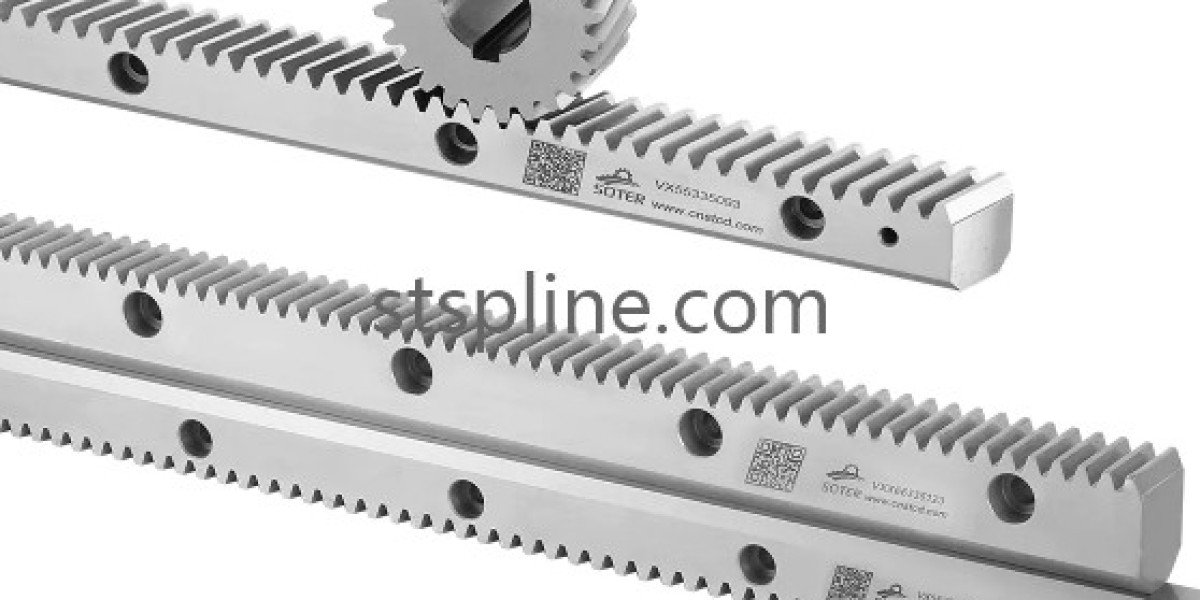
SOTER specializes in precision rack and pinion products for industrial transmission and motion applications. When designing equipment that combines linear guidance with mechanical drive systems, engineers should coordinate the roller assembly, guide rail, rack, and pinion interfaces. Explore SOTER's straight-tooth rack products at https://www.stspline.com/product/straight-teeth-rack/ to review related transmission components for industrial equipment.