
Artificial intelligence is changing how businesses develop software, manage information, serve customers, and improve daily operations. Companies are looking for practical ways to introduce intelligent technology into their workflows without making development unnecessarily complicated. An AI development platform provides the tools and environment needed to create, test, deploy, and manage AI-powered applications.
From intelligent chatbots to automated business processes, AI development platforms help organizations turn innovative ideas into practical digital solutions. They can support developers, startups, enterprise teams, and business professionals who want to improve efficiency and solve real-world problems through artificial intelligence.
Choosing the right platform is an important decision because different solutions offer different capabilities, integration options, security features, and pricing structures. Understanding how these platforms work can help businesses identify suitable technologies and build applications that deliver meaningful results.
What Is an AI Development Platform?
An AI development platform is a software environment that enables users to create and manage applications powered by artificial intelligence. It typically provides tools for working with AI models, preparing data, designing application workflows, testing performance, and deploying solutions.
Depending on the platform, users may be able to develop machine learning models, integrate generative AI, build intelligent agents, automate repetitive tasks, or create applications that understand natural language.
For example, a company can use an AI development platform to create a customer support assistant that answers common questions using approved business information. Another organization might build an application that summarizes documents, extracts information from contracts, or helps employees locate internal resources.
Instead of assembling every component independently, teams can use a shared development environment to simplify implementation and improve collaboration. Some platforms require programming expertise, while others offer visual interfaces and low-code development tools.
The main purpose of an AI development platform is to make AI application development more organized, accessible, and manageable.
Why Is an AI Development Platform Important?
Businesses operate in an environment where efficiency, customer satisfaction, and innovation are essential. Traditional software may not provide all the intelligent capabilities organizations need to analyze information, automate complex workflows, or respond naturally to customer requests.
An AI development platform helps businesses incorporate these capabilities into their existing operations.
Faster Application Development
Developing AI applications from scratch can involve data preparation, model selection, programming, testing, and infrastructure management. A suitable platform provides reusable components and development tools that simplify many of these activities.
Developers can focus on application functionality rather than spending unnecessary time managing separate systems. This can help organizations test ideas, create prototypes, and introduce useful solutions more efficiently.
Improved Business Productivity
Many organizations spend considerable time processing documents, responding to routine inquiries, organizing information, and performing repetitive administrative work.
AI-powered applications can assist with these activities. An AI development platform helps teams design workflows that automate suitable tasks while allowing employees to concentrate on responsibilities that require creativity, judgment, and personal interaction.
Better Use of Business Data
Organizations collect information through websites, customer interactions, internal systems, and operational processes. AI tools can help analyze this information, identify patterns, and produce useful summaries or predictions.
When data is accurate and properly managed, these insights can support planning, improve visibility, and help businesses make more informed decisions.
Greater Business Flexibility
Business requirements change as organizations grow and customer expectations evolve. A flexible AI development platform allows teams to update workflows, connect additional systems, improve models, and introduce new capabilities without rebuilding every application from the beginning.
This adaptability makes AI technology more practical for businesses with changing operational needs.
Essential Features of an AI Development Platform
The right features depend on the intended application, but several capabilities are especially valuable when evaluating an AI development platform.
AI Model Development and Integration
Model development tools allow teams to create, customize, evaluate, and deploy AI models. Some platforms support training machine learning models using business-specific data, while others provide access to existing models that can be integrated into applications.
Organizations should consider whether they need custom model development, pre-trained models, generative AI capabilities, or a combination of different approaches.
Data Preparation and Management
AI applications rely on relevant, reliable data. Data preparation features help teams organize information, correct inconsistencies, remove unnecessary duplication, and transform data into suitable formats.
Effective data management improves the foundation on which AI applications operate. It also helps organizations maintain appropriate access controls and handle sensitive information responsibly.
Generative AI Capabilities
Generative AI enables applications to create and interpret content, including text, summaries, code, and conversational responses.
An AI development platform may provide tools for integrating language models into customer support systems, document assistants, intelligent search applications, and internal knowledge tools.
Businesses should evaluate the quality of generated responses and implement safeguards against inaccurate or inappropriate output.
Low-Code and No-Code Tools
Low-code and no-code development features make AI technology more accessible to users who have limited programming experience.
Visual workflow builders, templates, and reusable components can help business teams create simple applications and automate routine processes. More complex applications may still require developers to handle integrations, security, customization, and advanced logic.
Integration With Existing Business Systems
An AI application becomes more useful when it can work with existing business software. Integration features may connect applications with databases, customer relationship management systems, websites, document repositories, and internal tools.
APIs and connectors help information move between systems, reducing manual work and making AI capabilities available within established workflows.
Testing, Deployment, and Monitoring
AI development continues after an application has been created. Teams need to evaluate output quality, identify errors, test security, and monitor performance in real operating conditions.
Monitoring tools can help detect changes in model behavior, unexpected results, and performance issues. Regular evaluation allows businesses to improve reliability and respond when application requirements change.
Types of AI Development Platforms
Different platforms focus on different development needs. Understanding these categories can help organizations select the right solution.
Machine Learning Development Platforms
Machine learning platforms support the creation of models that learn patterns from data. They can be used for demand forecasting, customer segmentation, fraud detection, predictive maintenance, and other analytical applications.
These platforms commonly provide tools for data preparation, model training, evaluation, and deployment.
Generative AI Development Platforms
Generative AI platforms help developers build applications that understand instructions and produce useful content. Common applications include conversational assistants, document summarization tools, intelligent search systems, and coding assistants.
Businesses can use these capabilities to improve access to information and simplify content-related workflows.
AI Agent Development Platforms
AI agent development platforms enable teams to create applications that interpret instructions, retrieve information, use approved tools, and perform defined tasks.
For example, an AI agent might search internal documentation, prepare a customer response, or organize incoming support requests. Organizations should establish suitable permissions and human oversight before allowing agents to perform actions in business systems.
Low-Code AI Development Platforms
Low-code platforms provide visual tools for creating applications with less manual programming. They are useful for business automation, internal applications, and prototypes.
These platforms can help teams develop solutions quickly, although advanced requirements may demand custom code and experienced technical support.
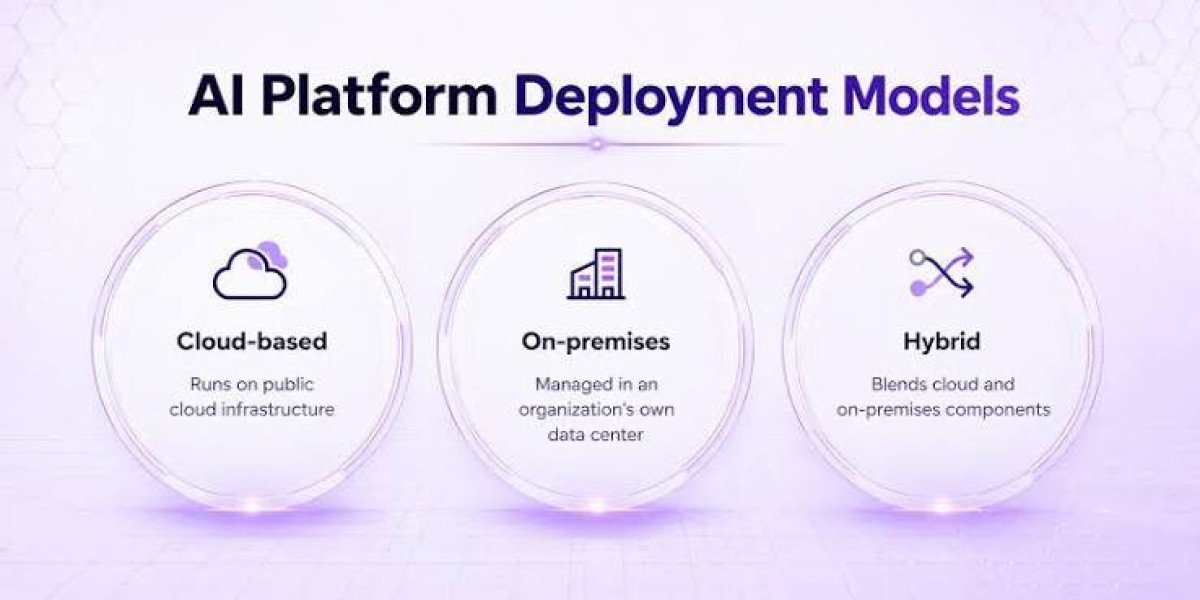
Cloud-Based AI Development Platforms
Cloud-based platforms provide access to computing resources, development environments, AI services, and deployment infrastructure through cloud providers.
They can reduce the need to maintain dedicated hardware and support applications as demand changes. However, businesses should consider data residency, recurring costs, performance, and dependence on a particular provider.
Benefits of Using an AI Development Platform
An AI development platform can create value across different departments when its capabilities are aligned with real business requirements.
Reduced development complexity: A centralized environment can simplify collaboration between data specialists, developers, and business teams.
Improved operational efficiency: Automated workflows can reduce repetitive work and help employees manage information more effectively.
Enhanced customer experiences: AI-powered assistants can answer routine questions, retrieve relevant information, and provide faster responses when supported by reliable data.
Cost management: Reusable components and managed services may reduce development and maintenance effort. Actual savings depend on implementation costs, usage, infrastructure, and ongoing support.
Scalability: Flexible infrastructure can help organizations expand applications as usage increases, provided that the platform supports their performance requirements.
Continuous improvement: Testing and monitoring features help teams identify problems, refine workflows, and improve application quality over time.
These benefits are not automatic. Successful implementation requires clear objectives, reliable information, appropriate safeguards, and ongoing evaluation.