
Making Solar Power Part of Everyday Life
What if your rooftop could help power your morning tea, washing machine, air conditioner, and evening lights? Solar energy systems make this possible by converting sunlight into electricity that can be used in everyday life.
As electricity costs and environmental concerns grow, more households and businesses are exploring solar power as a practical alternative to relying entirely on conventional electricity. Yet many people still wonder how solar panels actually work, whether they need batteries, and how much difference solar energy can make to their daily routines.
The good news is that you do not need to understand complex electrical engineering to benefit from solar power. With the right system, professional installation, and a basic understanding of your energy needs, solar can become a manageable part of everyday living.
For Indian homeowners and businesses, Solar365 offers a starting point for exploring rooftop solar solutions suited to different properties and energy requirements.
1. How Do Solar Energy Systems Work?
Solar energy systems use sunlight to generate useful power. The most common rooftop systems use photovoltaic (PV) panels. These panels contain cells that convert sunlight directly into electricity.
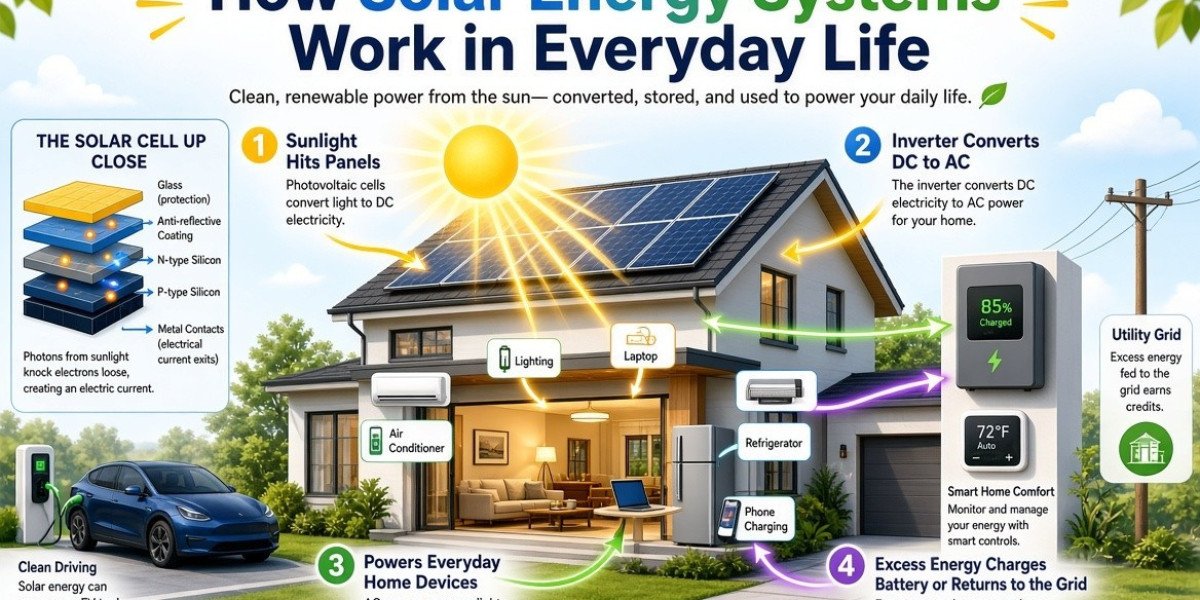
Here is how the process works:
1. Sunlight reaches the panels. Solar cells absorb energy from sunlight and generate direct-current (DC) electricity.
2. The inverter converts the electricity. An inverter changes DC electricity into alternating-current (AC) electricity, which most household appliances use.
3. Your appliances use the power. The generated electricity can supply lights, fans, refrigerators, computers, and other compatible electrical equipment.
4. Extra electricity is managed. Depending on the system and local electricity rules, surplus power may be exported to the grid or stored in a battery if one is installed.
According to the US Department of Energy, photovoltaic technology generates electricity by using sunlight to create moving electrical charges within solar cells. This process does not require burning fuel during operation.
Learn more from the US Department of Energy's guide to how solar works.
An important point to remember is that solar panels do not produce the same amount of electricity throughout the day. Output generally rises with available sunlight and falls during cloudy weather, early mornings, and evenings.
2. Understanding the Main Types of Solar Energy Systems
Not every property needs the same solar setup. Understanding the main options helps you choose a system that matches your lifestyle.
Grid-Connected Solar Systems
A grid-connected system works alongside your existing electricity connection. During sunny hours, solar power can run your appliances and reduce the electricity you need to purchase from the grid.
If your system generates more electricity than you use, surplus power may be exported under the applicable net-metering or other approved arrangements.
Best suited for: Homes, offices, shops, and commercial buildings with a reliable grid connection.
Hybrid Solar Systems
A hybrid system combines solar panels with battery storage and typically a grid connection. A battery stores electricity for use later, depending on the system's configuration and available charge.
This can be helpful when you want to use stored solar energy after sunset or keep selected essential appliances running during an outage.
Best suited for: Households and businesses that value backup power and greater control over when they use solar electricity.
Off-Grid Solar Systems
An off-grid system operates independently of the public electricity grid. It usually needs suitable battery storage and careful system sizing to supply electricity when sunlight is unavailable.
Best suited for: Remote properties, farms, or locations where a grid connection is unavailable or unsuitable.
The right option depends on your budget, electricity consumption, location, and backup requirements—not simply the number of panels you can install.
3. The Essential Components of a Solar Energy System
A rooftop solar installation consists of several components working together.
· Solar panels: Generate electricity from sunlight.
· Inverter: Converts electricity into a form suitable for appliances and, where applicable, grid interaction.
· Mounting structures: Secure the panels to the roof.
· Wiring and safety equipment: Connect the system and help protect against electrical faults.
· Metering equipment: Measures electricity flows where required by the approved installation.
· Battery storage: An optional component for systems designed to store electricity.
Professional system design matters because the panels, inverter, wiring, roof structure, and electrical protection must work together safely.
Before installation, ask your solar provider about equipment specifications, warranties, safety measures, monitoring options, and after-sales support.
4. How Solar Energy Fits Into Everyday Life
Solar power becomes easier to understand when you consider ordinary situations.
At Home: Powering Daily Activities
Imagine a family in Kaithal using electricity for ceiling fans, lighting, a refrigerator, a television, and a washing machine.
During the day, a rooftop solar system can generate electricity to supply some or all of these appliances, depending on their consumption and the system's output. Running suitable appliances during sunny hours can increase the share of solar electricity used directly.
The family may then purchase less electricity from the grid, although actual savings depend on usage, system size, tariffs, and local regulations.
At a Shop or Office: Managing Daytime Demand
Consider a shop that operates from morning until evening. Lighting, computers, cooling equipment, and other devices may consume electricity while solar panels are producing power.
This overlap between electricity demand and solar generation can make rooftop solar particularly useful for many daytime businesses.
A suitable installation can help reduce grid electricity purchases and make operating expenses more predictable. The financial outcome will depend on the installation cost and the business's actual consumption profile.
On Farms: Supporting Agricultural Activities
Solar technology can also support agricultural applications, including water pumping where the equipment and system are appropriately designed.
In India, the Ministry of New and Renewable Energy's PM-KUSUM scheme has promoted solar applications in agriculture. Farmers should verify current scheme provisions, eligibility, and implementation arrangements before investing.
These examples show that solar energy is not limited to large power plants. It can support a range of everyday activities when matched to the right needs.
5. What Benefits Can You Expect From Solar Energy?
Solar energy systems can provide several practical benefits.
Potential electricity bill savings: Generating electricity on-site can reduce grid consumption. The amount saved depends on how much solar power you use and the applicable electricity tariffs.
Lower operational emissions: Solar electricity produces no direct greenhouse gas emissions while generating power. Manufacturing, transportation, installation, and end-of-life management still have environmental impacts, but solar can reduce overall emissions when it displaces more carbon-intensive electricity.
Greater energy flexibility: Hybrid systems with suitable batteries can provide stored electricity for later use and backup for selected loads.
Long-term energy planning: Solar panels can produce electricity over many years, making installation quality, equipment warranties, maintenance, and realistic financial calculations important considerations.
Solar power is not a guarantee of zero electricity bills or uninterrupted supply. Understanding its limitations is part of making a sound investment.
6. How to Get Started With Solar Energy
If you are considering rooftop solar, follow these practical steps.
Step 1: Review your electricity bills. Check your monthly consumption and identify when your household or business uses the most electricity.
Step 2: Assess your roof. Consider available space, shading, roof condition, structural suitability, and access for maintenance.
Step 3: Compare suitable systems. Decide whether a grid-connected, hybrid, or off-grid arrangement best fits your needs.
Step 4: Check government support. India's PM Surya Ghar: Muft Bijli Yojana provides financial assistance to eligible residential consumers under applicable guidelines. Check the latest eligibility requirements and application process on the official PM Surya Ghar portal. Do not assume that every property or installation qualifies.
Step 5: Request a professional assessment. Ask for a proposal covering system capacity, expected generation, installation costs, warranties, safety provisions, and estimated savings based on your actual usage.
Step 6: Plan for long-term performance. Keep monitoring equipment accessible, follow the installer's maintenance recommendations, and arrange periodic inspections when needed.
For households and businesses in Kaithal, Haryana, a site assessment can help determine whether rooftop solar is suitable and what system size makes practical sense.
Conclusion: Turn Sunlight Into a Practical Everyday Resource
Solar energy systems can seem complicated at first, but their basic purpose is simple: to convert sunlight into useful electricity for the places where we live and work.
From powering household appliances to supporting daytime business operations, solar technology can help people manage electricity consumption while reducing dependence on conventional power sources. Its environmental benefits are strongest when systems are properly designed, maintained, and used to replace higher-emission electricity.
The first step does not have to be a major investment. Start by understanding your electricity use, assessing your roof, and comparing reliable installation options.
At Solar365, you can explore rooftop solar solutions for residential and commercial needs, including system design, installation, and ongoing support.
Ready to explore solar for your property? Learn about your options, request a professional assessment, and discover how solar energy could fit into your everyday routine.