
Type “Shin Kawasaki” into Google and you’ll get a confusing pile of results. There’s the motorcycle brand, a Japanese archaeologist with a similar name, and a professor whose surname is spelled slightly differently.
Honestly, it took me a few minutes of digging to work out who was who. So let’s save you that trouble.
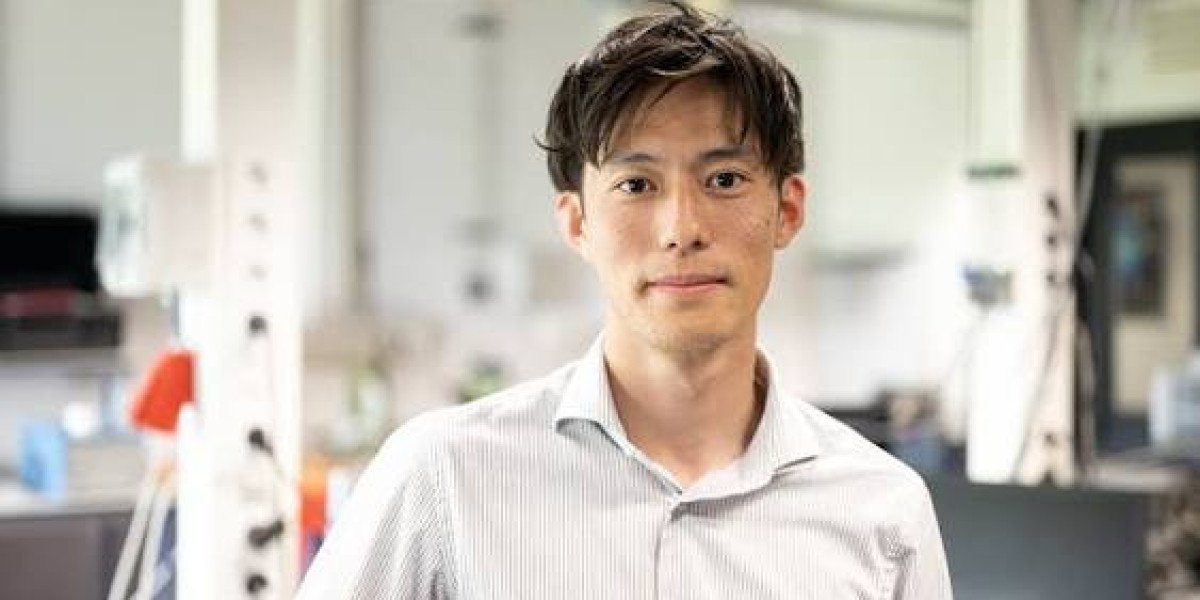
The Shin Kawasaki biography most people are really after belongs to a young Japanese engineer. He works on something that sounds like science fiction but is slowly becoming real: ultrasound you can wear on your skin like a patch.
His name isn’t splashed across magazines, and he isn’t chasing fame. But his story is a good one, and it’s worth telling properly.
Early Life and Background
Shin Kawasaki was born in Kanagawa, Japan, in March 1993. Kanagawa sits right beside Tokyo and includes the port city of Yokohama. It’s a region with a strong engineering and manufacturing tradition.
Beyond the birthplace and birth month, he hasn’t shared much about his childhood. There are no public interviews about his family or his school days, and no tidy story about the first gadget he took apart.
I could easily make one up, and plenty of websites do exactly that. I’d rather not. A made-up story is worth less than an honest gap.
What we can say is that his path points toward electronics from the very beginning. The rest of his record shows someone who knew what he wanted to study and kept going.
Education: From Tokyo to Delft
His education is the best-documented part of his life, and it tells a clear story.
He earned a Bachelor of Science in electrical engineering from the Tokyo Institute of Technology in 2016. Tokyo Tech is one of Japan’s most respected science universities, so that’s a serious foundation.
Then came the big move. In 2017 he completed a Master of Science in Microelectronics at Delft University of Technology in the Netherlands.
Think about what that involves. A new country, a new language around you every day, a different climate and a completely different way of life. Moving abroad to study is rarely easy, and it says something about his drive.
He didn’t leave after the master’s degree either. He went on to receive his PhD from TU Delft in 2024.
Seven years is a long time to stay with one university and one field. It points to patience, which research of this kind demands.
Career: Philips Research and TNO Holst Centre
While he was still working through his doctorate, he gained experience in industry. He was a guest researcher at Philips Research from 2019 to 2022.
Philips has a long history in medical technology and imaging. For someone interested in health-related electronics, that’s a very natural place to learn.
It also shows he wasn’t content with pure theory. Spending three years close to a company that builds real products suggests he cares about work that leaves the lab.
Today he works at TNO’s Holst Centre. He is in the hybrid printed electronics department, where the goal is to realize wearable ultrasound patches.
Holst Centre is a research hub in Eindhoven known for flexible and printed electronics. He has also been listed as a speaker at the Wearable Technologies conference, which tells you his work is attracting attention in its field.
The Work That Matters: Wearable Ultrasound
Most of us picture ultrasound as a hospital appointment. A technician presses a probe against your skin, moves it around, and squints at a grainy image on a screen.
It works well, but it needs a trained person and a clinical setting. That’s where the research at Holst Centre comes in.
The team is developing a hands-free ultrasound patch that sticks to the skin, for continuous monitoring at home as well as advanced imaging in hospitals.
Picture that for a moment. Instead of occasional snapshots, a doctor could follow what’s happening inside the body over hours or days, without anyone holding a probe.
The tricky part is the hardware itself. Conventional ultrasound arrays are rigid and bulky, and the larger they get, the more force you need to keep them pressed against the skin. That quickly becomes uncomfortable.
The answer the researchers are chasing is flexibility. If the arrays can bend, they can follow the contours of the body and move with it.
It’s an unglamorous kind of engineering. You won’t see it in a flashy product launch, but a breakthrough here could change how healthcare reaches people.
Personal Life: What We Actually Know
If you came looking for his relationship status, family details, hobbies or net worth, I’ll be straight with you. None of that is public.
He doesn’t seem to have a big online presence, and he hasn’t built a public persona around himself. He appears to let his research do the talking.
That’s quite common among scientists. Many are happy to discuss their papers for hours and equally happy to keep their private lives private.
You may stumble on other sites that claim to know everything about his wife, his income or his daily routine. Be careful with those.
If a page doesn’t say where its information came from, there’s a good chance it was invented to fill space. Reliable biographies admit what they don’t know.
Why His Story Is Worth Your Attention
On paper, his journey looks simple. He was born in Kanagawa, studied in Tokyo, trained in the Netherlands, worked with a major medical technology company, and now helps build the next generation of ultrasound.
But there’s more underneath. It’s a story about taking a leap by moving to another country. It’s about sticking with a hard problem for years, and about working on technology that could make healthcare more personal and less intimidating.
He may never be a household name. Honestly, that’s fine, because many of the things that quietly improve our lives were built by people most of us have never heard of.
And if wearable ultrasound does become normal in clinics and homes someday, people like him will be the reason.
Final Thoughts
So, who is Shin Kawasaki? He’s a Japanese-born electronics researcher with a PhD from TU Delft, experience at Philips Research, and a current role at TNO Holst Centre. His focus is making ultrasound flexible, wearable and usable outside the hospital.
His personal life remains private, and the respectful move is to leave it that way rather than guess.
As his work moves from the lab toward real-world use, there will probably be more to learn about him. When that happens, this profile can grow with it.