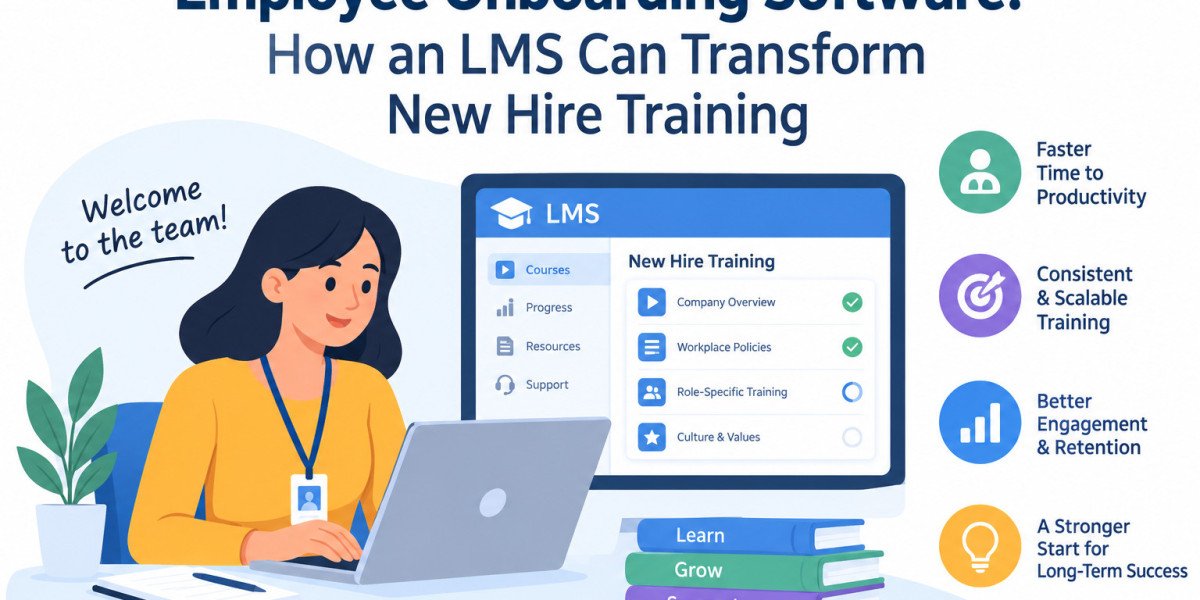

Hiring the right employees is only the first step toward building a successful organization. What happens after a candidate accepts an offer plays an equally important role in determining their performance, engagement, and long-term success. A well-structured onboarding process helps new employees understand company policies, learn their responsibilities, connect with their teams, and become productive faster.
However, traditional onboarding methods often involve repetitive paperwork, lengthy presentations, scattered training materials, and inconsistent communication. These challenges can make the first few weeks overwhelming for new hires and time-consuming for HR teams.
This is where Employee Onboarding Software makes a significant difference. By integrating a Learning Management System (LMS) into the onboarding process, organizations can deliver structured, engaging, and measurable training experiences. From automated learning paths to real-time performance tracking, an LMS helps businesses transform employee onboarding into a streamlined and results-driven process.
In this blog, we will explore how an LMS improves new hire training, the benefits of digital onboarding, and the essential features organizations should consider when choosing the right solution.
What Is Employee Onboarding Software?
Employee Onboarding Software is a digital solution designed to simplify and manage the activities involved in welcoming new employees into an organization. It helps HR teams coordinate documentation, introduce company policies, assign training materials, monitor learning progress, and ensure that new hires complete essential onboarding tasks.
Unlike traditional onboarding methods, which often depend on emails, spreadsheets, and in-person sessions, modern onboarding software brings important activities together in one centralized platform.
When combined with an LMS, onboarding software becomes even more powerful. Organizations can create structured training programs, deliver interactive learning content, assess employee knowledge, and track progress throughout the onboarding journey.
The result is a more consistent onboarding experience that supports both employee development and organizational efficiency.
How an LMS Transforms New Hire Training?
1. Creates a Structured Onboarding Experience:
One of the biggest challenges in employee onboarding is ensuring that every new hire receives the same essential information. When training depends entirely on individual managers or HR representatives, the quality and consistency of the experience can vary.
An LMS solves this problem by allowing organizations to create standardized onboarding programs.
Businesses can organize learning materials into modules covering company culture, workplace policies, job responsibilities, product knowledge, compliance requirements, and role-specific skills. New employees can follow a predefined learning path that guides them through each stage of their onboarding journey.
This structured approach ensures that employees receive relevant information in the right sequence while helping HR teams maintain consistent training standards across departments.
2. Automates Repetitive Training Tasks:
Manual onboarding involves numerous administrative responsibilities, including assigning training sessions, sending reminders, tracking course completion, and updating employee records.
These repetitive activities consume valuable time that HR professionals could otherwise spend improving employee engagement and supporting workforce development.
Employee Onboarding Software integrated with an LMS can automate many of these tasks. Once a new employee joins, the system can automatically assign relevant courses, notify the employee about pending activities, and send reminders when deadlines approach.
Automation reduces administrative workload and minimizes the risk of missing important onboarding steps. It also allows HR teams to manage larger groups of new hires without significantly increasing their operational burden.
3. Delivers Flexible and Self-Paced Learning:
Modern employees have different learning preferences, schedules, and levels of experience. A single classroom session may not provide enough flexibility for everyone to absorb new information effectively.
An Online Training Platform allows employees to access onboarding resources at a time and pace that suits their learning needs, subject to organizational requirements and course deadlines.
This flexibility is particularly useful for organizations with remote employees, distributed teams, multiple office locations, or frequent hiring cycles.
By making learning accessible and convenient, an LMS helps employees build confidence while reducing dependence on repeated instructor-led sessions.
4. Improves Employee Engagement Through Interactive Learning:
Traditional onboarding often relies on lengthy presentations, printed manuals, and information-heavy meetings. Although these methods can communicate essential information, they may not always keep new employees engaged.
An LMS can introduce interactive learning elements that make training more interesting and easier to understand.
These may include:
- Short training videos and animated explainers.
- Interactive quizzes and knowledge checks.
- Scenario-based learning activities.
- Gamification elements such as points, badges, and progress milestones.
- Downloadable resources and frequently asked questions.
- Knowledge assessments after each learning module.
These practical learning activities help employees apply their knowledge rather than simply memorize information.
A more engaging onboarding experience can also help new hires feel supported, confident, and connected to their responsibilities from the beginning.
5. Personalizes Training With Learning Experience Platform Software:
Not every employee requires the same onboarding content. A finance professional may need training on financial controls, while a marketing employee may need guidance on brand guidelines, campaign tools, and content approval processes.
This is where Learning Experience Platform Software can complement an LMS.
A Learning Experience Platform (LXP) focuses on making learning more personalized, discoverable, and relevant to individual employees. Depending on the solution, it may recommend courses, suggest additional learning resources, and help employees explore content based on their interests, skills, or development goals.
When organizations combine structured LMS-based onboarding with personalized learning experiences, they can address immediate job requirements while encouraging continuous professional growth.
This approach makes onboarding more relevant to individual roles and creates a stronger foundation for long-term employee development.
Key Benefits of Using Employee Onboarding Software
Implementing Employee Onboarding Software offers several advantages beyond reducing administrative work.
Faster Employee Productivity:
Structured learning paths help employees understand their responsibilities, tools, and workflows more quickly. Instead of searching through scattered documents, new hires can access relevant training resources from a centralized platform.
Consistent Training Across Teams:
Standardized onboarding programs ensure that employees across departments and locations receive essential information in a consistent format.
Reduced Administrative Workload:
Automated course assignments, reminders, and reporting allow HR teams to spend less time managing repetitive tasks and more time supporting employees.
Better Employee Experience:
Flexible learning options, clear expectations, and accessible resources help new employees navigate their first few weeks with greater confidence.
Improved Training Visibility:
Managers can monitor learning progress, identify knowledge gaps, and provide additional support when required.
Scalable Employee Development:
As organizations grow, digital onboarding programs can accommodate more employees without requiring a proportional increase in classroom sessions or manual coordination.
These benefits make an LMS a valuable investment for businesses looking to improve workforce readiness and create a more organized onboarding process.
Conclusion
Employee onboarding plays a critical role in helping new hires understand their responsibilities, develop essential skills, and become productive members of an organization. When managed through disconnected tools and manual processes, onboarding can become inconsistent, time-consuming, and difficult to measure.
Employee Onboarding Software integrated with an LMS offers a smarter alternative by centralizing training, automating repetitive tasks, personalizing learning experiences, and providing measurable insights into employee progress.
By using Learning Experience Platform Software to support personalized development, LMS Reporting Software to monitor outcomes, and an Online Training Platform to deliver accessible training, organizations can create a more structured and engaging onboarding journey.
The key is to select a solution that aligns with business objectives, supports employee needs, and provides useful insights for continuous improvement.
Ultimately, investing in a well-designed digital onboarding strategy helps organizations move beyond completing administrative checklists. It allows them to create a welcoming, consistent, and development-focused experience that sets new employees up for long-term success.