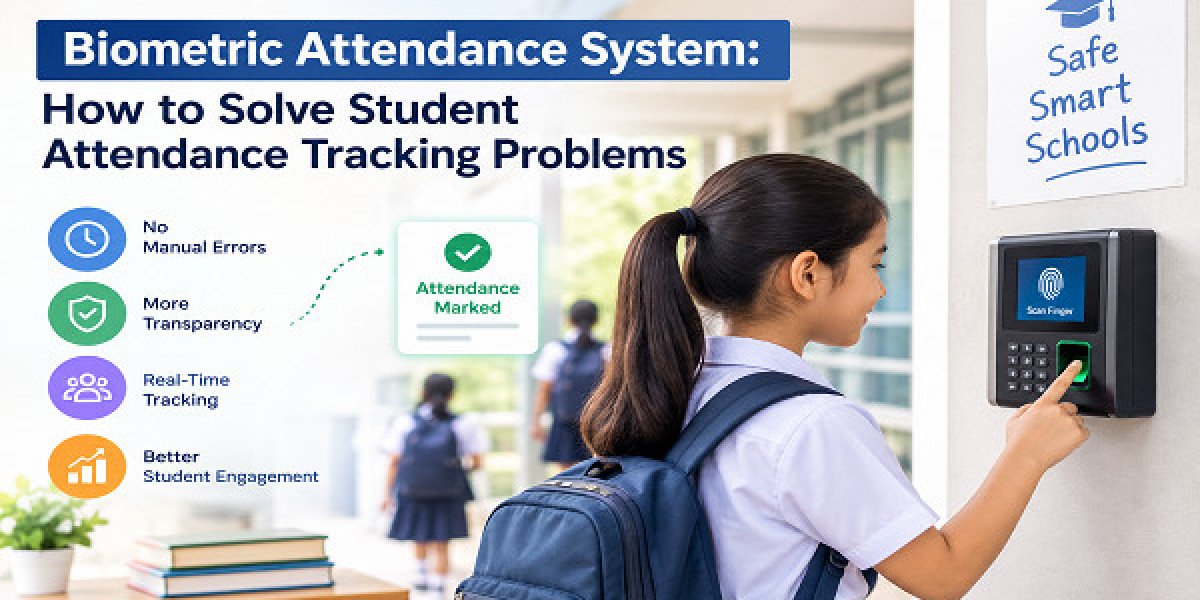

Managing student attendance is an important responsibility for every educational institution. However, traditional attendance methods often lead to inaccurate records, proxy attendance, time-consuming paperwork, and difficulties monitoring student absences. These challenges can affect classroom productivity and increase the administrative workload of teachers and school management.
A Biometric Attendance System provides a digital solution that helps schools record attendance using unique physical characteristics, such as fingerprints or facial recognition. When integrated with school management software, it can simplify attendance tracking, improve record accuracy, and support efficient school administration.
In this blog, we will explore common student attendance challenges and how biometric technology can help schools overcome them.
What Is a Biometric Attendance System?
A Biometric Attendance System is a technology-based solution that verifies an individual's identity using registered biological characteristics before recording attendance. Depending on the technology used, schools can implement fingerprint scanners or facial recognition devices to automate attendance management.
Unlike manual registers, biometric systems help reduce the need for repeated manual entries. When connected to a Student Information System, attendance records can be organized alongside student profiles, making it easier for authorized staff to access and manage essential information.
Common Student Attendance Tracking Problems in Schools
1. Inaccurate Attendance Records:
Manual attendance registers can contain errors because of missed entries, incorrect marking, or mistakes during data entry. These inaccuracies make it difficult for school administrators to maintain reliable attendance records and prepare accurate reports.
2. Proxy Attendance:
Proxy attendance occurs when one student marks attendance on behalf of an absent classmate. Traditional attendance methods may make this difficult to detect, resulting in unreliable attendance information.
3. Time-Consuming Manual Processes:
Teachers often spend valuable classroom time calling out student names and recording responses. In schools with large student populations, maintaining attendance registers and preparing summaries can create additional administrative work.
4. Difficulty Monitoring Absenteeism:
Identifying students with frequent absences or irregular attendance can be challenging when records are maintained separately. Without organized attendance information, schools may struggle to identify patterns and communicate concerns to parents promptly.
How Does a Biometric Attendance System Solve These Problems?
1. Improves Attendance Accuracy:
A Biometric Attendance System verifies students using their registered biometric characteristics before recording attendance. This reduces dependence on manual entries and helps schools maintain more consistent attendance records.
2. Reduces Proxy Attendance:
Biometric verification makes it more difficult for students to mark attendance on behalf of their classmates. Although no system eliminates every possibility of misuse, biometric identification can strengthen the reliability of attendance tracking when supported by appropriate supervision.
3. Saves Teachers' Time:
Automated attendance recording reduces repetitive administrative tasks and allows teachers to focus more on teaching and classroom activities. Digital records also simplify the process of reviewing attendance information and preparing reports.
4. Supports Better Attendance Monitoring:
When biometric attendance data is stored digitally, authorized administrators can review attendance history and identify students who frequently miss classes. This information can support timely communication with parents and help schools encourage regular attendance.
Role of School Management Software in Attendance Tracking
A biometric device records attendance, while school management software can help organize and use that information more effectively. Integrating attendance technology with digital school administration tools can improve coordination between teachers, administrators, and parents.
A Student Information System helps schools maintain organized student profiles, academic details, and attendance records. Depending on the available features, integration can reduce duplicate data entry and make attendance information easier to retrieve.
Similarly, a School Portal can provide authorized users with access to relevant academic and administrative information. When attendance features are available, teachers and administrators can review records more conveniently, while parent-facing services may help families stay informed about student attendance.
An Online Portal can also support access to school information from different locations, depending on user permissions and system capabilities. This can be particularly useful for institutions that want to improve communication and reduce reliance on paper-based processes.
Additionally, Admission CRM Software helps schools organize admission enquiries, manage prospective student information, and streamline enrolment activities. Although it serves a different purpose from biometric attendance technology, combining admission management with broader school management solutions can help institutions coordinate administrative processes more efficiently.
Key Benefits of a Biometric Attendance System for Schools
Implementing biometric attendance technology can offer several practical advantages:
- Improved accuracy: Helps minimize manual attendance errors and missing entries.
- Reduced proxy attendance: Strengthens identity verification during attendance recording.
- Better time management: Reduces the time teachers spend maintaining attendance registers.
- Centralized records: Supports organized attendance information when connected to compatible school management software.
- Simplified reporting: Makes it easier to review attendance history and identify irregular patterns.
- Improved communication: Supports timely parent follow-ups when suitable notification features are available.
These benefits can help schools improve administrative efficiency while maintaining better control over student attendance records.
What Should Schools Consider Before Implementation?
Before choosing a Biometric Attendance System, school administrators should evaluate device reliability, software compatibility, maintenance requirements, and ease of use. The selected solution should suit the school's student population and daily attendance procedures.
Data privacy is equally important because biometric information is sensitive. Schools should implement appropriate security controls, restrict access to authorized personnel, follow applicable data protection requirements, and establish clear policies for biometric data storage and deletion.
Schools should also maintain alternative attendance procedures for students who cannot complete biometric verification because of technical problems, accessibility requirements, or temporary injuries.
Conclusion
Student attendance tracking problems can increase administrative workloads, reduce record accuracy, and make it difficult to monitor absenteeism. A Biometric Attendance System helps schools automate attendance recording, discourage proxy attendance, and maintain more organized digital records.
When integrated with a compatible Student Information System, School Portal, or Online Portal, biometric attendance technology can support more efficient information management and communication. Schools should evaluate available features, integration capabilities, and privacy safeguards before selecting a suitable solution.
For educational institutions looking to modernize school administration, Vidyalaya School Software offers school management solutions that can help streamline digital processes. Schools can explore its attendance management capabilities and available integration options to identify a solution that matches their operational requirements.