
How to Get a Smooth, Glossy Finish with Epoxy Resin and Hardener: Expert Tips for Resin Art
Creating a smooth, glossy finish is one of the most important goals in resin art. Whether you are making decorative coasters, jewellery, keychains, serving trays, or artistic panels, the quality of your final result depends on choosing the right materials and following the correct working process.
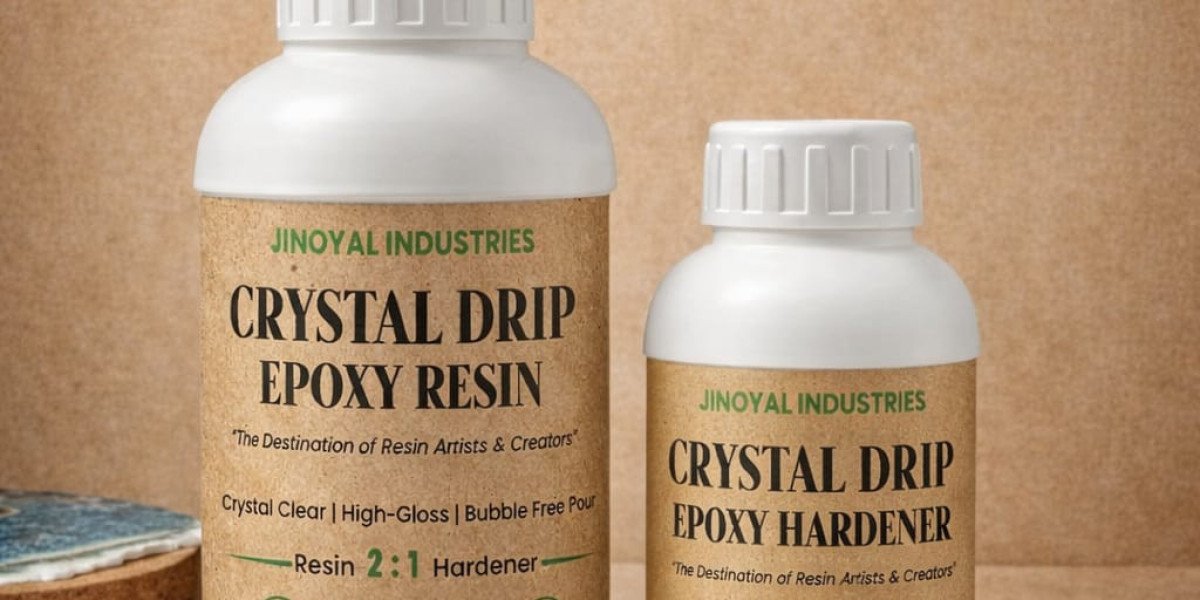
Epoxy Resin and Hardener are two essential components used to create durable, glossy, and decorative surfaces. When combined in the correct ratio, they undergo a chemical reaction that transforms the liquid mixture into a solid material.
For artists and DIY enthusiasts, Epoxy Resin, Crystal Clear Epoxy Resin, and compatible colourants such as Mica Powder, Metal Pigment, and Glitter for Resin provide numerous creative possibilities.
Jinoyal Industries Pvt. Ltd. offers a range of creative materials, including resin-art supplies and decorative pigments, helping customers explore different colours, textures, and artistic effects.
What Makes Epoxy Resin and Hardener Important for Resin Art?
Epoxy resin is a reactive polymer material that combines with a compatible hardener to form a solid structure. Each component has a specific role in the curing process.
Epoxy Resin forms the primary material, while Epoxy Resin Hardener initiates the reaction that allows the mixture to cure.
The properties of the finished product depend on the formulation, mixing accuracy, curing conditions, and intended application.
A suitable resin system can help create:
A smooth and glossy surface
Clear decorative castings
Colourful artistic designs
Durable decorative objects
Customised resin jewellery
Attractive coatings on compatible surfaces
For the best results, choose a resin formulation designed specifically for your project rather than assuming every epoxy product works in the same way.
Understanding Different Types of Epoxy Resin
Selecting the correct resin is the first step towards achieving a professional-looking finish.
1. Crystal Clear Epoxy Resin
Crystal Clear Epoxy Resin is used for projects where transparency and visual clarity are important.
Common applications include:
Transparent resin jewellery
Flower preservation
Decorative paperweights
Clear resin coasters
Embedded decorative objects
Artistic castings
When selecting a Crystal Clear Epoxy Resin Kit, check the recommended casting depth, working time, curing temperature, and any stated clarity or colour-stability limitations.
2. Epoxy Resin for Coasters and Trays
Decorative coasters and trays are popular projects for beginners and experienced artists alike.
A suitable Epoxy Resin Kit can be combined with compatible Resin Pigment, Resin Mica Powder, and glitter to create customised designs.
Silicone moulds can help produce consistent shapes, while layered colours and metallic effects can make each piece distinctive.
3. Casting Epoxy Resin
Casting resin is formulated for pouring into moulds or creating thicker sections within the manufacturer's specified limits.
It can be used for decorative blocks, jewellery, embedded objects, and selected artistic projects.
Always follow the recommended maximum pour depth to avoid excessive heat generation and other curing problems.
4. Coating Epoxy Resin
Coating epoxy is designed to create a surface layer over compatible substrates.
It may be suitable for decorative panels, artwork, and selected tabletops, depending on the formulation. A coating resin should not be substituted for a deep-pour casting system unless the manufacturer confirms that the application is appropriate.
How to Achieve a Smooth Finish with Epoxy Resin and Hardener
A glossy result begins with careful preparation and accurate mixing.
Step 1: Prepare a Clean Workspace
Choose a level, dust-free, well-ventilated workspace. Clean your tools and moulds before starting.
Dust, loose fibres, and moisture can affect the appearance of the finished surface.
Step 2: Measure the Components Correctly
Measure the resin and hardener according to the manufacturer's instructions.
Different products may require ratios measured by volume or by weight. Never assume that a ratio suitable for one Epoxy Resin and Hardener system will work for another.
Step 3: Mix Slowly and Thoroughly
Combine both components and stir according to the specified procedure. Scrape the sides and bottom of the mixing container where appropriate.
Poor mixing can cause sticky patches, uneven curing, and inconsistent surface quality.
Step 4: Add Suitable Colourants
For decorative projects, introduce compatible Mica Powder, Metal Pigment, or Resin Pigment after following the resin system's mixing instructions.
Add pigments gradually and stay within the recommended loading limits. Too much colourant can affect curing or the final appearance.
Step 5: Pour Carefully
Pour the mixture into the mould or onto the prepared surface within the product's working time.
Avoid introducing unnecessary air during pouring. Ensure the surface is level so the resin can spread evenly.
Step 6: Protect the Project While It Cures
Cover the project with a suitable dust shield without allowing it to touch the wet resin. Keep the piece undisturbed for the recommended curing period.
Avoid moving, touching, or demoulding the project prematurely.
How to Prevent Bubbles in Epoxy Resin
Air bubbles are a common challenge when working with resin, especially in transparent artwork.
These techniques can help reduce bubble formation:
Stir slowly to minimise air introduction.
Use clean, dry tools and moulds.
Pour carefully rather than from excessive height.
Follow the product's recommended working temperature.
Allow bubbles to release naturally when the formulation and working time permit.
Use only manufacturer-approved bubble-removal methods.
Excessive heating can create safety risks and may damage the resin. Do not apply an open flame unless the manufacturer explicitly permits a suitable method and provides safe operating instructions.
For transparent projects, a compatible Crystal Clear Epoxy Resin system can help achieve a clean appearance when used correctly.
Best Colourants for Creative Resin Projects
The right pigment can turn a simple resin object into an eye-catching piece of art.
Mica Powder for Resin Art
Mica Powder for Resin Art is widely used to create shimmering, pearlescent, and metallic-inspired effects.
Artists can use Mica Powder for decorative trays, coasters, pendants, keychains, and artistic panels.
Combining complementary shades can produce layered patterns and customised colour combinations.
Metallic Pigment Powder
Metallic Pigment Powder is useful for creating reflective effects in compatible resin formulations.
Gold, silver, bronze, copper, and other metallic-inspired shades can help create premium-looking decorative designs.
The appearance depends on the pigment formulation, concentration, and application method.
Glow in the Dark Powder
Glow in the Dark Powder can create luminous decorative effects after exposure to a suitable light source.
Compatible glow pigments may be used in keychains, decorative panels, and selected resin-art projects. Glow performance depends on the pigment, charging conditions, concentration, and resin formulation.
Chameleon Flakes
Chameleon Flakes create colour-shifting effects that vary with viewing angle and lighting.
They can add visual depth to decorative resin projects, including jewellery, trays, and artistic panels.
Glitter for Resin
Glitter for Resin adds visible sparkle to decorative creations. Fine glitter can create a subtle shimmering effect, while larger particles produce a more noticeable appearance.
Check the compatibility of the glitter with the selected resin and test the design before producing a larger batch.
Popular DIY Projects Using Epoxy Resin and Hardener
1. Handmade Resin Coasters
Resin coasters are a practical way to explore colour combinations, metallic effects, and layered patterns.
Use a suitable mould and compatible pigments to create coordinated coaster sets for home décor or gifts.
2. Personalised Resin Keychains
Personalised keychains can be made using alphabet moulds, decorative inclusions, and compatible colourants.
An Epoxy Resin Kit for Beginners may provide a convenient starting point, provided the included resin is suitable for the intended mould and casting thickness.
3. Decorative Resin Trays
Resin trays can feature marble-inspired patterns, metallic edges, or colourful abstract designs.
Resin Art Supplies such as mica powders and glitter allow artists to experiment with different finishes.
4. Resin Jewellery
Pendants, earrings, and other decorative jewellery can be made using compatible resin and moulds.
Use materials intended for the project, and allow the resin to reach its specified full cure before handling or wearing the finished item.
5. Artistic Resin Panels
Decorative panels can incorporate Metal Pigment, Resin Mica Powder, and other compatible pigments to create abstract designs.
Select a formulation suitable for the panel's dimensions, thickness, and substrate.
Common Epoxy Resin Problems and Their Solutions
Sticky or Soft Resin
Possible cause: Incorrect measuring, insufficient mixing, unsuitable curing conditions, or a formulation issue.
What to do: Review the manufacturer's troubleshooting instructions. Do not assume that adding more hardener to the uncured mixture will solve the problem.
Uneven Surface
Possible cause: An unlevel workspace, inconsistent pouring, or contamination.
What to do: Level the workspace, prepare the surface properly, and follow the product's recommended application procedure.
Too Many Bubbles
Possible cause: Rapid mixing, air trapped in the mould, or unsuitable working conditions.
What to do: Mix carefully, pour slowly, and use approved bubble-removal techniques.
Dull Finish
Possible cause: A naturally matte formulation, surface contamination, incorrect application, or incomplete curing.
What to do: Check whether the resin is designed to produce a glossy finish and follow the recommended application and curing procedures.
Pigment Settling
Possible cause: Particle size, pigment density, resin viscosity, or working time.
What to do: Select a compatible pigment, test small quantities, and follow the manufacturer's mixing recommendations.
Safety and Storage Tips
Proper handling is essential when working with Epoxy Resin and Hardener.
Read the technical and safety documentation before use.
Wear suitable gloves and eye protection as specified by the manufacturer.
Maintain adequate ventilation.
Avoid direct contact with uncured resin and hardener.
Keep materials away from children, pets, and food-preparation areas.
Store both components in their original, tightly closed containers.
Follow the recommended storage temperature and shelf-life guidance.
Dispose of leftover materials according to the manufacturer's instructions and local requirements.
Keep in mind that cured resin and uncured resin have different handling considerations. Follow the product documentation throughout the process.
How to Choose the Right Epoxy Resin Kit
Before purchasing an Epoxy Resin Kit, consider the following factors.
Project type: Determine whether you need resin for jewellery, coasters, trays, casting, or surface coating.
Mixing ratio: Check the correct ratio and whether measurements must be made by weight or volume.
Working time: Select a product that gives you enough time to mix, colour, and pour.
Curing requirements: Review the curing duration, temperature requirements, and maximum pour depth.
Colour compatibility: Confirm that your selected Resin Pigment, Mica Powder, glitter, or other decorative material is compatible with the resin.
Product information: Review the specifications, safety guidance, and intended applications.
If you plan to Buy Epoxy Resin Online, compare product details carefully instead of selecting a product based only on appearance or price.
Why Choose Jinoyal Industries Pvt. Ltd. for Resin Art Supplies?
Jinoyal Industries Pvt. Ltd. offers a selection of creative products for customers exploring resin art and decorative pigment applications.
Its product range includes Epoxy Resin, Epoxy Resin Hardener, Mica Powder, Metal Pigment, Glow in the Dark Powder, Chameleon Flakes, and glitter products.
Whether you are creating resin jewellery, decorative coasters, personalised gifts, or colourful artwork, choosing materials suited to your project is an important first step.
Visit https://www.jinoyal.com/ to explore available products and review their specifications.
Frequently Asked Questions
1. How do I get a glossy finish with epoxy resin?
Use a resin formulated for a glossy finish, measure and mix the components correctly, work in a clean environment, and follow the recommended curing instructions.
2. Can I mix mica powder with epoxy resin and hardener?
Yes, compatible Mica Powder can be added to many epoxy resin systems. Follow the manufacturer's pigment-loading recommendations.
3. What causes bubbles in epoxy resin?
Bubbles may form when air becomes trapped during mixing, pouring, or mould filling. Slow mixing, careful pouring, and suitable working conditions can help reduce them.
4. How long should epoxy resin cure before demoulding?
The demoulding time depends on the resin formulation, temperature, casting thickness, and curing conditions. Follow the product instructions rather than relying on a universal time.
5. Can I use metallic pigment powder in epoxy resin?
Compatible Metallic Pigment Powder can be used to create reflective effects. Confirm compatibility and test the pigment in a small batch.
6. Is epoxy resin suitable for beginners?
Yes, many products are designed for small craft projects. Beginners should choose a clearly documented kit, start with a simple project, and follow all safety instructions.
7. Where can I buy resin and hardener in India?
Visit https://www.jinoyal.com/ to explore the available Epoxy Resin and Hardener products and other resin-art materials offered by Jinoyal Industries Pvt. Ltd.
Final Thought
Achieving a smooth and glossy finish requires suitable materials, accurate mixing, careful pouring, and proper curing. Epoxy Resin and Hardener provide the foundation for a wide variety of creative projects, from resin coasters and jewellery to decorative trays and artistic panels.
Using compatible Mica Powder, Resin Mica Powder, Metallic Pigment Powder, Glow in the Dark Powder, Chameleon Flakes, and Glitter for Resin can help create distinctive designs and attractive colour effects.
Whether you are searching for Crystal Clear Epoxy Resin, an Epoxy Resin Kit, Epoxy Resin Hardener, or professional Resin Art Supplies, always consider your project's requirements and the manufacturer's technical guidance.
Jinoyal Industries Pvt. Ltd. offers a range of resin-art materials and decorative pigments for creative applications. Explore https://www.jinoyal.com/ to find suitable products for your next resin-art project.