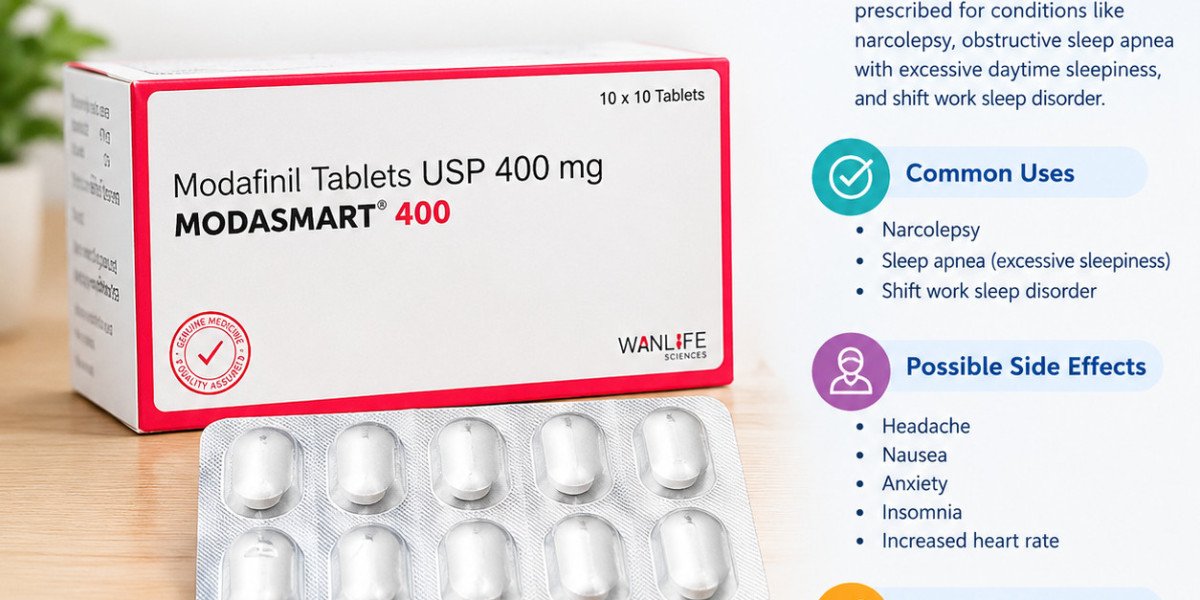

Modafinil is a wakefulness-promoting medicine used to improve alertness in people with certain sleep-related disorders. It is commonly associated with conditions such as narcolepsy, obstructive sleep apnea-related excessive daytime sleepiness, and shift work sleep disorder. A 400mg amount is higher than the usual recommended daily dose for these conditions, so information about this strength should be considered carefully and discussed with a qualified healthcare professional.
What Is Modafinil?
Modafinil is a medication that promotes wakefulness and reduces excessive daytime sleepiness. Unlike traditional stimulant medicines, its precise mechanism of action is not completely understood. It affects several chemical systems in the brain involved in wakefulness and alertness.
The medicine is primarily intended for people whose excessive sleepiness is related to an underlying diagnosed sleep disorder. It is not simply a general-purpose treatment for tiredness caused by insufficient sleep, demanding schedules, or lifestyle factors.
What Is Modafinil Used For?
Modafinil has established medical uses for improving wakefulness in adults with narcolepsy, obstructive sleep apnea, and shift work sleep disorder.
Narcolepsy can cause excessive daytime sleepiness and unexpected episodes of falling asleep. Modafinil may help people with narcolepsy remain awake during normal daytime activities.
For obstructive sleep apnea, modafinil may be used to address persistent excessive sleepiness when the underlying airway obstruction is being appropriately treated, such as with continuous positive airway pressure (CPAP). It does not remove the airway obstruction itself.
People with shift work sleep disorder may experience excessive sleepiness or difficulty staying awake during work periods that occur at unusual times. Modafinil can help promote wakefulness during the scheduled working period when used as directed.
Understanding the 400mg Strength
The 400mg strength deserves particular attention because it is above the usual recommended daily dosage for many approved uses of modafinil. Standard prescribing information commonly recommends 200mg once daily for adults with narcolepsy or obstructive sleep apnea, while some patients may be prescribed up to 400mg daily depending on the clinical situation.
A higher dose does not necessarily provide proportionally greater benefits. Increasing the amount can also increase the likelihood of adverse effects. Therefore, people should not increase their dose independently or take additional tablets simply to obtain stronger effects.
How Does Modafinil Work?
The exact mechanism responsible for modafinil's wakefulness-promoting effects is not fully established. Research indicates that it influences neurotransmitter systems involved in maintaining alertness, including dopamine pathways.
The result is increased wakefulness and reduced sleepiness rather than a direct replacement for adequate sleep. Modafinil should therefore be viewed as a treatment for specific medical conditions rather than a substitute for healthy sleep.
When Is Modafinil Usually Taken?
The timing depends on the condition being treated. For conditions such as narcolepsy and obstructive sleep apnea, modafinil is commonly taken in the morning. For shift work sleep disorder, it is generally taken before the work shift according to medical instructions.
Because modafinil can promote wakefulness for an extended period, taking it too late in the day may interfere with nighttime sleep. The exact schedule should follow the prescribing instructions provided by a healthcare professional.
Common Side Effects
Modafinil can cause side effects. Commonly reported effects include headache, nausea, nervousness, anxiety, dizziness, and difficulty sleeping. Some people may also experience dry mouth or digestive discomfort.
Side effects can vary depending on the individual, dose, other medicines, and underlying health conditions. A higher amount such as 400mg may increase the likelihood of unwanted effects in some people.
Serious Safety Concerns
Although uncommon, serious reactions can occur. Severe skin reactions, allergic reactions, psychiatric symptoms, chest pain, or significant changes in heart rate or blood pressure require prompt medical attention.
Anyone who develops a serious rash, swelling of the face or throat, difficulty breathing, hallucinations, or severe mood changes should seek urgent medical care.
Drug Interactions
Modafinil can interact with other medicines. It can affect enzymes involved in drug metabolism and may alter the effectiveness of certain medications, including some hormonal contraceptives.
People taking antidepressants, seizure medicines, anticoagulants, blood-pressure medicines, or other prescription drugs should tell their healthcare professional before starting modafinil. A complete medication review can help identify potentially important interactions.
Final Considerations
Modafinil 400mg represents a relatively high daily amount and should not be treated as a routine dose for everyone. Modafinil is mainly used to promote wakefulness in conditions such as narcolepsy, obstructive sleep apnea-related sleepiness, and shift work sleep disorder. Its benefits and risks depend on the individual's diagnosis, health status, other medicines, and prescribed dosage.
Anyone considering a 400mg dose should follow professional medical guidance rather than adjusting the amount independently. Proper diagnosis, appropriate treatment of the underlying sleep disorder, and monitoring for side effects are important parts of using modafinil safely.