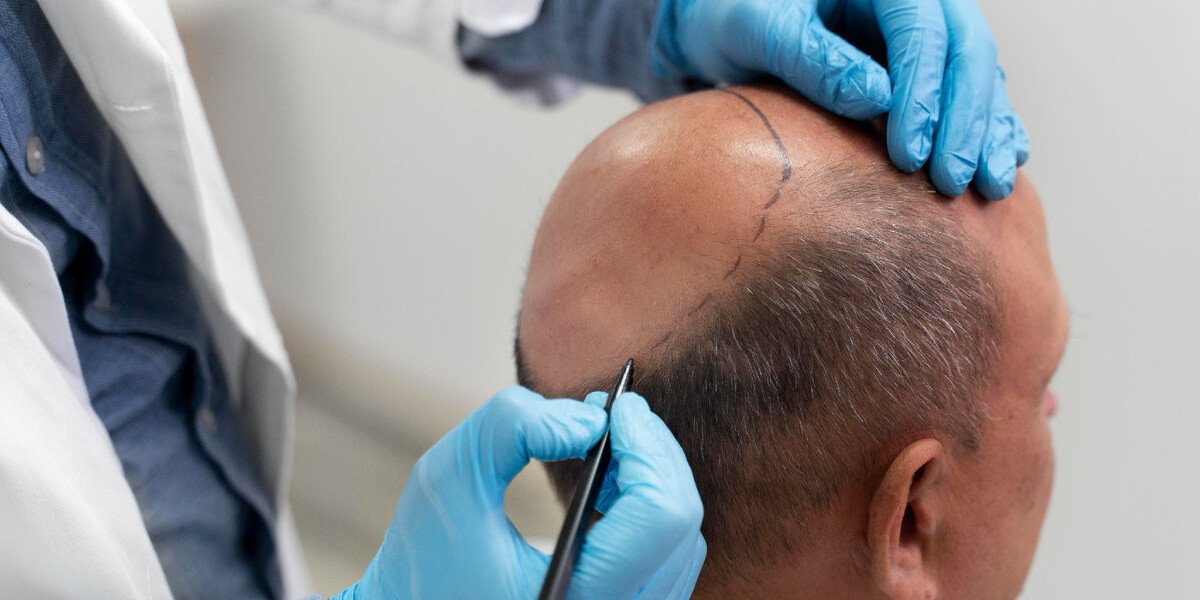

Hair thinning can gradually make the scalp more visible, particularly around the forehead, temples, and upper scalp. Even when hair loss develops slowly, reduced density can change how the hairline frames the face. FUE Hair Transplant is one option that may be considered by suitable candidates who want to improve areas affected by thinning.
For individuals exploring hair transplant in Islamabad, understanding how follicular units are selected, positioned, and integrated with existing hair can help create realistic expectations.
Why Does Hair Coverage Decrease?
Hair coverage can change for several reasons. Genetic hair loss is a common factor, while natural aging may also influence hair density and texture. Some people notice gradual recession around the temples, while others develop diffuse thinning across a larger section of the scalp.
The pattern of hair loss is important because restoration should be designed around the areas that have actually lost density.
How Does FUE Work?
FUE stands for Follicular Unit Extraction. The technique involves extracting individual follicular units from a suitable donor region and preparing them for placement into selected areas.
Because grafts are handled individually, the recipient area can be planned according to the patient's existing hair pattern. Direction, spacing, angle, and density can all be considered when determining where the grafts should be placed.
The objective is to support a natural-looking transition rather than simply filling the scalp with an even number of grafts.
Can FUE Help With a Weak Frontal Area?
The frontal region often has a strong influence on overall appearance. When density decreases, the scalp may become more noticeable and the hairline may appear less defined.
FUE may be used to add coverage to selected frontal areas when sufficient donor follicles are available. The design should take into account the existing hairline, facial proportions, and surrounding hair.
A carefully planned transition can help the transplanted follicles work visually with the patient's natural hair.
What About Temple Recession?
Temple recession can change the shape of the hairline and make the forehead appear wider. It can also create a noticeable difference between the frontal hair and the side areas.
In appropriate cases, FUE can be considered for temple restoration. However, the temple region requires careful attention to natural growth direction and angle.
The aim is to create a gradual connection between the transplanted follicles and existing hair.
Why Is Existing Hair Important?
A treatment area may not always be completely bald. Many patients have thinner existing hair that can remain present during restoration planning.
When natural hair is still present, graft placement needs to be considered carefully. Transplanted follicles may be distributed between existing hairs to improve overall density.
Future hair loss also needs to be considered because the surrounding natural hair may continue to change.
What Makes the Donor Area Important?
The donor region is the source of the follicles used for transplantation. Its density, thickness, and follicular characteristics can influence the treatment possibilities.
A detailed donor assessment can help determine how many grafts may reasonably be available and how they should be allocated.
For someone considering hair transplant in Islamabad, donor evaluation is an important part of developing a personalized treatment strategy.
Does Hair Thickness Influence Coverage?
Hair thickness can affect the way density appears. A person with thicker hair shafts may achieve a different visual effect from someone with fine hair, even if similar numbers of follicles are transplanted.
Hair texture and natural growth pattern can also influence the final appearance.
This is why treatment planning should consider more than graft numbers. The characteristics of the patient's own hair should guide the design.
Can FUE Be Used for Different Scalp Areas?
Depending on the individual's hair-loss pattern and donor availability, FUE may be considered for areas such as the frontal region, temples, mid-scalp, or selected thinning zones.
However, treating every area at once is not necessarily the best strategy. A professional may prioritize certain regions according to visibility, available donor follicles, and expected future hair loss.
This helps make the restoration plan more balanced.
What Happens During Recovery?
Following FUE, the treated scalp may experience temporary redness, swelling, sensitivity, or small crusts. These effects can vary depending on the individual.
The transplanted follicles then go through a gradual growth process. Hair does not usually reach its final appearance immediately, so patience is an important part of the recovery period.
Following aftercare recommendations can help protect the treated area while it heals.
Who May Benefit From an FUE Assessment?
People experiencing a receding hairline, temple thinning, localized sparse areas, or reduced frontal density may wish to discuss FUE with a qualified professional.
However, suitability depends on individual circumstances. Donor capacity, hair-loss progression, scalp condition, existing density, age, and expectations may all influence the decision.
A consultation can provide a clearer picture of what may realistically be achieved.
The Importance of Dr Adnan Bashir
Hair restoration requires careful planning because every patient's hair characteristics are different. Dr Adnan Bashir can assess the donor region, evaluate the pattern of hair loss, and discuss the areas that may require additional coverage.
The consultation can also help establish realistic expectations regarding density, hairline design, recovery, and gradual growth.
Enfield Royal Clinic in Islamabad
Individuals searching for Enfield Royal Clinic in Islamabad can discuss their concerns about thinning hair and explore whether FUE Hair Transplant may be appropriate for their situation.
At Enfield Royal Clinic in Islamabad, a personalized assessment can consider the patient's existing hair, donor supply, areas of concern, and desired restoration pattern.
A customized approach can be particularly useful when thinning affects more than one region.
Why Should Expectations Remain Realistic?
Hair restoration outcomes can vary from person to person. Donor quality, follicular characteristics, placement, healing, existing hair, and future hair loss can all influence the final appearance.
The goal should therefore be realistic improvement that works naturally with the patient's facial features and remaining hair.
Final Thoughts
Natural-looking hair coverage depends on much more than simply adding follicles. FUE Hair Transplant allows individual grafts to be placed strategically, making personalized planning an important part of the process.











