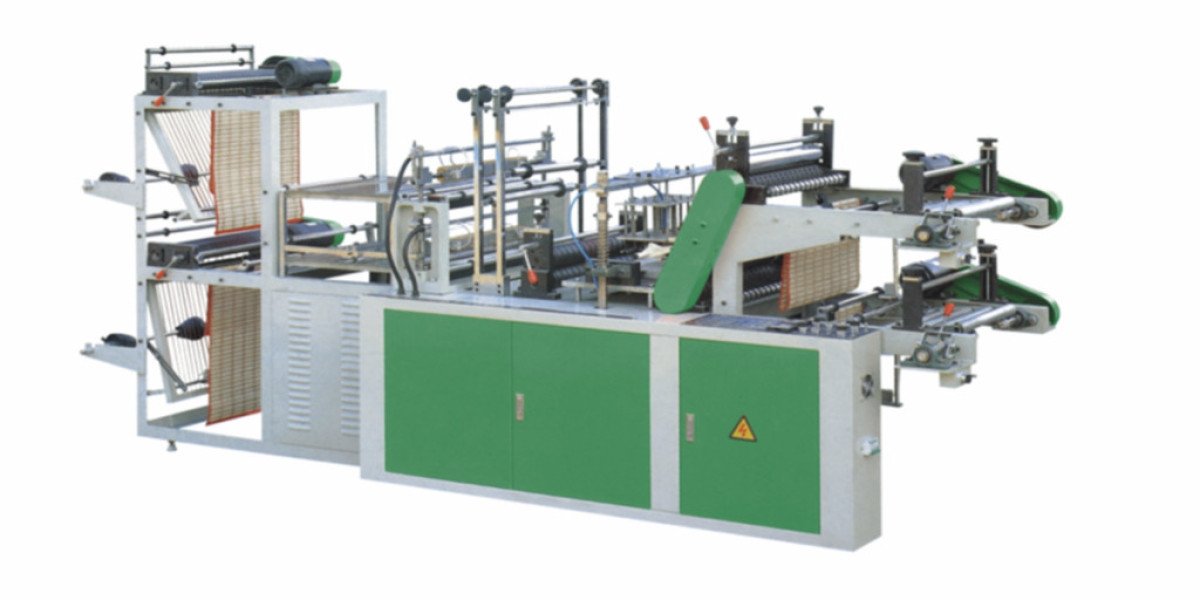

The plastic packaging industry continues to evolve as manufacturers look for faster production, better quality, lower material waste, and greater operational efficiency. As these requirements increase, modern plastic bag making machine technology is becoming more automated, precise, and adaptable.
For manufacturers, buying a bag-making machine is no longer simply about production speed. Factors such as automation, sealing accuracy, material compatibility, energy consumption, machine controls, maintenance, and the ability to produce different bag formats can have a direct impact on manufacturing performance.
In 2026, manufacturers are increasingly evaluating machines based on their overall production efficiency rather than one specification alone.
This guide explores the major trends shaping plastic bag manufacturing and explains what businesses should consider when selecting modern machinery.
What Is a Plastic Bag Making Machine?
A plastic bag making machine converts plastic film into finished bags through processes such as feeding, folding, sealing, cutting, and sometimes punching or other specialised operations.
Depending on the machine configuration, manufacturers can produce different types of bags for retail, industrial, food, medical, courier, packaging, and other applications.
Common machine functions include:
Film feeding and tension control
Bag length control
Heat sealing
Automatic cutting
Folding
Punching
Counting
Temperature control
Servo-driven movement
Automatic fault detection
The exact configuration depends on the type of bag being manufactured and the production requirements.
Why Automation Is Becoming More Important
Automation is one of the most important trends in modern bag manufacturing.
Traditional machines may require greater manual intervention for settings, adjustments, and monitoring. Modern automated equipment can reduce repetitive operator tasks and provide more consistent control over production parameters.
Consistent Production
Automated controls can help maintain consistent bag dimensions, sealing conditions, and cutting accuracy.
Reduced Operator Intervention
Automation can simplify repetitive production tasks and allow operators to focus more on monitoring, quality control, and machine management.
Better Production Planning
Digital controls and automatic counting can help manufacturers monitor output and organise production more efficiently.
High-Speed Production Is Not the Only Priority
It is tempting to choose a machine based entirely on its maximum production speed. However, actual productivity depends on several factors.
A machine operating at a high speed may not provide the expected output if frequent stoppages, material adjustments, sealing problems, or changeovers reduce effective production time.
Manufacturers should therefore evaluate:
Actual production speed
Machine uptime
Changeover time
Material compatibility
Sealing consistency
Cutting accuracy
Operator requirements
Maintenance requirements
Energy consumption
Availability of technical support
The objective should be efficient production, not simply a higher speed specification.
Improved Sealing and Cutting Accuracy
Bag quality depends heavily on accurate sealing and cutting.
Poor sealing can lead to leakage, weak bags, or rejected products. Inconsistent cutting can result in different bag lengths and an uneven finished appearance.
Modern machines increasingly use precise control systems to improve:
Seal temperature
Sealing pressure
Cutting position
Bag length
Film alignment
Production timing
This becomes particularly important for businesses producing large volumes where even a small percentage of defective bags can increase material costs.
Flexible Production for Different Bag Requirements
Packaging manufacturers often need to produce different bag sizes and formats for multiple customers.
A machine with practical adjustment and changeover capabilities can provide greater production flexibility.
Depending on the machine design, manufacturers may be able to work with different:
Film thicknesses
Bag widths
Bag lengths
Sealing configurations
Folding requirements
Punching patterns
Before purchasing equipment, manufacturers should confirm that the machine is compatible with the materials and bag specifications they actually produce.
Energy Efficiency and Operating Costs
Energy consumption is another consideration for manufacturers in 2026.
The purchase price of a machine is only one part of its total cost. Businesses should also consider ongoing operating expenses, including electricity, labour, maintenance, spare parts, and material waste.
An energy-efficient machine can contribute to lower operating costs over its working life.
However, manufacturers should evaluate energy performance together with productivity and output quality rather than considering energy consumption in isolation.
Digital Controls and Easier Machine Operation
Modern industrial machinery increasingly uses digital interfaces to make operation and parameter adjustment easier.
Depending on the machine, operators may be able to control settings such as:
Bag length
Temperature
Production speed
Counting
Sealing parameters
Production cycles
A user-friendly interface can reduce setup complexity and make it easier for operators to monitor production.
Material Compatibility Matters
Different applications require different types of plastic film.
Manufacturers may work with materials such as LDPE, HDPE, LLDPE, and other film structures depending on the finished bag.
For this reason, material compatibility should be discussed with the machine manufacturer before purchasing.
For businesses specifically producing LDPE packaging, an LDPE bag making machine should be evaluated according to the required film thickness, bag dimensions, sealing method, and production speed.
How to Choose the Right Machine in 2026
Before investing, follow a structured evaluation process.
1. Define Your Bag Specifications
Document the required:
Bag width
Bag length
Film thickness
Material
Seal type
Production quantity
Printing requirements
Punching requirements
2. Estimate Your Production Requirement
Calculate your current production volume and expected future demand.
Buying a machine that is significantly under your requirements may create production bottlenecks, while excessive capacity may increase unnecessary investment.
3. Evaluate Machine Automation
Ask what functions are automated and which tasks require manual intervention.
4. Check Changeover Requirements
If you manufacture multiple bag sizes, determine how quickly the machine can be adjusted between specifications.
5. Ask About After-Sales Support
Technical support, spare parts, installation assistance, and maintenance guidance can be important throughout the machine's operating life.
Why Choosing the Right Manufacturer Matters
The machine itself is only one part of a successful investment.
A reliable plastic bag making machine manufacturer should be able to understand your production requirements and recommend equipment based on your application rather than simply offering a standard configuration.
Before making a purchase, ask about:
Machine specifications
Production capacity
Compatible materials
Installation
Operator training
Warranty
Spare parts
Technical support
Customisation options
A detailed discussion before purchase can help prevent compatibility and production issues later.
Where Plastic Bag Making Machines Are Used
Plastic bags are manufactured for numerous applications, including:
Retail packaging
Industrial packaging
Courier and mailer bags
Garment packaging
Food packaging
Agricultural applications
Household packaging
Waste bags
General-purpose packaging
Different applications require different bag structures and machine configurations.
For example, courier packaging may require equipment designed around specific sealing and bag-forming requirements, while retail bags may require different cutting and handle configurations.
Frequently Asked Questions
What does a plastic bag making machine do?
It converts plastic film into finished bags through operations such as feeding, sealing, cutting, folding, and punching, depending on the machine configuration.
What materials can these machines process?
Material compatibility depends on the specific machine. Depending on the model, machines may process different polyethylene films, including LDPE, HDPE, and LLDPE.
Is a high-speed machine always better?
Not necessarily. Effective production depends on speed, uptime, changeover time, material handling, sealing quality, and maintenance requirements.
How do I select the right machine?
Start with your bag specifications, material, production volume, required bag type, and future capacity requirements. Then compare suitable machines based on performance, automation, support, and operating costs.
What should I ask a machine manufacturer?
Ask about production capacity, material compatibility, machine dimensions, automation, power requirements, installation, warranty, spare parts, training, and technical support.
Can one machine produce different bag sizes?
Many machines allow adjustments for different bag dimensions, but the range depends on the specific model. Confirm the available size range before purchasing.
Conclusion
The plastic bag manufacturing industry is moving toward greater automation, precision, flexibility, and production efficiency. In 2026, manufacturers should look beyond headline production speed and evaluate the complete performance of a machine.
The right equipment should match your material, bag specifications, production volume, quality requirements, and future business plans. If you are planning to upgrade your production line or invest in new machinery, contact an experienced machine manufacturer to discuss your application and production requirements. Explore suitable plastic bag-making solutions and choose equipment designed around your manufacturing needs.











