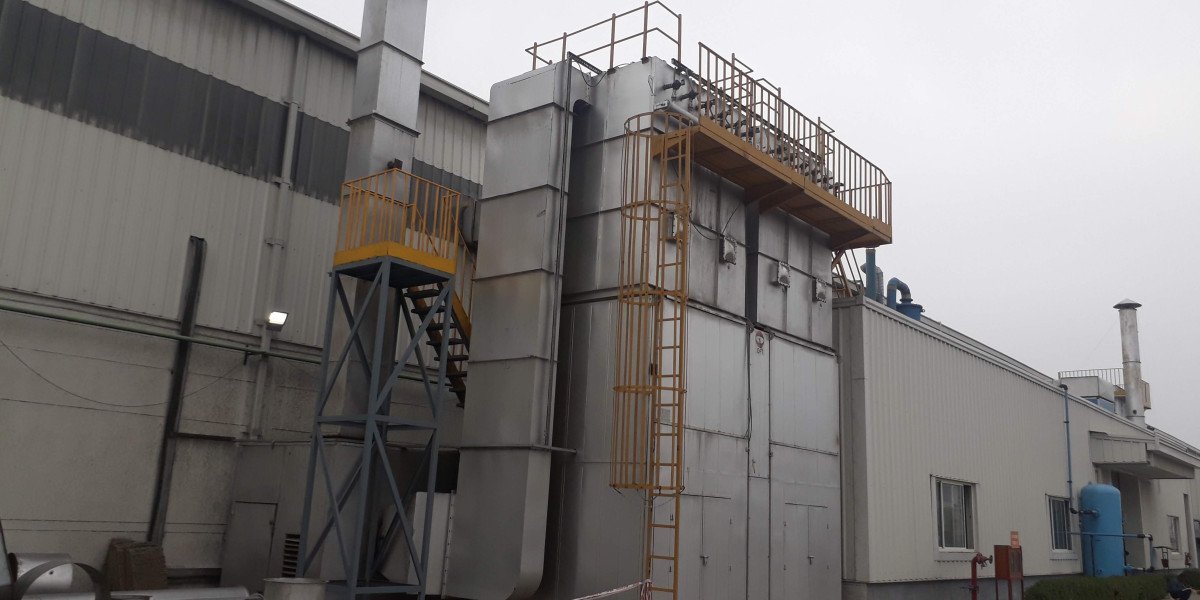

In woodworking and finishing plants, dust and overspray are not separate problems. They often occur in the same production environment, especially where cutting, sanding, routing, polishing, painting, and surface finishing are carried out under one roof.
A wood-processing facility may have large machines generating continuous dust at one end of the plant while painting or coating operations create airborne overspray somewhere else. Trying to manage both through a single generic extraction arrangement can create airflow imbalance, maintenance issues, and poor capture performance.
That is where application-specific air pollution control becomes important.
GPT-INDIA develops industrial dust collection and ventilation solutions for manufacturing environments where airflow, particulate capture, fume extraction, and finishing operations need to work together. Its range includes fixed dust collection systems, portable extraction equipment, and Water curtain Paint booth solutions for different industrial requirements.
Why Woodworking Dust Requires Proper Extraction
Wood dust is generated at several stages of production. Cutting, drilling, sanding, trimming, routing, grinding, and polishing can all release particulate matter into the surrounding workplace.
The quantity and characteristics of the dust can vary considerably depending on the type of wood, machine operation, cutting speed, tooling, and production process. Fine sanding dust behaves differently from larger chips generated by cutting or machining.
This makes source capture particularly important.
Instead of allowing dust to spread throughout the production area and attempting to clean it later, an appropriately designed extraction system captures material as close as practical to the generation point. This can help reduce airborne dust migration and keep production areas easier to maintain.
A properly designed collector also needs to work with the machines connected to it. Hood design, duct routing, airflow demand, pressure losses, filtration capacity, and dust discharge all influence the final result.
Selecting Wood Dust Collector Manufacturers for Industrial Applications
When comparing Wood Dust Collector manufacturers, buyers should look beyond the size or appearance of the collector.
The more important question is whether the manufacturer understands the dust-generation process and can develop an extraction arrangement around the actual machinery.
A woodworking plant with several cutting machines may require a different system from a facility primarily involved in sanding and finishing. The airflow requirement can also change when machines operate simultaneously rather than individually.
A manufacturer should therefore evaluate the number of extraction points, expected airflow, dust characteristics, duct configuration, available installation space, operating schedule, and dust-disposal requirements.
The collector itself is only one part of the system. The complete extraction network determines whether the dust is captured effectively at the source.
How a Wood Dust Collector Supports Better Production Areas
A good dust collection system does more than remove visible dust.
When airborne particulate matter is controlled close to the source, less material is allowed to settle on floors, machinery, electrical components, work surfaces, and finished products.
This can reduce the amount of housekeeping required and help prevent dust from migrating between different production zones.
Machine protection is another practical consideration. Dust accumulation around motors, moving components, sensors, control panels, and other equipment can contribute to maintenance problems depending on the environment.
For woodworking businesses operating multiple shifts, consistent extraction becomes particularly important because even moderate dust generation can accumulate rapidly over long production periods.
Fixed Extraction or Portable Dust Collection?
Not every woodworking operation has the same layout.
Large production plants with permanently installed machinery may benefit from a centralized extraction arrangement. Smaller workshops, maintenance areas, job-based operations, or facilities where machinery is frequently relocated may require more flexible extraction.
This is where a Portable Dust Collector can become useful.
Portable systems can be positioned closer to individual machines or moved according to changing production requirements. They can be particularly practical where installing extensive permanent ductwork is not commercially or physically convenient.
However, portability should not be confused with simply moving a machine around. The collector still needs to provide suitable airflow for the connected application, and the connection arrangement should minimize unnecessary pressure losses.
Why Portable Dust Collector Manufacturers Need to Understand the Application
Choosing Portable Dust Collector manufacturers based only on compact equipment dimensions can lead to an unsuitable system.
The actual dust-producing machine, extraction hood, hose or duct arrangement, particle characteristics, operating duration, and required airflow all influence system performance.
For example, a collector intended for intermittent use at a small workstation may have very different requirements from a portable unit connected to a high-dust woodworking machine operating continuously.
The equipment should therefore be matched to the process rather than treated as a one-size-fits-all product.
GPT-INDIA approaches portable dust collection as part of the overall extraction requirement, with attention to the relationship between the collector, source capture and operating conditions.
Working With Wood Dust Collector Suppliers
The role of Wood Dust Collector suppliers should extend beyond delivering equipment.
A useful supplier should be able to discuss the application before recommending a collector. This includes understanding which machines generate dust, how many machines operate simultaneously, where the equipment will be installed, and what type of material is being processed.
Installation conditions also matter.
A collector may perform differently when connected through a long duct network compared with a short direct connection. Bends, branches, dampers, flexible hoses, and changes in duct diameter can all affect pressure losses.
For this reason, supplier support can be particularly valuable when the collector is part of a larger industrial dust extraction system.
Portable Dust Collector Suppliers for Flexible Workshop Requirements
Portable Dust Collector suppliers are often considered by workshops that need extraction without committing to a large fixed installation.
This can be relevant for smaller production areas, temporary workstations, machine maintenance zones, or facilities where production layouts change frequently.
The main advantage is flexibility, but the system still needs to be correctly matched with the application.
Airflow should be considered alongside the resistance created by the connected hose, ducting, filtration media, and extraction hood. A compact collector that cannot maintain the required airflow at the machine will not deliver the expected capture performance.
The right selection therefore balances mobility with actual extraction requirements.
What Makes a Water Curtain Paint Booth Different?
Woodworking facilities frequently move from machining to surface finishing. Once painting begins, the contamination problem changes.
Paint application can generate overspray, which needs to be controlled before it spreads into the surrounding work area or deposits on nearby surfaces.
A Water curtain Paint booth uses a water curtain as part of the overspray capture arrangement. Paint-laden air is directed toward the water curtain, where the liquid assists in capturing paint particles before the air is discharged through the appropriate extraction system.
The design needs to maintain suitable airflow across the working area while controlling overspray effectively.
The booth therefore combines enclosure design, airflow management, water circulation, overspray collection, and exhaust extraction.
Why Airflow Matters Inside a Paint Booth
A paint booth should not be evaluated only by its physical dimensions.
Air movement inside the booth directly affects overspray capture and finishing conditions. Poorly distributed airflow can allow paint particles to move away from the intended capture zone, while excessive or poorly controlled airflow can affect application behaviour and increase energy requirements.
The extraction fan, booth geometry, intake arrangement, water curtain and exhaust path need to function as a coordinated system.
This becomes even more important where the booth operates alongside woodworking machinery because dust from adjacent operations should not be allowed to interfere with finishing quality.
Separating machining and finishing environments through appropriate ventilation and extraction design can therefore improve process control.
Combining Wood Dust Extraction With Finishing Operations
A modern woodworking facility may contain several distinct air-control requirements.
Woodworking machines generate chips and dust. Sanding can create finer particulate matter. Painting generates overspray and potentially other airborne contaminants associated with coatings. Each process requires an extraction approach suited to its characteristics.
Trying to solve every problem with a single filtration technology is rarely the most practical approach.
A dedicated wood dust collector can handle particulate extraction from woodworking machinery, while a properly engineered paint booth can manage overspray at the finishing stage. Additional ventilation or filtration technologies may be considered depending on the coating materials and process conditions.
The result is a more organized approach to air management throughout the production facility.
Maintenance Considerations for Wood Dust Collection
Even a correctly designed collector needs routine attention.
Dust accumulation, filter loading, duct blockage, damaged flexible connections, fan performance, and dust-discharge problems can gradually affect extraction efficiency.
Pressure-drop monitoring can help indicate changes in filtration resistance. A sudden change in system behaviour may justify inspection of the filter media, ductwork, fan, or dust discharge arrangement.
For portable equipment, connections and hoses should also be checked regularly because movement can place additional mechanical stress on flexible components.
Maintenance should focus not only on the collector but on the complete extraction path from the machine to the final air discharge.
Planning a Dust Collection System for Future Production
Production requirements often change after equipment is installed.
A woodworking business may add another CNC machine, increase sanding capacity, introduce a new finishing line, or change its production schedule. If the original extraction system has no allowance for future requirements, expansion can become difficult.
This is why capacity planning should be considered during the initial engineering stage.
The design can evaluate current extraction demand alongside potential future additions. This does not mean automatically installing an oversized collector. Instead, the system should be designed with a realistic understanding of production growth, operating patterns, and available installation space.
A scalable approach can make future modifications more manageable.
Why GPT-INDIA for Industrial Dust and Finishing Solutions?
GPT-INDIA develops industrial air pollution control and ventilation solutions for different manufacturing environments. Its equipment portfolio covers dust collection, fume extraction, air movement, wet scrubbing, filtration, and industrial finishing applications.
For woodworking operations, the focus can be placed on matching extraction capacity with the actual machines and dust-generation points. Portable systems can be considered where mobility is important, while fixed systems can support larger production arrangements.
For paint application, Water curtain Paint booth solutions can be incorporated into finishing areas where overspray management and controlled airflow are required.
The engineering approach should always begin with the process rather than selecting equipment from a generic catalogue.
GPT-INDIA NAP Details
Green Planet Technologies, popularly known as GPT-INDIA, works in industrial air pollution control, dust extraction, ventilation, and exhaust technology.
Office Address: 59/2/1, Site 4, Industrial Area, Sahibabad, Distt. Ghaziabad–201010, Uttar Pradesh, India
Phone: +91-9773500660
Email: info@gpt-india.com
Website: gptindia.in
Frequently Asked Questions
What is a Wood Dust Collector used for?
A Wood Dust Collector is used to capture and collect dust, chips, and other particulate matter generated during woodworking processes such as cutting, sanding, routing, drilling, and machining.
How should I choose Wood Dust Collector manufacturers?
Consider the manufacturer's understanding of your machinery, airflow requirements, dust characteristics, duct layout, filtration method, dust discharge system, installation conditions, and after-sales technical support.
When is a Portable Dust Collector useful?
A Portable Dust Collector can be useful where extraction equipment needs to be moved between workstations or where a permanent centralized duct system is not practical.
What should I ask Portable Dust Collector manufacturers?
Ask about airflow at operating resistance, filtration capacity, dust-container arrangement, mobility, filter cleaning, connected machine requirements, and maintenance requirements rather than focusing only on the physical size of the equipment.
Why are Wood Dust Collector suppliers important for system selection?
Wood Dust Collector suppliers can help match the collector with the machines, airflow demand, ductwork, operating conditions, and installation environment. This can reduce the risk of selecting equipment that is unsuitable for the actual application.
What is the purpose of a Water curtain Paint booth?
A Water curtain Paint booth is designed to help capture paint overspray using a water curtain while controlled airflow moves contaminated air toward the extraction system.
Can dust collection and paint-booth extraction be used in the same factory?
Yes, but the two processes should be evaluated according to their different contamination and airflow requirements. Wood dust extraction and paint overspray control generally require application-specific arrangements rather than treating both as the same filtration problem.
Conclusion
Industrial air quality management becomes more effective when extraction equipment is selected around the process instead of the product name alone.
Woodworking machinery requires dependable particulate capture, while flexible workshops may need portable extraction. Finishing operations introduce a different challenge, where controlled airflow and overspray collection become central to the booth design.
By considering machine-level dust generation, airflow, filtration, duct resistance, maintenance, and future production requirements together, manufacturers can develop a more dependable air-control strategy.
GPT-INDIA combines dust collection, portable extraction, ventilation, and industrial finishing solutions to support different production environments. The key is not simply installing equipment, but ensuring that each system is correctly matched to the process it is expected to control.