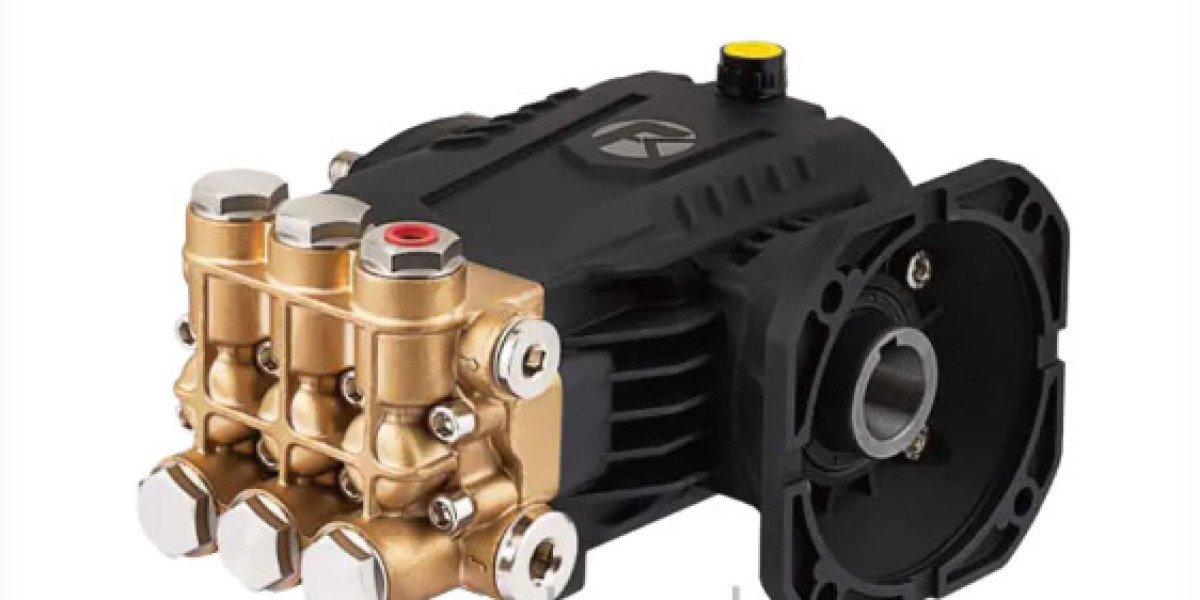

Industrial operations depend on equipment that can move liquids reliably through different stages of production and maintenance. Cleaning, water treatment, manufacturing, and other processes may require controlled movement under specific pressure and flow conditions. A Piston Pump uses reciprocating movement to transfer liquid through a defined operating cycle, but its suitability depends on the complete application, including liquid properties, pressure requirements, operating frequency, installation conditions, and connected equipment.
The basic operating principle involves a piston moving inside a chamber. As the piston travels through its cycle, valves control the entry and discharge of liquid. The repeated movement creates a controlled transfer process. The actual operating characteristics depend on the piston dimensions, movement speed, valve arrangement, liquid properties, and resistance within the connected system. These factors should be evaluated together when determining whether the equipment is appropriate.
Pressure and flow requirements are important starting points for equipment selection. Different industrial processes may require different combinations of pressure and liquid volume. Some operations need controlled delivery under elevated pressure, while others may place greater emphasis on liquid movement over a specific period. Reviewing both pressure and flow can help prevent equipment from being selected according to only one operating characteristic.
Liquid compatibility should also be considered. The working medium may be clean water, treated water, cleaning liquid, or another industrial fluid. Temperature, chemical composition, suspended particles, and exposure duration can affect internal components. Materials should therefore be selected according to the actual working environment. Seals, valves, connections, and other components that contact the liquid should also be included in the evaluation.
Sealing performance can influence operating reliability because the piston moves repeatedly during normal operation. Seals need to control liquid movement while accommodating mechanical motion. Their condition can be affected by pressure, temperature, lubrication, alignment, liquid cleanliness, and operating frequency. Regular inspection can help identify leakage or deterioration before it causes additional problems within the system.
Industrial cleaning is one application where controlled liquid delivery can be useful. Machinery, production equipment, surfaces, and industrial components may need to be cleaned regularly to remove dirt, residues, or other unwanted materials. The cleaning result depends on pressure, liquid volume, application distance, nozzle configuration, temperature, and the type of material being removed. The equipment should therefore be integrated with the complete cleaning arrangement.
Water-related processes may also require controlled liquid movement. Depending on the facility, equipment can support flushing, circulation, filtration-related operations, or other process stages. The installation may include valves, filters, monitoring instruments, and control components that work together with the equipment. Coordinating these elements can help maintain suitable operating conditions and reduce problems caused by an unsuitable system arrangement.
Installation quality can influence long-term operating stability. Secure mounting can help reduce unwanted movement, while correct alignment can limit mechanical stress. Inlet piping should provide appropriate liquid supply conditions without unnecessary restrictions. Discharge piping should be designed according to expected operating conditions, and all connections should be adequately supported. Maintenance access should also be considered during installation.
Routine maintenance provides a structured way to monitor equipment condition. Operators may inspect valves, seals, lubrication points, connections, pressure indicators, and mechanical components according to the working environment. Changes in vibration, noise, temperature, leakage, or pressure behavior may indicate that additional inspection is required. Maintenance intervals should be established according to actual use and applicable equipment recommendations.
Energy consumption is another practical consideration. Equipment that is too large or poorly matched to the actual application may consume unnecessary energy or operate under unsuitable conditions. Appropriate sizing, efficient piping, suitable operating conditions, and regular maintenance can help support balanced operation. Maintaining related components in good condition can also reduce avoidable losses within the complete system.
For industrial buyers, equipment selection should begin with a clear understanding of the intended process. Pressure, flow, liquid characteristics, operating frequency, temperature, environmental conditions, installation requirements, and maintenance capabilities should all be reviewed before procurement. A Piston Pump should be evaluated according to how well its operating characteristics correspond with the complete application. Businesses researching industrial pumping equipment can explore https://www.triplex-plungerpump.com/product/pumps/ for additional product information and available solutions.










