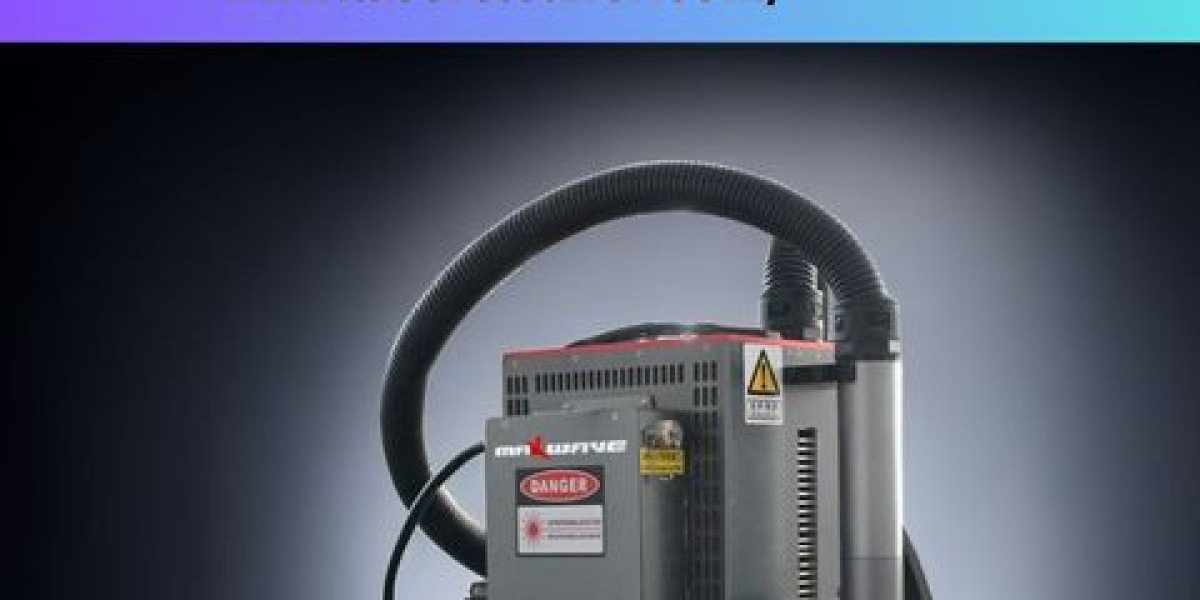

When businesses begin exploring modern surface treatment equipment, one of the first questions is often about the laser cleaning machine price. Laser cleaning technology has become increasingly popular for removing rust, paint, oxide layers, oil, grease, and other contaminants from metal surfaces. However, there is no single price that applies to every machine. The final cost depends on the laser technology, power, configuration, cooling system, components, and intended application.
Understanding Laser Cleaning Technology
A laser cleaning machine uses concentrated laser energy to remove unwanted material from a surface. Depending on the application and settings, the laser can remove rust, paint, coatings, oxidation, dirt, and other contaminants while allowing the operator to control the cleaning process.
Unlike conventional surface preparation methods, laser cleaning does not require abrasive blasting media for the cleaning process. This makes it suitable for applications where controlled and precise surface treatment is important.
Modern machines are available in handheld, portable, stationary, and automated configurations. Their prices can therefore range from relatively affordable entry-level systems to sophisticated industrial installations.
Why Laser Cleaning Machine Price Varies
The laser cleaning machine price is influenced by several technical and commercial factors. Two machines with different specifications can have significantly different prices even if both are advertised as laser cleaners.
Laser power is one of the most important factors. Lower-power systems are commonly used for lighter cleaning work, while higher-power machines are designed for faster removal across larger or more demanding surfaces.
Laser technology also matters. Continuous-wave and pulsed laser systems are designed for different types of work, so their pricing should not be compared simply by looking at wattage. Published 2026 market guides show broad price ranges across both technologies.
Laser Power and Its Relationship to Price
Laser power directly affects the working capacity of a machine. Entry-level systems may be suitable for small parts, light rust, and controlled cleaning applications. Medium-power machines can handle more demanding workshop and industrial tasks, while high-power systems are designed for large surfaces and higher production requirements.
For example, public market references in 2026 place some 50W–100W systems in lower price ranges, while 200W–500W pulsed machines and 1,000W or higher industrial systems can cost considerably more. Automated systems may reach much higher prices depending on their configuration.
This is why buyers should determine the required cleaning speed and material condition before selecting wattage.
Pulsed and Continuous-Wave Laser Systems
Another important factor behind the laser cleaning machine price is whether the machine uses a pulsed or continuous-wave laser source.
Pulsed laser cleaners deliver energy in controlled pulses and are often considered for applications requiring precise cleaning and careful heat management. They can be used for molds, tooling, detailed components, and surfaces where process control is particularly important.
Continuous-wave systems deliver a continuous laser beam and are commonly used for applications such as rust removal, paint removal, surface preparation, and other larger-area industrial cleaning tasks.
Because these technologies are engineered differently, a lower-wattage pulsed machine can sometimes cost more than a higher-wattage continuous-wave machine. Current pricing references demonstrate this difference clearly.
Laser Source Quality
The laser source is another major component affecting the overall machine cost. Different manufacturers and source models can have different specifications relating to stability, operating life, performance, and service support.
When comparing quotations, buyers should ask the supplier which laser source is installed rather than comparing machines only by advertised wattage.
A machine with a clearly identified and reputable laser source may have a different price from a machine using an unspecified component. The source should therefore be included in any serious price comparison.
Cooling System and Machine Configuration
Cooling requirements also influence equipment pricing. Depending on the laser power and machine design, a system may use air cooling or water cooling.
Lower-power equipment can often use simpler cooling arrangements, while higher-power systems may require more substantial thermal management. Cooling equipment adds to the initial purchase cost and can also influence installation requirements.
Machine configuration is another consideration. A compact handheld system may be designed for flexible workshop or on-site work, while a stationary system can be configured for dedicated production environments.
Cleaning Head, Optics, and Control System
The cleaning head and optical components play an important role in how the laser energy is delivered to the working surface.
The scanning system determines how the laser beam moves across the material. Different scan widths and patterns can be selected depending on the application. Control systems also vary from straightforward manual settings to more advanced programmable interfaces.
Consequently, two machines with similar laser power may have different prices because their optical components, scanning heads, controls, and overall configurations are different.
Portable Laser Cleaning Machine Price
Portable laser cleaning machines are attractive to maintenance teams, workshops, repair businesses, and contractors that need to move equipment between different work areas.
The exact laser cleaning machine price for a portable model depends on power, laser type, cooling method, cleaning head, fiber length, and accessories.
Some published 2026 market references list handheld machines from a few thousand US dollars, while more specialized or higher-powered systems can cost considerably more. These figures are indicative rather than universal quotations because supplier configuration and shipping terms can change the final purchase price.
Industrial Applications and Pricing
Industrial users often require more than basic surface cleaning. Automotive parts, molds, fabrication components, machinery, construction equipment, shipbuilding components, and metal structures may require different cleaning speeds and operating conditions.
For larger production environments, automation can also become part of the system. Robotic integration, safety enclosures, extraction equipment, customized workstations, and production-line integration can substantially increase the overall investment. Published industrial pricing guides place customized automated systems far above basic handheld equipment.
For this reason, an industrial buyer should request a quotation based on the complete application instead of asking only for the price of a particular wattage.
Consider the Complete Purchase Cost
The quoted machine price may not always represent the complete amount a buyer will spend. Depending on the supplier and destination, additional expenses may include shipping, installation, training, safety equipment, spare parts, taxes, and local compliance requirements.
Warranty and technical support should also be discussed before purchasing. A machine used for commercial production requires dependable support if troubleshooting or replacement parts are needed.
Buyers should therefore request a detailed quotation that clearly states what is included.
How to Compare Laser Cleaning Machine Prices
Comparing several quotations can be useful, but the comparison should be based on equivalent specifications.
Check the laser power, laser type, source manufacturer, cooling method, cleaning head, scanning width, control system, warranty, included accessories, and service arrangements.
For example, comparing a 200W pulsed machine with a 1,500W continuous-wave machine purely because both are called laser cleaning machines does not provide a meaningful price comparison. Their technologies and intended applications can be very different.
A detailed specification sheet makes the purchasing process much clearer.
Selecting the Right Machine for Your Business
The right equipment should begin with the cleaning application rather than the advertised price. Consider the material being cleaned, type and thickness of contamination, required cleaning speed, surface sensitivity, working area, daily operating hours, and whether the machine will be used at a fixed location or transported between sites.
A small workshop may need a compact handheld system, while a large manufacturer may require higher power or automated integration.
Matching the machine to the actual workload can help prevent spending money on equipment that is either underpowered for the job or unnecessarily sophisticated for simple cleaning tasks.
Getting a Laser Cleaning Machine Quote
Once the application has been defined, contacting manufacturers or suppliers for a configuration-specific quotation is the next step. Provide information about the materials, contaminants, approximate cleaning area, desired cleaning speed, and working environment.
Suppliers can then recommend an appropriate configuration and provide a more accurate laser cleaning machine price.
It is also useful to request a cleaning sample or demonstration when possible. Testing the actual material and contamination can provide more useful information than relying only on photographs or general specifications.
Final Thoughts
The laser cleaning machine price depends on much more than the number printed on a quotation. Laser power, pulsed or continuous-wave technology, laser source, cooling system, optical components, machine configuration, automation, accessories, and after-sales support can all influence the final investment.