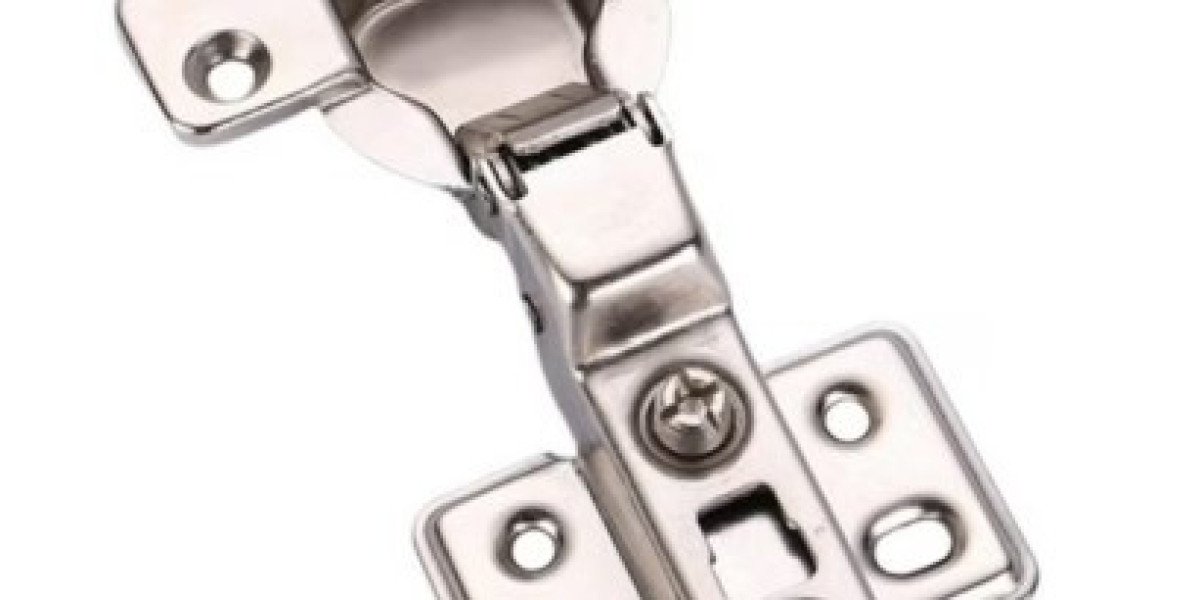

Clean architectural design often depends on hardware that performs important mechanical functions while remaining visually discreet. In this field, Invisible 3D Adjustable Hinges combine concealed installation with multidirectional positioning capability. Their engineering involves material selection, precision machining, adjustment mechanisms, structural load management, installation accuracy, and surface protection. A successful design must therefore balance visual integration with the mechanical requirements of repeated door movement.
Material selection establishes the foundation of the hardware structure. Load-bearing components must withstand repeated forces while maintaining their dimensions over time. Steel can provide suitable strength for structural sections, while stainless steel may be considered for environments where moisture exposure requires additional resistance. Engineering alloys can also be used for selected components when manufacturers need particular characteristics related to wear, machining, or dimensional stability.
Raw material consistency is essential for precision manufacturing. Differences in hardness or composition can affect cutting, forming, heat treatment, and finishing processes. Manufacturers can manage these variables through incoming inspection, supplier qualification, material documentation, and batch traceability. Consistent material properties help ensure that adjustment components and structural parts remain compatible during assembly.
Multidirectional adjustment requires carefully designed mechanical interfaces. Door positioning may need correction vertically, horizontally, or in depth after installation because construction tolerances can vary between frames and door panels. A suitable adjustment structure allows installers to make controlled corrections while keeping the main hardware concealed within the door assembly. The adjustment range should be supported by stable mechanical interfaces that maintain their position after installation.
Precision machining is critical to this function. CNC milling, turning, drilling, grinding, and other processes can produce the mounting plates, adjustment threads, connection points, and moving surfaces required by the design. Critical tolerances should be monitored during production because dimensional errors can influence adjustment smoothness and final alignment. Digital measurement systems can provide repeatable inspection results for important components.
Structural stability must remain a priority after adjustment. The hinge transfers loads between the door and frame, so adjustment components cannot be considered separately from the main load path. Engineers should evaluate mounting surfaces, connecting sections, pins, fasteners, and surrounding materials as one system. Stress distribution and repeated movement can be considered during product development to reduce unnecessary loading on individual components.
Installation procedures also influence the final result. Concealed hardware typically requires accurate preparation because much of the mechanism is positioned within the door and frame. Installers should verify mounting dimensions, structural conditions, clearances, and alignment before securing the components. Adjustment should be performed progressively so that the door reaches the intended position without introducing unnecessary stress into the mechanism.
Surface engineering supports durability and visual consistency. Even concealed hardware may include areas exposed to humidity, dust, cleaning agents, or contact with surrounding materials. Suitable pretreatment, plating, coating, polishing, or related processes can help protect metal surfaces. Finishing should be controlled carefully so that coating thickness and surface condition do not interfere with moving interfaces or adjustment components.
Manufacturing automation can improve consistency across production batches. CNC machining centers, automated inspection equipment, assembly assistance, and traceability systems can reduce repetitive variation. Digital quality records can also help manufacturers identify patterns in dimensional deviations and improve production processes. Automation should be supported by tooling maintenance and qualified operators to ensure that process stability is maintained.
Architectural applications can create different priorities for the same type of hardware. Residential interiors may focus on clean lines and installation flexibility, while commercial buildings may require consistent alignment across numerous openings. Hospitality projects can emphasize uniform visual integration, and institutional environments may prioritize durability, serviceability, and long-term maintenance. Manufacturers should therefore consider the intended environment during product development.
Serviceability is another consideration for concealed adjustable hardware. Since the mechanism is integrated into the door structure, future access should be considered during design. Adjustment points should be practical for technicians, while securing elements should maintain stable positioning after correction. Clear technical documentation can also reduce installation errors and make future service procedures more efficient.
Quality assurance should cover raw materials, machining, adjustment mechanisms, assembly, surface treatment, and functional movement. Dimensional inspection can confirm important interfaces, while assembly checks can identify issues that may not be visible in individual components. Functional testing can further verify that the completed structure operates consistently under representative conditions.
International buyers evaluating suppliers should examine manufacturing equipment, engineering capability, material control, machining accuracy, adjustment technology, finishing processes, inspection procedures, and production traceability. Invisible 3D Adjustable Hinges can support architectural integration when concealed construction, multidirectional adjustment, and structural stability are developed as a unified system. Lanxi Maya Hardware Co., Ltd. provides further product information through https://www.hinges-factory.com/product/catalogue-download/ for buyers researching adjustable architectural door hardware.