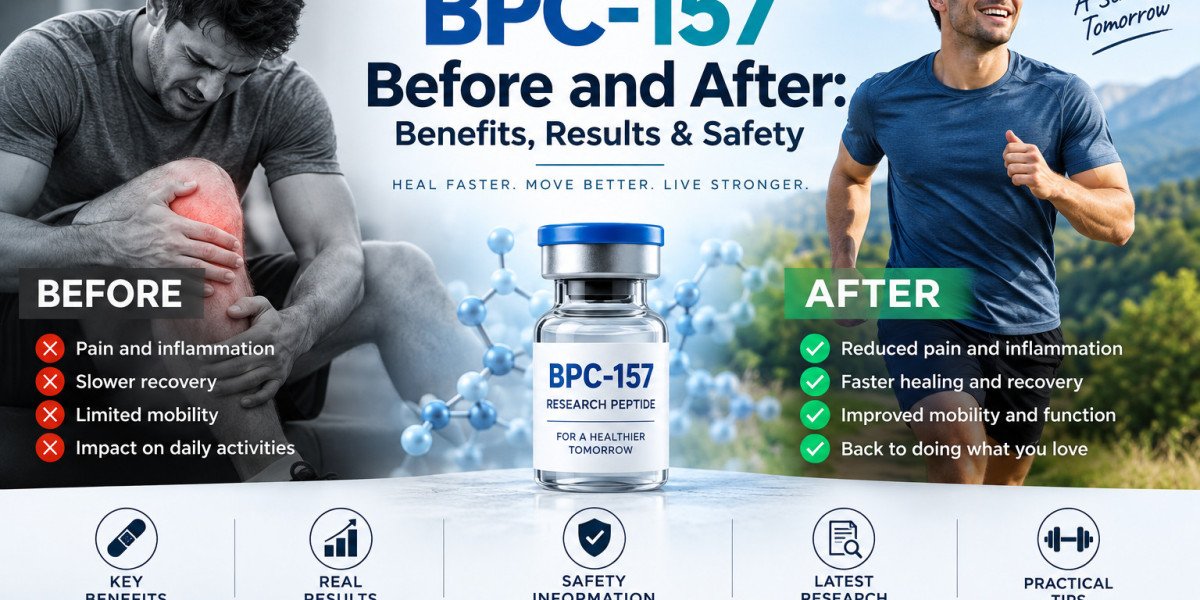

BPC-157 is one of the most talked-about peptides in the recovery and longevity space, with online communities sharing "before and after" photos and anecdotes tied to tendon injuries, gut issues, and general healing. But between the enthusiastic testimonials and the actual research literature, there's a real gap worth understanding. This guide breaks down what BPC-157 is, what the science actually shows, what people report anecdotally, and the safety and legal picture you should know before forming any expectations.
What Is BPC-157?
BPC-157 (Body Protection Compound-157) is a synthetic peptide made up of 15 amino acids, derived from a protective protein naturally found in human gastric juice. It was first researched in the 1990s by scientists investigating why the stomach lining is able to heal so efficiently despite constant exposure to acid and digestive enzymes.
That origin explains why so much of the early research is focused on the gut — but over the following decades, animal studies expanded into tendon, ligament, muscle, bone, and even nerve healing, which is how BPC-157 became associated with the broader "recovery peptide" category rather than staying a purely gastrointestinal compound.
How BPC-157 Is Thought to Work
The proposed mechanisms behind BPC-157's effects, based largely on animal research, include:
- Angiogenesis promotion. Several studies suggest BPC-157 upregulates growth factors like VEGF (vascular endothelial growth factor), which supports the formation of new blood vessels — a key part of getting nutrients and healing signals to damaged tissue.
- Growth hormone receptor expression. Some research indicates BPC-157 may increase the expression of growth hormone receptors in tendon fibroblasts, potentially supporting the deposition of collagen and connective tissue repair.
- Nitric oxide (NO) system modulation. BPC-157 has been studied for its interaction with the NO system, which plays a role in blood flow regulation and tissue protection.
- Anti-inflammatory signaling. Animal studies have observed reduced inflammatory markers at injury sites following BPC-157 administration, which researchers have proposed as part of its reported healing effects.
It's important to be clear that the precise receptor or pathway BPC-157 acts through in humans has not been definitively established — most of what's described above comes from rodent and in-vitro models, not confirmed human mechanism studies.
What the Research Actually Shows
This is the area where expectations and evidence most often diverge, so it's worth separating them clearly.
Animal studies (the majority of the evidence base):
- Rat studies have shown accelerated healing of Achilles tendon and ligament injuries, including improved tensile strength during recovery.
- Research in rodent models has demonstrated protective effects on the gastric lining, including in models of ulcers and NSAID-induced gastric damage — consistent with BPC-157's original discovery context.
- Animal studies have also explored effects on muscle injury healing, spinal cord injury models, and even wound healing in skin, with generally positive findings on markers of tissue repair.
Human research (limited):
- There is a marked absence of large-scale, peer-reviewed human clinical trials for BPC-157. What exists is mostly early-phase or preclinical work, plus theoretical and mechanistic papers.
- No BPC-157 product has completed the clinical trial pathway required for regulatory approval as a therapeutic drug in the United States, EU, or comparable markets.
This gap between promising animal data and minimal human trial data is the single most important thing to understand before interpreting any "before and after" claims you see online — those results are anecdotal, not clinical evidence.
"Before and After": What People Report Anecdotally
Within online communities — bodybuilding forums, biohacking spaces, and injury-recovery groups — commonly reported anecdotal outcomes include:
- Faster perceived recovery from tendon and ligament strains (especially elbow, shoulder, and knee issues)
- Reduced joint pain during rehab from overuse injuries
- Subjective improvement in digestive symptoms, including bloating and gut discomfort
- General reports of "feeling better faster" after soft-tissue injuries compared to past recovery experiences
These reports are worth taking seriously as data points about what draws people to BPC-157, but they come with real limitations: no control groups, no blinding, frequent concurrent use of physical therapy or other treatments, and strong placebo potential in pain and recovery contexts. A genuine "before and after" comparison would need to control for all of those variables — something anecdotal reports online essentially never do.
Legal and Regulatory Status
BPC-157's legal status is a critical piece of context that often gets buried beneath enthusiastic marketing copy:
- United States: BPC-157 is not FDA-approved for any human therapeutic use. In late 2023, the FDA added BPC-157 to its list of substances that compounding pharmacies are prohibited from using in compounded drug products, specifically citing safety concerns and insufficient data. It continues to be sold by some vendors as a "research chemical" labeled not for human consumption — a labeling technicality that doesn't reflect how it's actually being purchased and used by many consumers.
- World Anti-Doping Agency (WADA): BPC-157 has been flagged by anti-doping authorities and is generally treated as a prohibited substance in competitive sport contexts, falling under broader restrictions on peptides and growth factors.
- European and other markets: Regulatory approval status is similarly absent; BPC-157 has not cleared the clinical trial and approval process required to be marketed as a medicine in the EU, UK, Australia, or Canada.
In short: nowhere does BPC-157 currently have approval as a prescribed human therapeutic. Any product marketed for direct human use should be understood in that regulatory context.
Safety Considerations
Because BPC-157 hasn't gone through the human clinical trial process that establishes an official safety and side-effect profile, much of what's known comes from animal studies and unregulated real-world use reports. Points worth knowing:
- Unregulated sourcing risk. Products sold outside pharmaceutical-grade manufacturing carry variability in purity, concentration, and contamination risk — a concern that applies broadly to peptides purchased through non-clinical channels, not unique to BPC-157 chemically.
- Theoretical cancer-growth concern. Because BPC-157's proposed mechanism involves promoting angiogenesis (new blood vessel growth), some researchers have raised a theoretical concern about whether this could also support the growth of existing abnormal or cancerous cells — a question that hasn't been resolved through dedicated long-term human safety studies.
- Unknown long-term effects. Since there's no completed long-duration human trial data, effects from sustained or repeated use over months or years are simply unknown territory.
- Interaction uncertainty. How BPC-157 interacts with medications, other peptides, or pre-existing health conditions has not been systematically studied in humans.
Anyone genuinely dealing with a tendon injury, gut condition, or chronic pain issue is better served discussing evidence-based treatment options with a physician, physical therapist, or gastroenterologist than relying on an unregulated peptide with an incomplete human safety record.
BPC-157 vs. Other Recovery-Focused Peptides
| Peptide | Primary Research Focus | Human Trial Data | Regulatory Status |
|---|---|---|---|
| BPC-157 | Gut lining, tendon/ligament healing | Very limited | Not approved; FDA-restricted from compounding |
| TB-500 (Thymosin Beta-4 fragment) | Cell migration, wound healing | Very limited | Not approved for human use |
| GHK-Cu | Skin repair, collagen signaling | Some topical/cosmetic studies | Approved in cosmetic formulations only |
| Collagen peptides (dietary) | General joint/skin support | Moderate human evidence | Widely available as a supplement |
This comparison highlights something important: BPC-157 sits within a category of peptides with strong preclinical interest but a thin human evidence base — a pattern shared by several other "recovery peptide" products currently circulating in wellness and fitness communities.
Frequently Asked Questions
Does BPC-157 actually heal tendons?
Animal studies show promising tendon-healing effects, but this hasn't been confirmed through controlled human clinical trials, so it remains an evidence gap rather than an established human outcome.
Is BPC-157 legal?
It's not FDA-approved for human use, and in the U.S. it was specifically added to the FDA's list of substances barred from pharmacy compounding due to safety data concerns.
How long before you see "results"?
Anecdotal reports online vary widely and aren't based on controlled measurement, which makes any specific timeline anecdotal rather than clinically established.
Is BPC-157 the same as a steroid?
No. It's a peptide theorized to support tissue repair mechanisms, structurally and mechanistically distinct from anabolic steroids, though both fall under scrutiny in competitive sports contexts.
The Bottom Line
BPC-157's story is a good example of how animal research excitement can outpace the human evidence needed to responsibly draw conclusions. Core Trust Labs The preclinical data on gut protection and tissue repair is genuinely interesting from a research standpoint, and it's easy to see why "before and after" anecdotes circulate so widely in recovery-focused communities. But without completed human clinical trials, an approved safety profile, or regulatory clearance, those anecdotes remain personal reports rather than verified outcomes. Anyone considering it should weigh that evidence gap carefully — and loop in a qualified healthcare provider if an actual injury or health condition is the underlying reason for interest.