
A hand held fiber laser welder combines the flexibility of manual welding with the concentrated energy of fiber laser technology. It is designed to deliver a focused laser beam through a handheld welding head, allowing operators to join metal components with speed, precision, and excellent control. Because the laser concentrates energy into a localized area, the process can create a narrow heat-affected zone and help minimize thermal distortion in suitable applications.
For workshops, manufacturers, fabricators, and metalworking professionals looking to modernize their production processes, laserchina provides a technology-focused approach to fiber laser welding equipment. The combination of handheld operation, focused energy delivery, and flexible welding capabilities makes this technology suitable for many fabrication environments.
What Is a Hand Held Fiber Laser Welder?
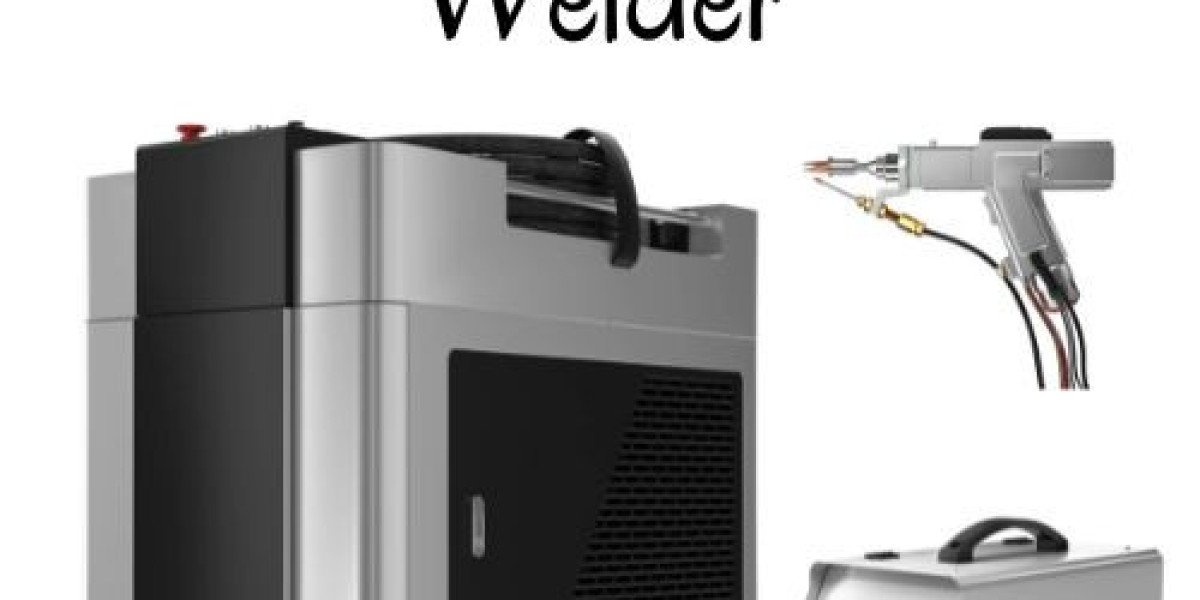
A hand held fiber laser welder is a welding system that uses a fiber laser source to generate a concentrated beam of light. The beam travels through an optical fiber to a handheld welding head, where it is focused onto the joint between two metal components. As the operator guides the welding head along the joint, the concentrated laser energy melts the material and creates a solid welded connection as it cools.
A typical system can incorporate a fiber laser source, optical fiber delivery system, handheld welding head, control system, cooling unit, shielding-gas arrangement, and optional wire feeder. This integrated configuration provides a practical solution for workshops that need both flexibility and production efficiency.
How Fiber Laser Welding Works
The working principle is straightforward but highly precise. First, the fiber laser source generates the laser beam. The beam is delivered through the fiber-optic cable to the handheld welding head. The optical system then focuses the beam onto the selected welding area.
When the focused beam reaches the joint, its concentrated energy rapidly heats and melts the metal. As the operator moves the welding head along the seam, the molten material solidifies behind the laser beam, forming the weld. Shielding gas is commonly used around the welding zone to protect the molten pool from atmospheric contamination.
Precision and Concentrated Heat Control
One of the defining characteristics of a hand held fiber laser welder is its concentrated heat input. Unlike processes that distribute heat over a comparatively larger region, laser welding directs energy into a small area. This can create a narrow heat-affected zone and help reduce thermal distortion, particularly when welding suitable thin and medium-thickness metal components.
For manufacturers working with stainless-steel panels, enclosures, decorative components, machinery parts, and precision sheet metal, controlled heat input can contribute to cleaner dimensions and more consistent finished products.
Fast and Efficient Welding Performance
Production speed is another important benefit of handheld fiber laser technology. In appropriate applications, fiber laser welding can achieve substantially higher travel speeds than conventional TIG welding, especially when working with thin sheet materials. Actual performance depends on laser power, material type, thickness, joint configuration, preparation, and welding parameters.
For laserchina customers, this capability can help improve production throughput while allowing operators to work efficiently across different fabrication tasks. Faster welding can be particularly valuable for workshops handling repeated seams or larger production volumes.
Clean and Professional Weld Appearance
A well-configured fiber laser welding process can produce narrow, smooth, and visually attractive weld seams. The concentrated beam helps control the welding area, while optimized parameters can reduce unnecessary spatter and finishing work.
This is especially useful when the finished product will remain visible, such as stainless-steel furniture, kitchen equipment, architectural components, cabinets, enclosures, and decorative metal products. A cleaner seam can also contribute to a more streamlined finishing process.
Reduced Thermal Distortion
Heat management is extremely important when welding thin metal. Excessive heat can affect dimensions and create unwanted deformation. Fiber laser welding addresses this challenge through highly concentrated energy delivery, which limits the amount of surrounding material exposed to intense heat.
The resulting narrow heat-affected zone can help maintain the shape and appearance of suitable workpieces. For precision fabrication, this feature is one of the major reasons manufacturers consider a hand held fiber laser welder for modern production.
Flexible Handheld Operation
The handheld format gives operators greater freedom when working with different workpiece shapes and positions. Instead of being restricted to a fixed welding setup, the operator can guide the welding head directly along the required joint.
This flexibility is valuable for repair work, customized fabrication, short production runs, metal cabinets, frames, machinery components, stainless-steel products, and other applications where workpieces can vary considerably. The technology can combine the mobility of manual welding with the precision associated with fiber laser processing.
Material Compatibility
Fiber laser welding is commonly used for a range of metals, including stainless steel, carbon steel, aluminum and other suitable metal alloys. The appropriate laser power, parameters, joint design, shielding gas, and welding technique depend on the specific material and thickness.
This broad application range allows laserchina to serve businesses involved in different areas of metal fabrication. From stainless-steel products to industrial components and customized sheet-metal structures, the technology can support diverse production requirements when the process is properly configured.
Beam Oscillation for Versatile Welding
Many modern handheld laser welding systems incorporate beam oscillation, often referred to as a wobble function. Instead of keeping the focused beam at a single point, the system moves the beam according to a selected pattern. This can widen the effective welding track and provide greater flexibility for different joint configurations.
This feature can be particularly useful when manufacturers want greater control over weld width and appearance. Combined with suitable power settings and welding parameters, beam oscillation can make a handheld system more adaptable to different fabrication requirements.
Optional Wire Feeding Capability
Some hand held fiber laser welder configurations include a wire feeder for applications where additional filler material is required. Depending on the joint design, material condition, and desired weld profile, filler wire can provide additional material to the welding pool.
This makes the equipment more versatile for different fabrication requirements. A wire-feeding configuration can be especially useful when joint gaps or reinforcement requirements call for additional weld material.
Applications Across Modern Industries
The flexibility of handheld fiber laser welding makes it useful across numerous industries. Sheet-metal fabrication, stainless-steel manufacturing, automotive components, kitchen equipment, machinery production, metal furniture, architectural products, electrical cabinets, and repair operations can all benefit from its combination of speed and precision.
For businesses producing different products throughout the working day, a flexible handheld system can provide an efficient way to approach a variety of welding tasks without relying exclusively on fixed-position equipment.
Advantages of Choosing Laserchina
With laserchina, businesses can explore fiber laser technology as part of a modern approach to metal fabrication. A suitable system can provide high welding speed, concentrated heat input, narrow weld seams, reduced thermal distortion, flexible handheld operation, and excellent production versatility.
The ability to select appropriate laser power and configuration also allows users to align equipment characteristics with their particular materials, thickness requirements, production volume, and welding applications. Proper process setup remains essential for achieving consistent results.
Benefits for Production Efficiency
The benefits of a hand held fiber laser welder extend beyond the welding seam itself. Faster processing can support higher productivity, while reduced heat input can help limit distortion and finishing requirements. A clean welding process can also contribute to a more streamlined workflow.
For businesses focused on improving manufacturing efficiency, these combined benefits can help create a smoother production cycle from component preparation through welding and final finishing.
Why Modern Workshops Are Exploring Fiber Laser Welding
Manufacturing requirements continue to emphasize speed, precision, flexibility, and consistent quality. Handheld fiber laser technology addresses these priorities by bringing focused laser energy into a manually controlled welding format.
Instead of limiting laser welding to highly specialized automated installations, handheld systems make the technology more accessible for flexible fabrication environments. This creates opportunities for workshops to handle customized projects while maintaining professional welding performance.
Final Thoughts
A hand held fiber laser welder represents a modern approach to metal joining, combining concentrated laser energy with flexible handheld operation. Its potential for fast welding, controlled heat input, narrow seams, reduced thermal distortion, and versatile applications makes it an attractive technology for many metal fabrication environments.
laserchina brings fiber laser technology into focus for businesses seeking efficient and precise welding solutions. Whether the goal is improving production speed, achieving cleaner weld appearances, handling stainless-steel fabrication, or expanding workshop capabilities, a properly configured handheld fiber laser welding system can become a valuable part of a modern manufacturing workflow.