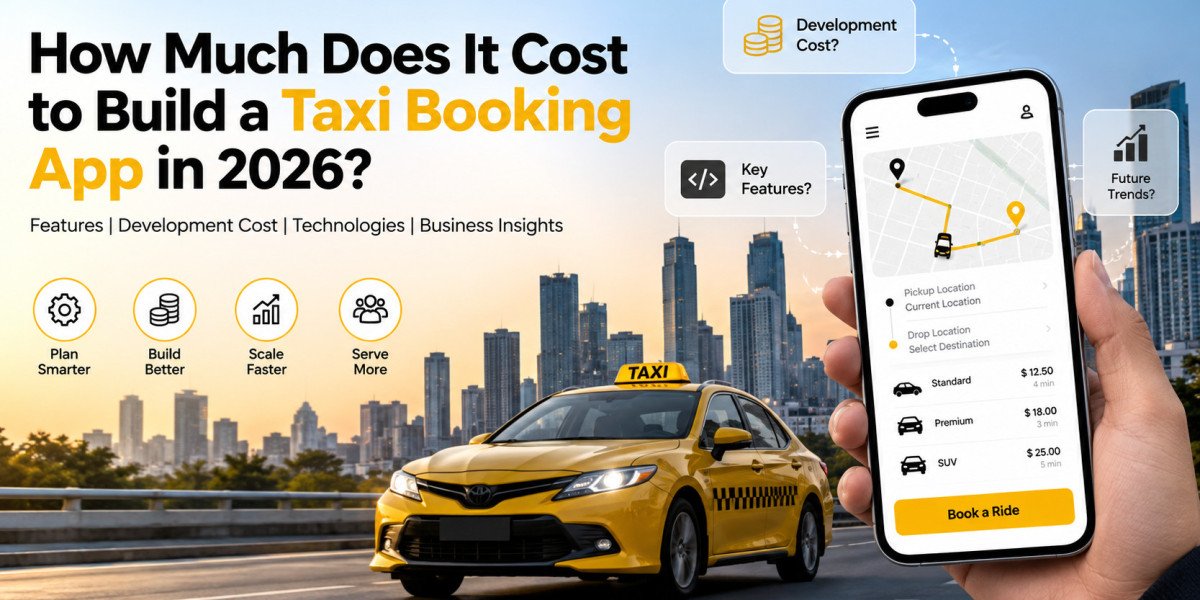

The taxi and ride-hailing industry has changed significantly with the growth of mobile technology, GPS navigation, digital payments, and real-time ride tracking. Businesses looking to enter this market often start with one important question: How much does it cost to build a taxi booking app in 2026?
The average Taxi App development cost can range from $25,000 to $150,000+, depending on the app's features, platforms, technology stack, design complexity, location, and development team. A basic taxi booking application with essential booking functionality costs considerably less than an advanced Uber-like platform with AI, automated dispatching, multiple payment options, analytics, and fleet management.
What Is a Taxi Booking App?
A taxi booking app connects passengers with drivers through a mobile or web-based platform. Customers can enter their pickup and destination locations, view estimated fares, book rides, track drivers, make payments, and provide ratings.
From the business perspective, a taxi platform usually requires multiple components, including:
- Passenger mobile application
- Driver mobile application
- Admin dashboard
- Backend and API infrastructure
- Payment gateway integration
- GPS and map integration
- Notification system
- Driver and vehicle management
- Ride and booking management
Because of these components, the overall development cost depends on the scope of the complete ecosystem rather than just the passenger-facing application.
Taxi App Development Cost in 2026
The approximate development cost can be divided into different categories based on complexity.
Basic Taxi App: $25,000–$45,000
A basic taxi booking app is suitable for startups or local taxi businesses that want to launch an MVP. It generally includes user registration, driver profiles, ride booking, GPS tracking, fare calculation, basic payment integration, push notifications, and ratings.
The goal of an MVP is to validate the business model before investing heavily in advanced functionality.
Medium-Complexity Taxi App: $45,000–$80,000
A medium-level application can include more sophisticated booking and operational features. These may include multiple payment methods, ride scheduling, promo codes, driver earnings, trip history, advanced notifications, location sharing, customer support, and an improved admin panel.
Businesses expanding across multiple cities may require additional backend capabilities and better scalability at this stage.
Advanced Taxi App: $80,000–$150,000+
An advanced platform can include functionality similar to large-scale ride-hailing ecosystems. Features may include AI-powered ride matching, dynamic pricing, automated driver allocation, multiple service categories, corporate accounts, wallet functionality, advanced analytics, fraud detection, multilingual support, and sophisticated fleet management.
Large businesses may also require custom integrations with CRM, ERP, accounting, mapping, and business intelligence systems.
Key Factors Affecting Taxi App Development Cost
Several factors influence the final Taxi App development cost.
1. Number of Platforms
Developing an application for Android, iOS, and the web requires additional development and testing resources. Businesses can initially launch on one platform or use cross-platform technologies to reduce development time.
2. UI/UX Design
A simple interface requires less design effort than a highly customized experience. Taxi applications need intuitive booking flows because users should be able to book a ride quickly.
The design process can include wireframes, prototypes, passenger interfaces, driver interfaces, admin dashboards, and responsive web screens.
3. Real-Time GPS Tracking
GPS is one of the core components of a taxi application. The system needs to identify driver and passenger locations, calculate routes, estimate arrival times, and update ride status.
Map APIs and location services can also create ongoing operational expenses after development.
4. Payment Gateway Integration
Modern taxi platforms typically support cards, digital wallets, online banking, and other regional payment options. Each payment method may require separate integration, testing, security considerations, and transaction fees.
5. Admin Dashboard
The admin panel is essential for managing users, drivers, rides, payments, commissions, complaints, promotions, and analytics.
A simple dashboard costs less than a comprehensive fleet and business management system.
6. Backend and Cloud Infrastructure
A taxi platform needs a reliable backend capable of handling concurrent bookings, location updates, notifications, payments, and user data.
Cloud infrastructure can be scaled as the number of users and rides increases. Businesses should therefore consider both initial development expenses and long-term infrastructure costs.
Essential Features of a Taxi Booking App
A competitive taxi platform generally includes features for passengers, drivers, and administrators.
Passenger Features
- User registration and login
- Pickup and destination selection
- Fare estimation
- Ride booking
- Real-time driver tracking
- Ride scheduling
- Multiple payment options
- Digital receipts
- Ride history
- Ratings and reviews
- Promo codes
- Customer support
Driver Features
- Driver registration
- Profile and document verification
- Online/offline status
- Ride request notifications
- Navigation
- Trip acceptance and rejection
- Earnings dashboard
- Ride history
- Ratings
- Wallet or payout management
Admin Features
- User management
- Driver management
- Vehicle management
- Booking management
- Fare management
- Commission management
- Payment monitoring
- Reports and analytics
- Promotional campaign management
- Customer support
- Content management
Advanced Technologies for Taxi Apps in 2026
Technology can significantly improve the functionality and scalability of modern taxi applications.
Artificial Intelligence: AI can be used for demand forecasting, intelligent driver allocation, fraud detection, personalized recommendations, and customer support automation.
Cloud Computing: Cloud infrastructure allows businesses to scale application resources according to traffic and ride demand.
Machine Learning: Machine learning models can analyze historical ride data to identify demand patterns and improve operational planning.
Real-Time Data Processing: Real-time technologies help update driver locations, ride statuses, estimated arrival times, and booking information.
Digital Payments: Secure payment integrations allow customers to complete transactions without depending on cash payments.
Businesses looking to implement these technologies can work with a specialized Taxi App development Company that understands both mobility platforms and scalable backend architecture.
Why Choose Professional On-Demand App Development Services?
Developing a taxi application involves much more than creating mobile screens. The platform needs secure APIs, real-time communication, location services, payment processing, cloud infrastructure, database management, testing, and ongoing maintenance.
Professional On-demand app development services can help businesses manage the complete development lifecycle, from initial business analysis and UI/UX design to development, testing, deployment, and post-launch support.
A development partner can also recommend the appropriate technology stack based on the expected number of users, target geography, business model, and required integrations.
How to Reduce Taxi App Development Costs
Businesses do not necessarily need to launch every feature at once. An MVP approach can help control the initial investment.
Start with essential functionality such as registration, ride booking, GPS tracking, fare calculation, driver management, payments, notifications, and an admin dashboard.
After collecting real user feedback, additional features such as AI-based matching, corporate rides, subscriptions, loyalty programs, advanced analytics, and automated customer support can be introduced.
Cross-platform development can also reduce the effort required to maintain separate Android and iOS codebases, depending on the project's technical requirements.
Final Thoughts
The Taxi App development cost in 2026 depends heavily on the application's complexity, number of platforms, features, integrations, design requirements, development location, and scalability expectations. A basic MVP may start around $25,000, while a feature-rich enterprise platform can require an investment of $150,000 or more.
For startups, the most practical approach is often to begin with a focused MVP and gradually expand the platform based on market demand. Established transportation companies may require a more comprehensive ecosystem from the beginning.
Working with an experienced Taxi App development Company and selecting the right On-demand app development services provider can help businesses build a scalable platform while controlling development and operational costs.