
As organizations accelerate digital transformation, User Authentication has become a critical component of enterprise cybersecurity and digital trust. The growing adoption of cloud applications, hybrid IT environments, remote work models, and digital services has increased the need for secure and seamless methods to verify user identities.
QKS Group’s User Authentication market research provides a detailed analysis of emerging technology trends, market dynamics, competitive developments, and the future outlook of the global User Authentication market. The research helps technology vendors understand changing customer requirements and market opportunities while enabling enterprises to evaluate vendors based on capabilities, competitive differentiation, and market positioning.
User Authentication Market Moves Beyond Passwords
The modern authentication landscape is evolving from static credential verification toward intelligent and contextual identity verification. Organizations increasingly require authentication platforms that can assess the risk associated with every access request and dynamically determine the appropriate level of verification.
Multifactor authentication remains a central security mechanism, combining multiple authentication factors such as passwords, one-time passwords, security keys, mobile authentication, and biometrics. At the same time, passwordless authentication is gaining momentum as enterprises seek to reduce exposure to phishing, credential theft, password reuse, and account takeover attacks.
Adaptive Authentication and Risk-Based Security
One of the major developments in the User Authentication market is the integration of contextual intelligence and risk-based authentication. Instead of applying the same authentication requirements to every login, modern platforms can evaluate contextual signals such as device information, location, user behavior, network characteristics, and access patterns.
Risk-based authentication enables organizations to respond dynamically to potentially suspicious activity. For example, a low-risk access request may require minimal user interaction, while an unusual login pattern can trigger additional verification.
Cloud-Native Authentication Supports Distributed Enterprises
The shift toward cloud computing has significantly influenced the deployment and management of authentication technologies. Enterprises increasingly operate across public cloud, private cloud, SaaS applications, on-premises infrastructure, and hybrid environments.
Authentication-as-a-Service (AaaS) and cloud-native authentication platforms can simplify deployment, support elastic scalability, and reduce the operational complexity associated with managing authentication infrastructure. These platforms also enable organizations to extend authentication capabilities across geographically distributed users, applications, and devices.
User Authentication and the Zero Trust Security Model
The growing adoption of Zero Trust security architectures is another major factor influencing the User Authentication market. Zero Trust emphasizes continuous verification and does not inherently trust users, devices, applications, or network locations.
Within this model, authentication provides a foundational mechanism for establishing identity and evaluating access requests. Modern authentication platforms can combine identity signals, contextual information, device posture, and behavioral intelligence to support more granular access decisions.
Evaluating Leading User Authentication Vendors
The competitive User Authentication landscape includes vendors offering different combinations of MFA, passwordless authentication, biometrics, adaptive authentication, risk analytics, identity verification, and cloud-based deployment models.
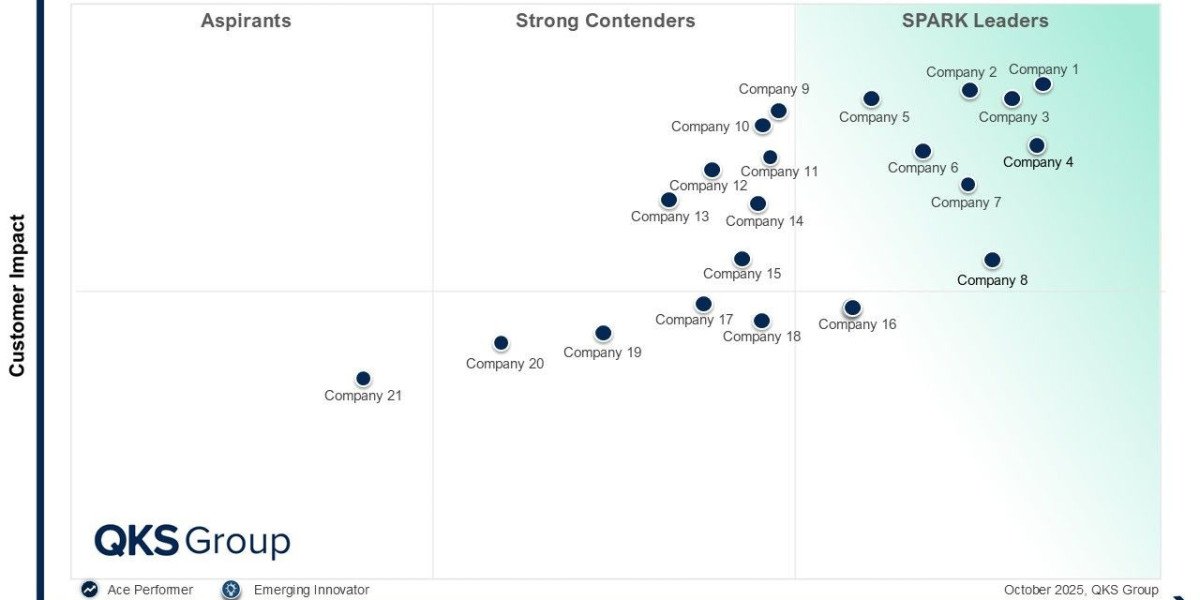
QKS Group’s research includes detailed competition analysis and vendor evaluation using the proprietary SPARK Matrix™ analysis. The SPARK Matrix provides a structured assessment of leading User Authentication vendors based on their technological capabilities and market impact, helping stakeholders understand competitive positioning and key areas of differentiation.
The vendors analyzed in the User Authentication SPARK Matrix include 1Kosmos, Beyond Identity, Broadcom, Cisco, CyberArk, Entrust, Facephi, HID, IBM, Imprivata, LastPass, Microsoft, Okta, One Identity, OneSpan, OpenText, Ping Identity, RSA, SecureAuth, Thales, and Transmit Security.
Expert Perspective on the User Authentication Market
According to Analyst at QKS Group, “Modern User Authentication platforms have become pivotal to enterprise security strategies, moving beyond password dependence to deliver adaptive, risk-aware, and frictionless access across distributed digital ecosystems. By unifying multifactor authentication, biometrics, passwordless methods, and contextual intelligence, these solutions provide scalable defenses against phishing, credential theft, and account takeover. Cloud-native and Authentication-as-a-Service (AaaS) delivery models are enabling rapid deployment, elastic scalability, and consistent protection across hybrid IT and multi-cloud environments.”
Future Outlook for the User Authentication Market
The future of User Authentication is expected to be shaped by the convergence of passwordless security, biometrics, adaptive authentication, AI-driven risk analysis, cloud-native platforms, and Zero Trust architectures. Enterprises are increasingly seeking authentication technologies that can protect identities without creating unnecessary friction for employees, customers, partners, and applications.
QKS Group’s User Authentication market research and SPARK Matrix analysis provides stakeholders with insights into these market developments, emerging technologies, competitive dynamics, and vendor capabilities. The research can help enterprises evaluate the evolving User Authentication landscape and support technology investment and digital security strategies.