
Surface preparation is an important part of manufacturing, maintenance, restoration, and repair work. Before applying a new coating, welding a component, restoring machinery, or preparing a metal surface for further processing, old paint often needs to be removed carefully. Traditional methods can require considerable manual effort and may produce large amounts of dust, waste, or chemical residue. A laser paint remover provides a modern approach that uses focused laser energy to remove unwanted paint from suitable surfaces.
As industries continue looking for cleaner and more controlled surface preparation methods, laser technology is becoming increasingly relevant. From workshops and factories to automotive restoration and industrial maintenance, laser-based paint removal can be incorporated into different cleaning processes.
What Is a Laser Paint Remover?
A laser paint remover is a laser cleaning system designed to remove paint, coatings, oxides, rust, and other unwanted materials from a surface. Instead of using abrasive materials or chemical solvents, the system directs concentrated laser energy toward the target coating.
When the laser interacts with the paint, the coating absorbs the energy and is rapidly removed from the surface. Depending on the material, coating thickness, and selected settings, the process can be adjusted to achieve controlled cleaning.
This makes laser paint removal particularly interesting for applications where surface preparation needs to be accurate and repeatable.
How Does Laser Paint Removal Work?
Laser cleaning works through the interaction between laser energy and the unwanted coating. The operator directs the laser beam across the painted surface. The energy is absorbed by the paint layer, causing it to detach, vaporize, or break into particles that can then be collected using an appropriate extraction system.
The underlying material can remain comparatively unaffected when the correct laser parameters are selected. Operators can adjust settings such as power, scanning speed, frequency, and beam characteristics according to the application.
The process is therefore not simply about applying maximum power. Proper parameter selection is essential for achieving controlled paint removal while protecting the substrate.
Preparing Metal Surfaces for Repainting
One of the most common uses for a laser paint remover is preparing metal surfaces before repainting. Old coatings can interfere with adhesion when a new layer of paint is applied. Removing the previous coating allows the surface to be inspected and prepared before the next finishing stage.
Industrial components, machinery frames, metal structures, tools, and fabricated parts may require paint removal during refurbishment. Laser cleaning can help operators work selectively on specific areas instead of treating an entire component unnecessarily.
After the old coating has been removed, the surface can be inspected for corrosion, cracks, damage, or other conditions that may require additional treatment.
Paint Removal in Automotive Restoration
Automotive restoration is another area where controlled paint removal can be valuable. Vehicle components can contain multiple coating layers accumulated over many years. Removing these layers may be necessary before restoration, repair, welding, or repainting.
A laser system can be used on suitable automotive metal components to remove unwanted coatings from selected areas. This can help restoration professionals expose the original surface without relying exclusively on abrasive blasting or aggressive chemical products.
The exact process depends on the material, coating, and condition of the component, so testing a small area before full-scale treatment is an important part of professional operation.
Industrial Machinery Maintenance
Industrial equipment frequently requires maintenance and refurbishment. Paint, protective coatings, oxidation, and contaminants can build up on machinery surfaces over time. During maintenance work, technicians may need to expose the underlying metal to inspect its condition or prepare it for a new coating.
A laser paint remover can be integrated into maintenance workflows where controlled surface treatment is required. Operators can focus on specific sections of equipment rather than manually treating every area with conventional tools.
This approach can be particularly useful when maintenance teams need a repeatable process for similar components or recurring refurbishment tasks.
Removing Coatings Before Welding
Certain repair and fabrication operations require coatings to be removed before welding. Paint and other surface materials can interfere with the welding area and may create undesirable fumes when exposed to high temperatures.
Laser cleaning can be used to prepare suitable areas before welding by removing paint and other surface contaminants. This allows the operator to establish a cleaner working area before beginning the welding process.
The exact cleaning procedure should always be selected according to the substrate and coating. Proper ventilation, extraction, protective equipment, and laser safety procedures remain essential.
Surface Preparation for Industrial Coatings
The quality of surface preparation can influence the results of many coating processes. Paint manufacturers and industrial finishing professionals often require surfaces to meet particular preparation standards before applying a new coating.
A laser paint remover can form part of a surface preparation workflow by selectively removing existing paint and exposing the underlying material. After cleaning, the surface can be inspected and treated according to the requirements of the new coating system.
For professional applications, operators should consider surface condition, coating composition, laser wavelength, power level, and cleaning speed before beginning the process.
Choosing the Right Laser System
Different paint removal jobs can require different laser specifications. A small workshop may have different requirements from a large manufacturing facility. The choice of equipment should therefore be based on the type of material, coating thickness, working area, production requirements, and frequency of use.
Laser power is one important consideration, but it is not the only factor. Beam delivery, scanning system, control options, portability, cooling method, extraction arrangements, and available support can also influence how effectively the equipment fits a particular operation.
For businesses handling multiple materials or coating types, selecting a flexible system can make it easier to adapt the cleaning process to different jobs.
Handheld and Portable Laser Paint Removal
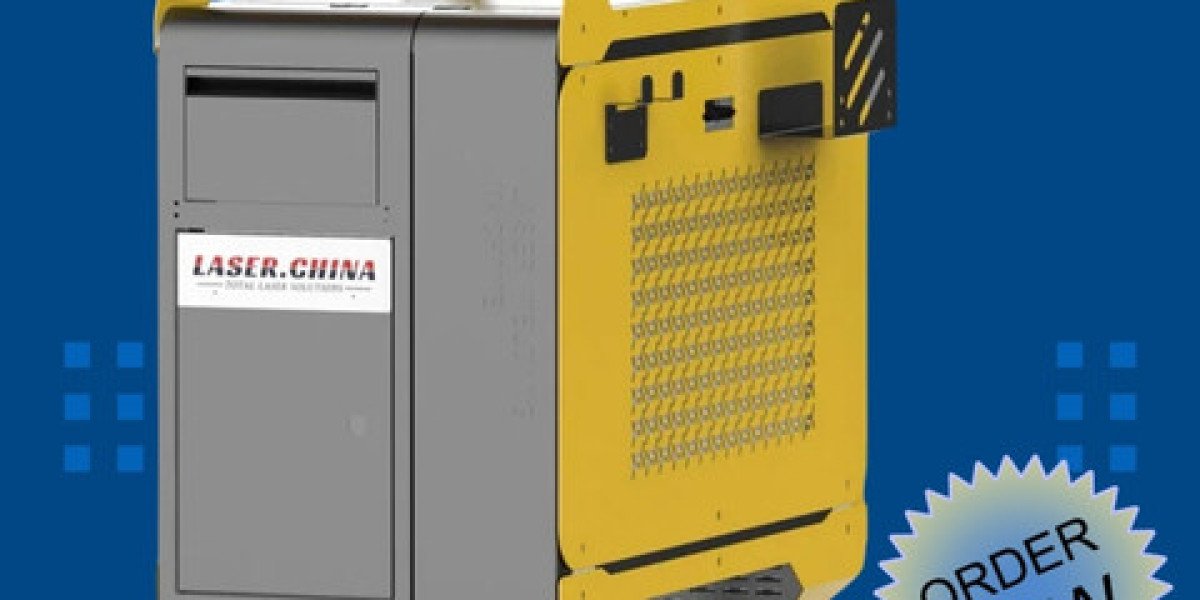
Handheld laser cleaning equipment is becoming increasingly useful for applications where components cannot easily be moved to a fixed cleaning station. An operator can guide the laser cleaning head across the required surface while the main unit remains positioned nearby.
Portable systems may be suitable for machinery maintenance, metal structures, workshops, fabrication areas, and restoration projects. Their practical use depends on equipment specifications and the working environment.
Before purchasing a system, businesses should evaluate the workspace, electrical requirements, cleaning area, operating procedures, and safety requirements.
Important Safety Considerations
Laser equipment must be operated responsibly. Industrial laser systems can present serious hazards to eyes and skin, and reflected laser radiation can also create risks in unsuitable environments.
A controlled work area, appropriate laser safety measures, suitable protective equipment, proper operator training, and effective fume or particle extraction should be part of the cleaning setup. Operators should follow the equipment manufacturer's instructions and applicable workplace safety regulations.
Paint removal can also release particles or fumes depending on the coating composition. Materials should therefore be identified before processing whenever possible, particularly when older paints may contain hazardous substances.
Applications Across Different Industries
The versatility of laser cleaning allows paint removal technology to be considered across several industries. Manufacturing facilities can use it for equipment preparation and component refurbishment. Automotive businesses can apply it to suitable restoration work. Fabrication companies can prepare metal around welding areas, while maintenance teams can use laser cleaning during machinery servicing.
Other potential applications include metal furniture restoration, industrial structures, tooling, ship maintenance, transportation equipment, and specialized fabrication.
As laser technology continues to develop, businesses can evaluate whether laser-based surface preparation fits their particular workflow.
Final Thoughts
A laser paint remover offers a modern method for controlled coating removal and surface preparation. By using focused laser energy rather than relying solely on conventional abrasive or chemical techniques, businesses can approach paint removal with greater control over the treatment area and cleaning process.
Whether the requirement involves machinery maintenance, automotive restoration, repainting, welding preparation, or industrial refurbishment, the correct laser system can become a valuable part of a professional surface preparation workflow.