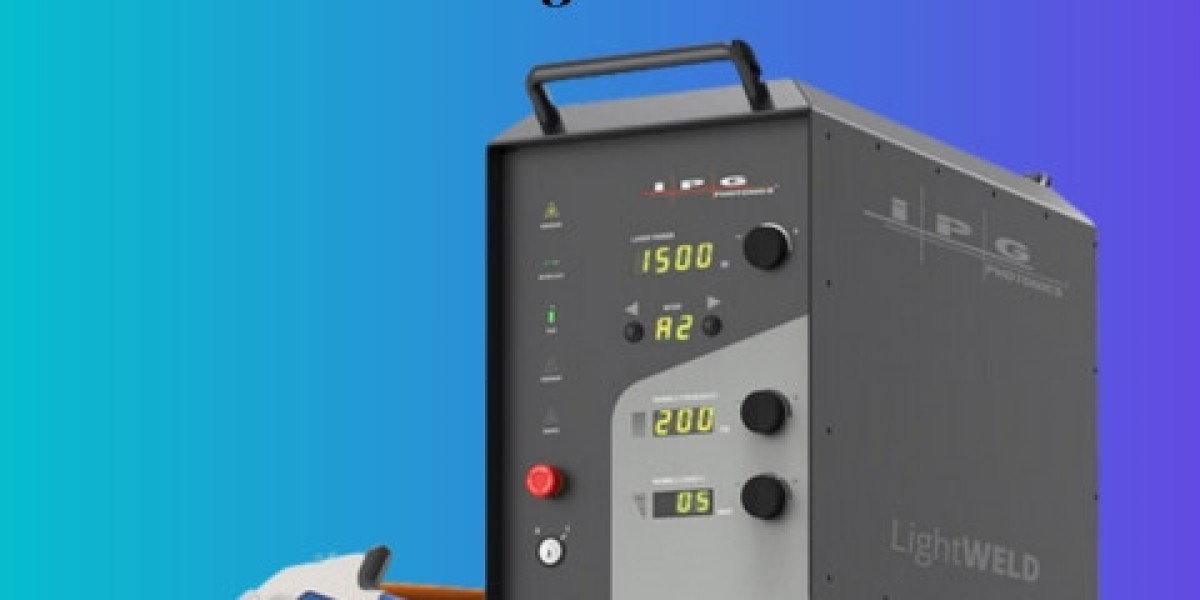

Metal fabrication continues to evolve as manufacturers look for more precise and practical methods for joining different materials. Welding remains an essential part of industries such as automotive production, machinery manufacturing, metalworking, construction, and equipment repair. Among modern welding technologies, the hand held metal laser welding machine has gained attention for applications that require controlled and accurate metal joining.
Unlike conventional welding methods that often require extensive setup and manual control, laser welding uses a concentrated laser beam to create a controlled welding area. The handheld design allows operators to work directly on different metal components while maintaining flexibility during fabrication and repair tasks. This combination of laser technology and handheld operation makes the equipment suitable for workshops and industrial environments with varied welding requirements.
What Is a Hand Held Metal Laser Welding Machine?
A hand held metal laser welding machine is a laser-based welding system designed to join metal components using a focused laser beam. The operator guides a handheld welding head along the area that needs to be joined. The laser energy melts the material at the welding point, allowing the metal surfaces to fuse together as the molten area cools.
These machines are commonly designed for materials such as stainless steel, carbon steel, aluminum, galvanized metals, and other compatible alloys. The appropriate machine configuration depends on the material thickness, application requirements, production environment, and desired welding results.
The handheld structure provides greater freedom of movement compared with fixed welding equipment. Operators can reach different positions, edges, corners, and components without always needing to reposition the entire workpiece.
How Does Laser Welding Work?
Laser welding begins when the machine generates a high-energy laser beam. The beam is directed through the optical system toward the welding area. Because the energy is concentrated into a small spot, the laser can heat the selected area rapidly.
As the operator moves the welding head along the joint, the laser creates a controlled molten pool. The two metal surfaces interact within this area and form a welded connection as the material solidifies.
Depending on the application, filler wire may also be introduced when additional material is required. Welding parameters such as laser power, speed, wire feeding, and gas protection can be adjusted according to the material and joint requirements.
Proper parameter selection is important because different metals react differently to concentrated heat. Thickness, joint design, surface condition, and material composition should all be considered before beginning production.
Applications Across Metalworking Industries
A hand held metal laser welding machine can be used in a wide range of fabrication environments. In stainless steel workshops, it can be used for joining sheets, frames, cabinets, pipes, and other fabricated components.
Automotive manufacturers and repair facilities may use laser welding for selected body components, brackets, frames, and metal assemblies. Machinery manufacturers can also incorporate laser welding into the production of equipment housings, mechanical components, and customized structures.
The technology is also relevant to kitchen equipment production, metal furniture, advertising displays, electrical cabinets, architectural metalwork, and general industrial fabrication. Its flexibility makes it useful where operators need to weld different components without relying entirely on large fixed systems.
Working With Different Metals
Different metals require different welding approaches. Stainless steel is widely used in industrial and commercial fabrication because of its durability and corrosion resistance. Laser welding can be applied to stainless steel components when suitable parameters are selected.
Aluminum presents different welding characteristics because of its thermal properties and reflective surface. A suitable laser source, power level, welding speed, and process setup are important when working with aluminum.
Carbon steel is another common material used in machinery, construction, automotive components, and general fabrication. Laser welding parameters can be adjusted according to its thickness and joint configuration.
Galvanized metal requires particular attention because its zinc coating can react during welding. Proper preparation, process control, and workplace ventilation are important when working with coated materials.
Preparing the Workpiece
Successful laser welding starts before the laser is switched on. The workpieces should be correctly positioned and secured so that the joint remains stable throughout the process.
Surface preparation is also important. Oil, dirt, rust, paint, and other contaminants can interfere with the welding process and affect the finished joint. Cleaning the metal before welding helps create a more consistent working surface.
The joint should also be inspected for gaps or misalignment. Although laser welding provides concentrated heat, the process still depends on suitable joint preparation. Operators should select the correct welding method according to the thickness, shape, and condition of the materials.
Choosing Suitable Welding Parameters
A laser welding system normally provides controls for adjusting the welding process. Power is one of the most important parameters because insufficient energy may not create the required penetration, while excessive energy can produce unwanted heat effects.
Welding speed also influences the final result. Moving too quickly may reduce penetration, while moving too slowly can increase heat input. Wire feeding parameters may need adjustment when filler material is used.
Shielding gas is another important part of the process. Suitable gas protection helps protect the welding area from atmospheric contamination during welding. The exact gas and flow rate should be selected according to the material and welding application.
Operators should follow the machine manufacturer's recommended settings and conduct test welds before beginning important production work.
Handheld Operation in Workshop Environments
The handheld design changes how operators approach metal fabrication. Instead of bringing every component to a fixed welding position, the welding head can be guided toward the work area.
This can be particularly useful when working with larger structures, customized components, or parts that are difficult to position on conventional welding equipment. The operator can move around the workpiece and follow different joint shapes while maintaining control over the welding head.
However, handheld operation still requires proper training. Operators need to understand the machine controls, material behavior, welding parameters, safety procedures, and appropriate working techniques.
Maintenance and Daily Care
Regular maintenance helps keep a laser welding system operating consistently. The welding head, protective components, cooling system, optical parts, cables, and other equipment should be inspected according to the manufacturer's maintenance schedule.
Dust and contaminants should not be allowed to accumulate around sensitive components. Cooling systems should be checked to ensure that the machine operates within its required temperature range.
Consumables such as protective lenses and welding nozzles may require periodic replacement depending on operating conditions. Keeping records of maintenance and component replacement can also help workshops identify potential problems before they interrupt production.
Safety During Laser Welding
Laser welding requires strict attention to workplace safety because the equipment produces concentrated laser radiation and intense heat. Operators should use the protective equipment specified for the particular machine and working environment.
The welding area should be properly controlled so that unauthorized people cannot enter during operation. Appropriate laser safety measures, ventilation, protective clothing, eye protection, and fire prevention procedures should be established.
Metal fumes can also be generated during welding, particularly when coatings or contaminants are present. Adequate extraction and ventilation should therefore be maintained.
Operators should always read the manufacturer's safety documentation before using the equipment and follow local workplace safety requirements.
Selecting the Right Machine
When purchasing a hand held metal laser welding machine, manufacturers should consider the materials they commonly process, typical metal thicknesses, production volume, available workspace, and operator requirements.
Laser power should correspond with the intended welding applications. The machine's cooling system, control interface, welding head, compatible materials, consumable availability, and after-sales support are also important considerations.
Businesses should avoid selecting equipment based only on laser power or initial purchase price. The complete working environment and long-term production requirements should be considered when choosing a suitable system.
The Growing Role of Laser Welding
As metal fabrication becomes increasingly focused on precision, consistency, and flexible production, laser welding technology continues to attract interest from workshops and manufacturers. Handheld systems provide an approach that combines laser welding with direct operator control.
The technology can support both specialized fabrication and general metalworking applications when the machine is correctly configured and operated. As more manufacturers become familiar with laser-based processes, handheld welding systems are becoming an increasingly recognizable part of modern fabrication environments.
Final Thoughts
A hand held metal laser welding machine provides a modern approach to joining metal components in workshops and industrial environments. Its focused laser process, handheld operation, and compatibility with various metalworking applications make it suitable for many fabrication tasks.
From stainless steel assemblies and machinery components to customized metal structures and repair work, the technology can be adapted to different production requirements. Careful material preparation, correct parameter selection, regular maintenance, operator training, and proper safety procedures remain essential for achieving reliable welding results.