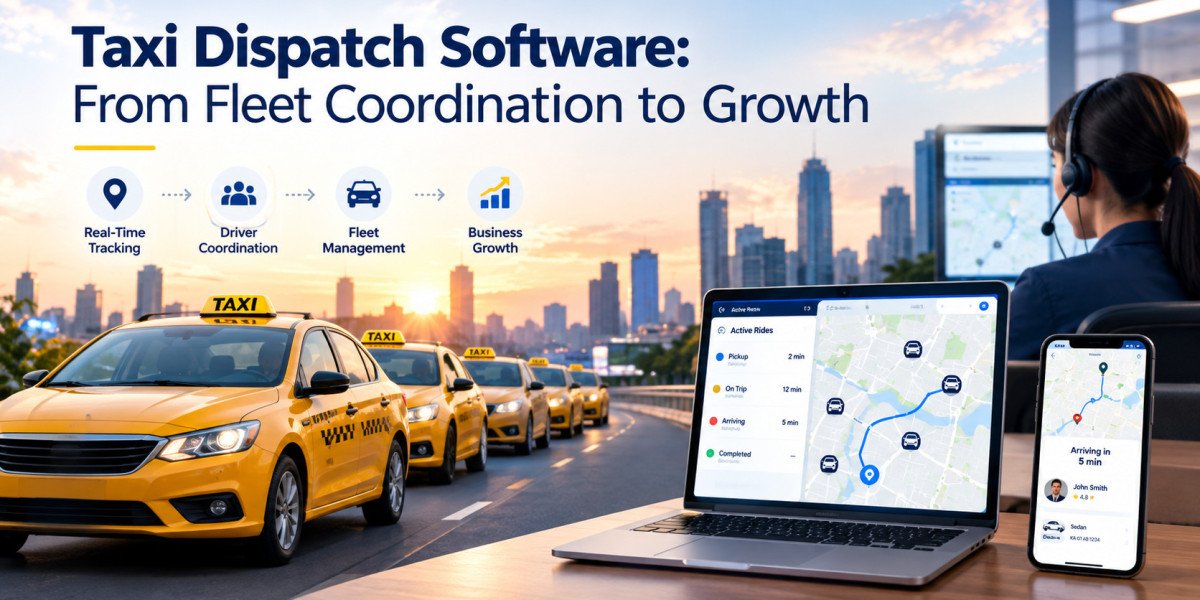

A taxi business can have plenty of drivers and still struggle to serve more rides efficiently. Taxi dispatch software changes that equation by connecting bookings, drivers, vehicles, routes, and customer updates in one operational workflow. For taxi operators, fleet owners, mobility startups, and transport companies, the opportunity is no longer just to dispatch a vehicle—it is to make every dispatch decision more commercially valuable.
The taxi market is becoming increasingly dynamic. Customers expect faster confirmations, accurate ETAs, digital payments, live ride tracking, and frictionless communication. At the same time, operators are dealing with driver availability, fuel costs, peak-hour demand, traffic congestion, and competition from app-based mobility platforms.
That creates a difficult balance: how can a taxi business improve customer experience without allowing operational costs to grow at the same pace?
The answer increasingly lies in smarter dispatch operations.
Why Taxi Fleet Management Is Changing
Traditional taxi dispatch often depends on phone calls, radio communication, manual allocation, or disconnected booking systems. These methods can become inefficient when a fleet expands across multiple service zones.
A modern dispatch platform creates a centralized view of the operation. Dispatchers can identify available drivers, assign rides, monitor active trips, and track vehicle movement without switching between multiple systems.
More importantly, the software can help operators make better allocation decisions.
Instead of simply assigning the nearest available driver, dispatch workflows can consider factors such as location, vehicle type, driver availability, scheduled bookings, service requirements, and operational priorities.
This can help reduce unnecessary vehicle movement while improving response times.
For businesses managing dozens or hundreds of vehicles, even small improvements in driver utilization can create a meaningful operational impact.
Smarter Driver Allocation and Real-Time Tracking
Driver coordination is one of the most important areas where taxi operators can gain efficiency.
A connected platform can provide dispatch teams with real-time information about active vehicles and available drivers. This visibility helps reduce the uncertainty that often surrounds manual dispatching.
Customers also benefit from the same connected workflow.
Live vehicle tracking, estimated arrival times, automated ride notifications, and digital payment options can make the experience feel more predictable. Instead of repeatedly calling the operator to ask where the taxi is, customers can receive relevant updates throughout the journey.
That reduces communication friction for both passengers and support teams.
Taxi Booking Technology Is Moving Beyond the Ride
One of the biggest shifts in mobility is the move from basic ride booking toward intelligent transportation management.
Taxi operators are increasingly looking at their technology stack as a way to manage different revenue opportunities rather than only individual trips.
A dispatch platform can become the operational foundation for airport transfers, corporate transportation, scheduled rides, school transportation, medical trips, local fleet services, and other specialized mobility requirements.
This creates an opportunity for operators to diversify without completely rebuilding their business model.
Another important trend is the growing role of data-driven fleet management. Every completed trip can generate useful operational information—pickup patterns, peak demand periods, driver utilization, cancellation trends, popular service areas, and average trip performance.
Instead of treating this information as historical reporting, businesses can use it to improve future decisions.
For example, demand patterns can help operators determine where additional vehicles may be required during specific periods. Performance data can reveal underutilized vehicles or recurring delays. Zone-level insights can help businesses rethink fleet distribution.
The result is a shift from reactive dispatching to proactive fleet planning.
The 2026 Challenge: Efficiency Without Losing Flexibility
Taxi operators today face an unusual challenge. They need technology sophisticated enough to compete with digital-first mobility companies, but flexible enough to support their own local business model.
A one-size-fits-all platform may not work for every market.
Different cities have different regulations, payment preferences, traffic patterns, fleet structures, customer expectations, and pricing models. A successful taxi technology strategy therefore needs customization rather than simply adding more features.
This is where scalable taxi fleet management software becomes valuable.
Operators can build workflows around their actual business requirements while creating room for future expansion. Whether the goal is to add more vehicles, enter another city, introduce corporate bookings, support multiple vehicle categories, or integrate additional services, the technology should be capable of adapting.
Build a Dispatch Operation That Works Smarter
The future of taxi dispatch isn't about putting more pressure on dispatchers to handle more bookings. It is about giving them better visibility and better tools to make decisions.
With centralized booking management, real-time tracking, intelligent driver allocation, automated notifications, digital payments, and operational analytics, taxi businesses can create a more connected service ecosystem.
For startups, this provides a foundation for entering competitive mobility markets with a technology-led operating model. For established taxi companies, it creates an opportunity to modernize without abandoning the local strengths that built their business.
The real advantage of taxi dispatch software is therefore not the dispatch screen itself. It is the ability to turn scattered fleet activity into actionable operational intelligence.
When every ride contributes to better planning, every driver becomes easier to coordinate, and every customer receives clearer visibility, dispatch becomes more than an operational task—it becomes a growth lever.
Ready to Modernize Your Taxi Operations?
Don't let manual dispatching, fragmented communication, and limited fleet visibility restrict your next stage of growth. Build a smarter taxi operation with technology designed around your fleet, market, and business model.