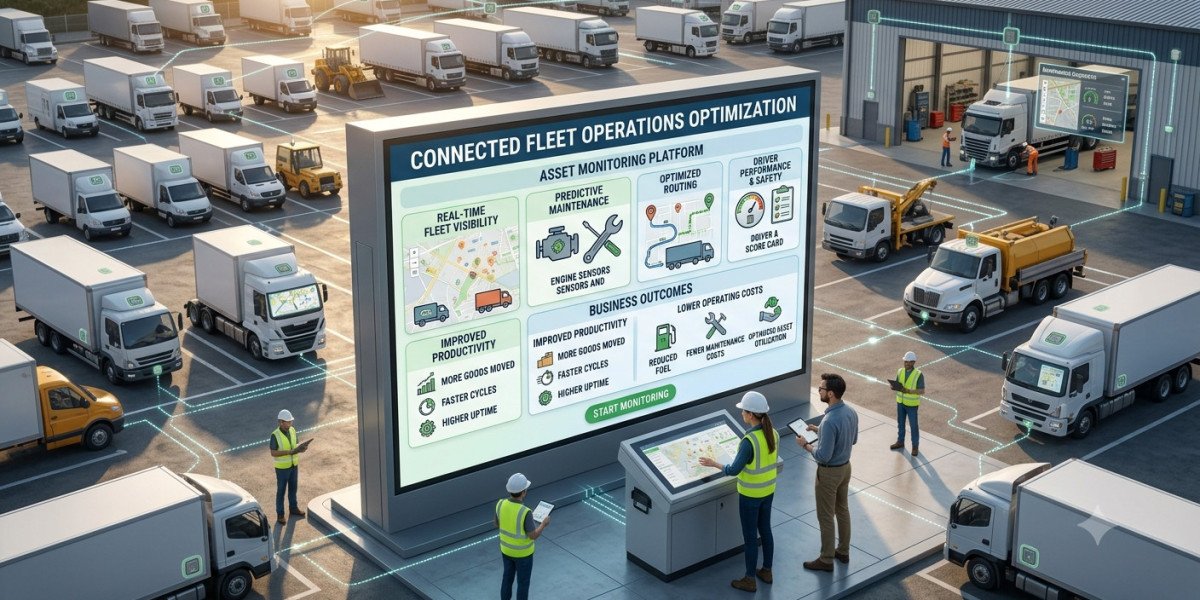

The business environment in 2026 is being shaped by technology, changing customer expectations, tighter competition, sustainability, and new approaches to workforce management. Businesses of all sizes are looking for practical ways to improve productivity while controlling costs and maintaining customer trust.
Artificial intelligence has moved from an experimental technology toward a practical business tool. At the same time, companies are investing in digital sales channels, cybersecurity, customer experience, flexible teams, and more responsible business practices. IDC reports that small and medium-sized businesses are increasingly focusing on practical AI and cloud applications that can deliver measurable returns.
These changes do not mean every business needs to adopt every new technology. A better approach is to identify specific problems and select tools that can solve them.
AI and Automation Become Part of Daily Operations
Artificial intelligence is one of the biggest business trends in 2026. Small and medium-sized businesses are increasingly using AI for marketing, customer communication, content creation, data analysis, and repetitive administrative work.
IDC notes that SMBs are moving from technology experimentation toward more strategic AI adoption, with an emphasis on practical applications and measurable return on investment.
AI can help businesses handle repetitive tasks, but successful implementation requires more than purchasing software. Companies need to understand their existing processes before adding automation.
Common business applications include:
Customer service chatbots
Marketing content assistance
Sales lead qualification
Data analysis
Document processing
Email assistance
Inventory forecasting
Internal knowledge search
Workflow automation
The main goal should be efficiency rather than simply using AI because it is popular. A business that automates an inefficient process may simply create a faster version of the same problem.
Security and accuracy are also important. Recent SMB research found that many business owners still have concerns about data security and the reliability of AI-generated information.
Businesses can reduce these risks by limiting sensitive information, reviewing AI outputs, training employees, and establishing clear internal rules.
Customer Experience and Digital Commerce
Customer expectations continue to change as people become accustomed to fast digital communication. Customers often expect businesses to provide convenient websites, quick responses, simple payment options, useful information, and consistent service across different channels.
This is encouraging businesses to combine physical and digital sales methods. E-commerce, social media marketing, mobile communication, and direct customer engagement are becoming important parts of many business strategies. Upwork's 2026 small-business trends research identifies e-commerce, omnichannel growth, social media marketing, and personalized customer experiences as major areas of focus.
A strong customer experience can include:
Easy website navigation
Clear product or service information
Fast communication
Simple checkout processes
Multiple payment options
Helpful after-sales support
Consistent branding
Personalized communication where appropriate
Personalization can be useful, but it should not become intrusive. Customers want relevant communication without feeling that every interaction is being tracked unnecessarily.
Businesses should also remember that acquiring a customer is only one part of growth. Retaining existing customers can reduce the pressure to constantly find new buyers.
Regular feedback can help identify problems early. Reviews, customer surveys, support conversations, and sales data can provide useful information for improving products and services.
Digital marketing also requires consistency. A business does not necessarily need to be active on every platform. It is often more effective to focus on the channels used by its target customers and maintain useful, relevant content.
Flexible Teams, Skills, and Business Productivity
Workforce planning is another major business issue in 2026. Companies are balancing full-time employees with freelancers, contractors, remote workers, and specialized external professionals.
Upwork's 2026 research reports that many SMBs are increasing their use of flexible workforce models, including freelance talent.
This can help businesses access specialized skills without creating permanent positions for every requirement. For example, a company may work with external professionals for:
Website development
Graphic design
SEO
Accounting
Legal services
Content production
Software development
Digital advertising
However, flexible staffing still requires proper management. Businesses need clear responsibilities, deadlines, communication processes, and data-security procedures.
Employee development is equally important. Technology changes quickly, and employees may need new digital skills to remain productive. In India, KPMG's 2026 research on MSMEs highlights AI readiness, digital fluency, sustainability capabilities, and structured skill development as important areas for future workforce preparation.
Training does not always require expensive programs. Businesses can use internal workshops, online courses, mentoring, practical projects, and peer learning.
A strong workplace also benefits from clear communication. Employees should understand business objectives, performance expectations, and how their work contributes to larger goals.
Productivity should not be measured only by the number of tasks completed. Quality, customer satisfaction, employee workload, error rates, and business outcomes can provide a more realistic picture.
Sustainability, Cybersecurity, and Long-Term Planning
Sustainability is increasingly becoming a business consideration rather than only a public-relations issue. Companies are examining energy use, packaging, supply chains, waste, sourcing, and resource efficiency.
Small businesses may not have the same resources as large corporations, but they can still take practical steps:
Reduce unnecessary packaging
Track energy consumption
Minimize material waste
Choose durable equipment
Improve inventory planning
Reduce unnecessary business travel
Work with responsible suppliers
Maintain accurate sustainability records
The OECD notes that AI and digital tools can help SMEs with sustainability-related finance by improving data generation, reporting, verification, and monitoring, although proper governance is needed.
Cybersecurity is another area that businesses cannot ignore. As more companies depend on cloud software, online payments, remote work, and digital customer records, protecting business information becomes increasingly important.
Basic security practices include:
Use strong, unique passwords
Enable multi-factor authentication
Keep software updated
Restrict access to sensitive information
Train employees to recognize phishing attempts
Back up important business data
Review third-party software permissions
Create a basic incident-response plan
Long-term planning is also becoming more important because businesses face changes in technology, customer behavior, costs, and regulation.
Business owners can review their plans regularly by tracking practical indicators such as revenue, profit margin, customer retention, operating costs, conversion rates, employee productivity, and cash flow.
Online business research can sometimes also include unrelated commercial product terms. For example, Custard Monster salt e-liquid is a product-related keyword and has no direct connection with business strategy, management, or entrepreneurship. Businesses should distinguish unrelated search results from useful market information.
Similarly, Custard Monster Flavors belongs to a specific consumer-product category rather than general business planning. Keeping commercial product information separate from strategic research can make online research more accurate.
The same applies to Custard Monster Official, which should be treated as a brand-related search rather than a source of general business guidance.
Conclusion
Business in 2026 is increasingly focused on practical technology, customer experience, flexible workforce models, cybersecurity, sustainability, and measurable results. AI is becoming easier for smaller companies to access, but its value depends on how well it is integrated into existing processes.
Customer expectations are also encouraging businesses to improve digital communication and provide smoother experiences across online and offline channels. At the same time, companies need skilled employees who can work effectively with new technologies.
The strongest business strategy is not necessarily based on adopting every new trend. It is based on understanding customer needs, controlling costs, protecting information, developing employees, and using technology where it creates genuine value.
For businesses entering the next stage of growth, 2026 offers opportunities, but those opportunities require practical planning. Companies that focus on useful innovation, reliable service, responsible operations, and measurable outcomes can build a stronger foundation for long-term growth.