
Introduction
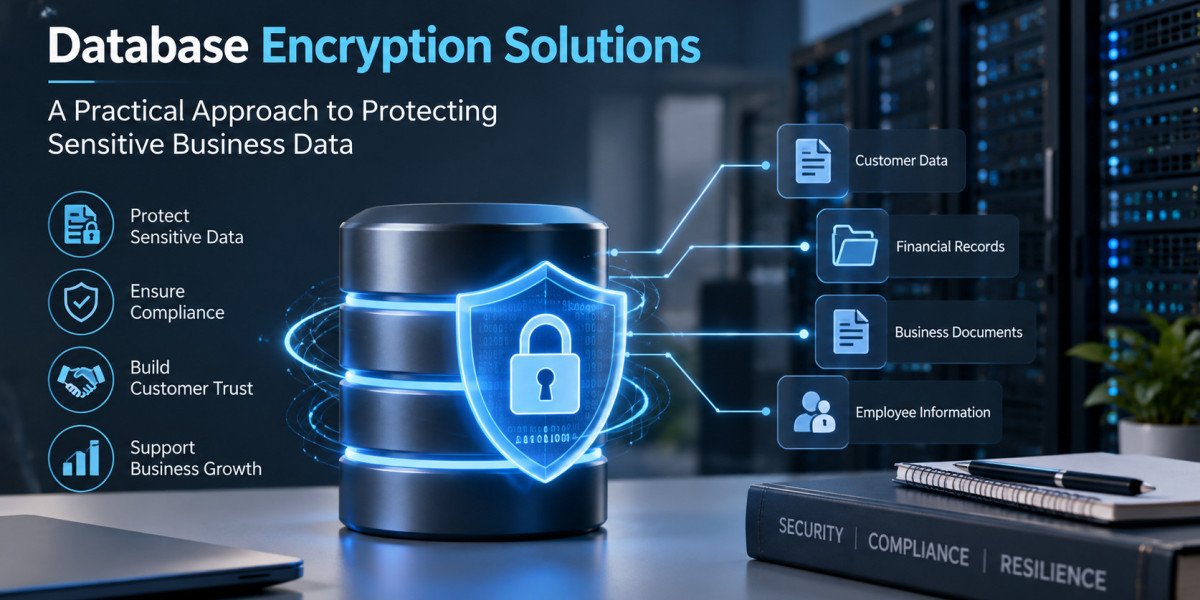
Data has become one of the most valuable assets for modern businesses. Organizations store customer information, financial records, employee details, transaction histories, intellectual property, and business documents across databases.
This information supports daily operations, but it also creates significant security responsibilities. A compromised database can expose sensitive information and create financial, operational, legal, and reputational consequences.
Organizations therefore need multiple layers of data protection. Authentication and access controls can prevent unauthorized users from reaching databases, while monitoring can identify suspicious activity. Encryption adds another important layer by protecting information even if someone gains access to the underlying storage.
A database encryption solution converts readable information into ciphertext using cryptographic algorithms. Authorized systems can decrypt the information when they have access to the appropriate cryptographic keys.
However, organizations must also protect those keys. This makes Key management, HSM modules, and key management in cryptography important components of a practical database security strategy.
What Is Database Encryption?
Database encryption protects information stored in a database by converting plaintext into encrypted data.
The encryption process uses a cryptographic key. Authorized applications or users can use the appropriate key to access the original information.
Organizations may encrypt:
- Customer records
- Payment information
- Personal data
- Employee records
- Financial information
- Confidential business information
- Authentication data
Encryption can protect information stored on servers, storage systems, or database infrastructure.
Why Businesses Need Database Encryption
Databases contain information that attackers may find valuable.
Without encryption, an attacker who gains access to database files or storage systems may be able to read sensitive information.
Encryption adds protection because unauthorized individuals cannot easily understand encrypted information without the appropriate key.
Businesses may also need encryption to support contractual obligations, internal policies, and applicable Data security standards.
However, organizations should treat encryption as one part of a broader security strategy.
Types of Database Encryption
Different organizations use different encryption approaches.
Transparent Data Encryption
Transparent Data Encryption, often called TDE, protects database files at the storage level.
It can encrypt data written to storage and decrypt it when authorized systems access it.
This approach can provide protection without requiring major application changes.
Column-Level Encryption
Column-level encryption protects selected database fields.
Organizations can use this approach when only certain information requires stronger protection.
For example, a business may encrypt specific fields containing sensitive customer information.
Application-Level Encryption
Application-level encryption encrypts data before the application stores it in the database.
This approach can provide detailed control but requires careful application design and Key management.
The Importance of Key Management
Encryption keys determine who or what can access encrypted information.
This makes Key management one of the most important parts of a database encryption architecture.
Organizations should manage the complete key lifecycle, including:
- Generation
- Storage
- Access
- Distribution
- Rotation
- Backup
- Recovery
- Retirement
Key management in cryptography provides the processes and controls required to perform these activities securely.
Organizations should also separate encryption keys from the databases they protect. If attackers can obtain both the encrypted data and the corresponding keys, encryption may provide limited protection.
How HSM Modules Protect Encryption Keys
HSM modules provide specialized hardware environments for protecting cryptographic keys.
Instead of storing sensitive keys directly in database servers, applications, or configuration files, organizations can protect them inside an HSM.
HSM modules can support:
- Secure key generation
- Key storage
- Encryption
- Decryption
- Digital signatures
- Authentication
This hardware-based approach can reduce direct exposure of critical cryptographic keys.
HSM Solutions for Database Security
HSM Solutions can help enterprises implement secure cryptographic infrastructure across multiple applications and databases.
Large organizations may manage many databases across data centers, cloud environments, and business applications.
HSM Solutions can support a centralized security architecture in which critical keys receive stronger protection while authorized applications continue to perform required cryptographic operations.
Organizations should evaluate HSM Solutions according to their database architecture, availability requirements, performance needs, and security policies.
Thales Key Management for Database Encryption
Enterprises with complex IT environments often need centralized Key management capabilities. Thales key management can help organizations manage cryptographic keys across multiple environments.
A centralized approach can provide better visibility into:
- Key ownership
- Key lifecycle
- Access permissions
- Key usage
- Rotation schedules
When combined with HSM technology, centralized key management can provide both administrative control and hardware-based protection.
This approach can simplify the management of encryption across databases and other enterprise systems.
Database Encryption in Cloud Environments
Cloud databases have become common across modern enterprises.
Organizations may use cloud databases to support applications, analytics, e-commerce platforms, and business systems. However, cloud adoption introduces additional questions around data ownership and key control.
Businesses should understand:
- Where encrypted data resides
- Where encryption keys reside
- Who can access the keys
- Which applications can perform decryption
- How keys rotate
- How the organization recovers keys
A database encryption solution combined with centralized Key management can help organizations maintain better control over these processes.
Database Encryption and Data Security Standards
Businesses must consider the security requirements that apply to their industry and operations.
Applicable Data security standards may require organizations to protect sensitive information through encryption, access controls, auditing, and other measures.
Database encryption can contribute to these objectives, but organizations should not treat encryption as a complete compliance solution.
A strong security program should also address:
- Identity management
- Access control
- Vulnerability management
- Monitoring
- Backup security
- Incident response
- Security testing
Practical Steps for Implementing Database Encryption
Identify Sensitive Information
Start by identifying which database records contain sensitive information.
Classify Data
Classify information according to business importance and security requirements.
Select an Encryption Method
Choose an encryption approach that fits the database and application architecture.
Protect Encryption Keys
Use secure Key management processes and appropriate HSM technology for critical keys.
Establish Access Controls
Limit access to encrypted data and cryptographic keys.
Automate Key Rotation
Automated rotation can reduce administrative errors and support security policies.
Monitor Encryption Activity
Review key usage and database access for suspicious behavior.
Test Recovery Procedures
Make sure authorized teams can recover critical keys and access protected information when necessary.
Common Database Encryption Challenges
Database encryption can introduce operational considerations.
Encryption may affect system performance depending on the implementation and workload. Organizations should test encryption before deploying it across production systems.
Key rotation can also create operational challenges. Businesses must ensure that applications can continue accessing data after keys change.
Another challenge involves managing keys across different databases and cloud platforms. Centralized Key management can help address this complexity.
Benefits of a Database Encryption Solution
Stronger Data Protection
Encryption makes sensitive information harder for unauthorized users to understand.
Better Security for Stored Information
Organizations can protect data stored on database systems and storage infrastructure.
Support for Compliance
Encryption can help organizations address applicable security and privacy requirements.
Improved Customer Confidence
Strong data protection practices can increase customer trust.
Protection Across Modern Infrastructure
Organizations can use database encryption across on-premises, cloud, and hybrid environments.
Building a Layered Database Security Strategy
Database encryption works best when organizations combine it with other security controls.
A practical architecture can follow this model:
Data classification → Database encryption → Key management → HSM protection → Access control → Monitoring → Audit
Each layer provides a different security function.
Data classification identifies sensitive information. Encryption protects the data. Key management controls the cryptographic keys. HSM modules provide additional hardware-based protection. Access controls restrict users and applications, while monitoring and auditing provide visibility.
This layered approach reduces reliance on a single security mechanism.
Conclusion
A database encryption solution provides an important layer of protection for sensitive business data. By converting readable information into encrypted data, organizations can reduce the risk associated with unauthorized access to database storage.
However, encryption depends on cryptographic keys, which means businesses must also establish strong Key management practices.
Key management in cryptography helps organizations manage keys throughout their lifecycle, while HSM modules provide specialized hardware protection for critical cryptographic assets. HSM Solutions can support enterprise-scale security requirements, and Thales key management can help organizations centralize key administration across distributed systems.
By combining database encryption with secure key management, HSM technology, access controls, monitoring, and applicable Data security standards, organizations can create a practical and scalable framework for protecting sensitive business information.