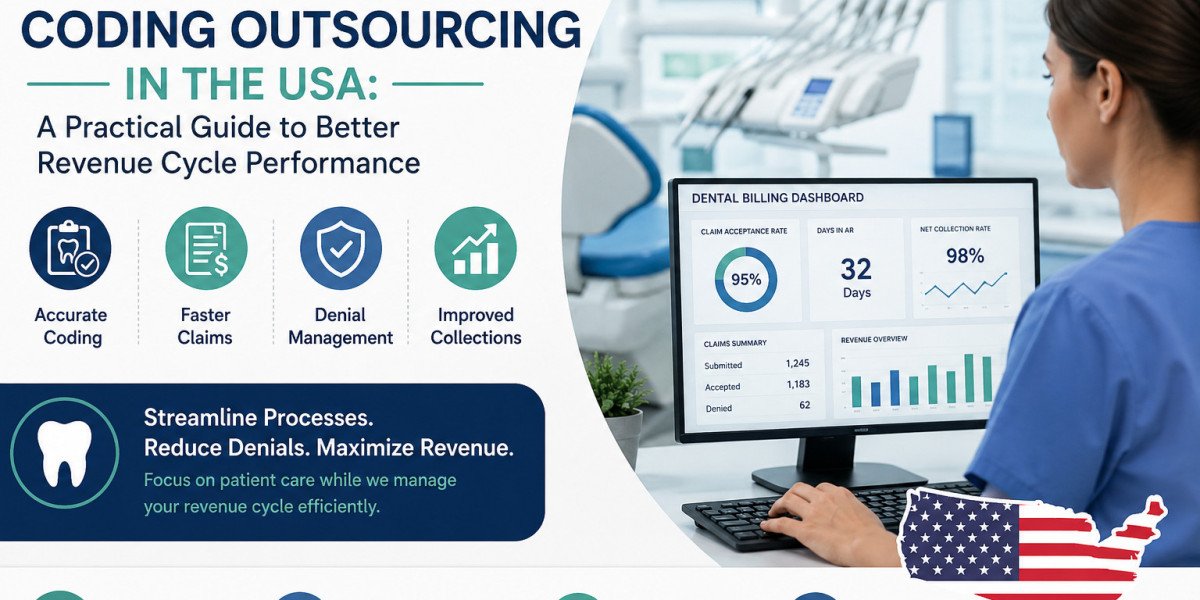

Running a dental practice involves much more than treating patients. Alongside clinical care, dental teams have to manage insurance verification, claims, coding, payment posting, patient balances, denials, follow-ups, and changing payer requirements. When these administrative responsibilities start taking too much time, practices can struggle to keep collections consistent and staff focused on patients.
This is one reason outsourcing dental billing services has become an increasingly practical option for dental practices across the USA. Instead of handling every billing function internally, a practice can work with an experienced billing team that manages selected or complete revenue-cycle activities.
The goal is not simply to send billing work outside the practice. A well-managed outsourcing arrangement should help reduce avoidable claim problems, improve follow-up, organize accounts receivable, and give the practice better visibility into its financial performance.
Why Dental Billing Has Become More Complicated
Dental insurance billing may appear straightforward from the outside, but the process can involve numerous details that affect reimbursement.
A claim can be delayed because of incorrect patient information, missing documentation, eligibility issues, coding discrepancies, coordination-of-benefits problems, or payer-specific requirements. Even a small error can create additional work for the billing team.
Dental practices also deal with different types of procedures, insurance plans, benefit limitations, deductibles, waiting periods, frequency restrictions, and patient responsibility amounts.
For a busy practice, keeping up with these details while managing appointments and patient care can become difficult.
Common administrative challenges include:
- Verifying insurance eligibility before treatment
- Understanding patient benefits and limitations
- Submitting accurate claims
- Tracking unpaid claims
- Managing rejected and denied claims
- Posting insurance and patient payments correctly
- Following up on outstanding accounts
- Reviewing aging accounts receivable
- Communicating patient balances
- Maintaining accurate billing records
When these processes are not monitored consistently, revenue can remain tied up in unpaid or underpaid claims.
What Does Outsourcing Dental Billing Services Actually Mean?
Outsourcing dental billing services means allowing an external billing team to handle some or all of a practice's financial and administrative billing activities.
The exact arrangement can vary. Some practices outsource only claims submission and follow-up, while others use a complete billing solution covering the entire revenue cycle.
A typical outsourced dental billing workflow may include:
- Patient information and insurance verification
- Charge and claim preparation
- Dental claim submission
- Rejection monitoring
- Denial analysis and follow-up
- Insurance payment posting
- Accounts receivable management
- Patient balance follow-up
- Reporting and billing performance analysis
The important point is that outsourcing should be treated as a process improvement strategy rather than simply a staffing alternative.
Why Dental Practices Consider Outsourcing
Reduced Administrative Pressure
Dental staff already have multiple responsibilities. Front-desk employees may be answering calls, scheduling appointments, checking patients in, collecting payments, and handling insurance questions.
Adding extensive billing follow-up to that workload can make it difficult to give sufficient attention to unpaid claims.
An external billing team can take responsibility for repetitive financial tasks, allowing in-house employees to spend more time on patient-facing responsibilities.
More Consistent Claim Follow-Up
Submitting a claim is only one part of the billing process.
Unpaid claims require regular monitoring. If a claim remains unresolved for weeks or months, the practice may lose valuable time and potentially face difficulties recovering the balance.
Dedicated dental billing providers can establish follow-up schedules, identify aging accounts, and prioritize claims based on their status and value.
Better Accounts Receivable Management
Accounts receivable is one of the most important areas to monitor in a dental practice.
A practice may have strong patient volume but still experience cash-flow problems if too much revenue remains outstanding.
Outsourced billing teams can review aging reports and separate accounts into categories such as:
- Current balances
- Recently outstanding claims
- Older insurance balances
- Denied claims
- Patient balances
- High-value unresolved accounts
This creates a more organized approach to collections.
Choosing Among Dental Billing Companies
There are many dental billing companies offering different levels of support. Practices should avoid choosing a provider based only on price.
The right partner should understand the operational realities of dental practices and have a clear process for handling claims, denials, payments, and reporting.
Before selecting a company, practices can evaluate:
Dental Billing Experience
Ask whether the company regularly works with dental practices and understands common dental billing workflows.
A provider experienced with dental claims is more likely to understand the difference between clinical documentation, procedure coding, insurance benefits, and payer requirements.
Technology and Practice Management Systems
The billing company should be able to work effectively with the practice management or dental software used by the office.
Technology should support the workflow rather than create additional administrative work.
Denial and Rejection Management
Ask how rejected and denied claims are handled.
A useful process should identify why a claim failed, correct the underlying issue when possible, resubmit the claim appropriately, and track the result.
Reporting
A practice should be able to see what is happening with its revenue cycle.
Useful reports may include:
- Outstanding accounts receivable
- Aging by payer
- Claim status
- Denial categories
- Collection activity
- Payment posting
- Monthly production and collection trends
Good reporting allows practice owners to make decisions using actual financial information instead of assumptions.
Understanding Dental Billing Company Services
The scope of dental billing company services can differ considerably between providers.
Some companies provide a narrow claims-processing service, while others manage nearly every administrative stage of the revenue cycle.
Common services may include insurance eligibility verification, claim submission, payment posting, denial management, accounts receivable follow-up, patient billing, and financial reporting.
A practice should clearly define which responsibilities remain with the internal team and which will be handled by the outsourcing partner.
For example, the front desk may continue verifying certain patient details while the external team handles claims and insurance follow-up. Another practice may prefer a more comprehensive arrangement.
Clear responsibility reduces confusion and prevents tasks from falling between teams.
The Role of Dental Billing RCM
Dental billing RCM refers to the financial process that begins when a patient receives a service and continues through claim submission, reimbursement, payment posting, and collection.
Looking at billing as a complete revenue cycle is important because individual improvements do not always solve broader financial problems.
For example, a practice may submit claims quickly but still have poor collections if denied claims are not followed up. Similarly, collecting payments efficiently at the front desk does not solve problems caused by inaccurate insurance information.
A stronger revenue cycle connects each stage.
The process generally looks like:
Patient registration → Eligibility verification → Treatment → Documentation and coding → Claim submission → Payer processing → Payment posting → Denial follow-up → A/R management → Final collection
A weakness at any stage can affect the stages that follow.
Dental Billing Companies in USA: What Practices Should Look For
When comparing dental billing companies in USA, practices should consider more than whether a company offers low-cost billing.
Important questions include:
- Does the provider understand dental insurance workflows?
- How quickly are claims submitted?
- How are rejected claims identified?
- Who handles denied claims?
- How frequently is A/R reviewed?
- What reports will the practice receive?
- How is patient information protected?
- Can the provider integrate with existing systems?
- Is there a dedicated account manager or support team?
- How are performance issues communicated?
The answers can reveal whether the company is simply processing claims or actively managing the practice's revenue cycle.
When Outsourcing May Make More Sense Than Hiring Internally
Hiring and retaining experienced billing staff can be challenging, particularly for smaller practices.
An internal employee may leave unexpectedly, require training, or become overwhelmed during periods of high patient volume.
Outsourcing can provide access to a broader billing team rather than relying on one individual.
However, outsourcing is not automatically the best choice for every practice. A large dental organization with an established internal revenue-cycle department may prefer to maintain control over billing operations.
The decision should depend on workload, staffing, technology, claim volume, financial performance, and management preferences.
How Outsourcing Can Support Better Patient Experience
Billing affects patients too.
Unexpected balances, unclear insurance information, delayed statements, and repeated billing corrections can create frustration.
A more organized billing process can help patients receive clearer information about their financial responsibility.
For example, verifying benefits before treatment can help identify potential coverage limitations. Accurate payment posting can reduce confusion about outstanding balances. Timely claim processing can also reduce the time patients spend waiting for insurance decisions.
The objective is not simply collecting more money. It is creating a billing process that is predictable for the practice and easier for patients to understand.
Beyond Dental Billing: Related Revenue Cycle Support
Some dental practices eventually need support beyond traditional claim processing. Broader medical billing services may be relevant to organizations that operate across dental and medical healthcare environments or manage services that require medical claims.
Similarly, medical coding services can support organizations that handle medical coding requirements alongside dental operations. For practices or healthcare groups with broader administrative needs, integrated medical billing and coding services may provide a more coordinated workflow.
Other organizations may also require broader revenue cycle management services, including eligibility verification, denial management, payment posting, accounts receivable follow-up, and financial reporting.
Credentialing services can also be important when providers need assistance with payer enrollment and maintaining participation with insurance networks. Although credentialing is different from day-to-day dental billing, delays in enrollment or inaccurate provider information can affect a practice's ability to receive reimbursement.
For healthcare organizations looking for broader administrative support, 247 Medical Billing Services is one example of a company that provides services across areas such as medical billing services, medical coding services, medical billing and coding services, revenue cycle management services, and credentialing services.
Questions to Ask Before Signing an Outsourcing Agreement
Before committing to a dental billing partner, practice owners should have a clear understanding of the relationship.
Ask for details about:
Scope of work: What exactly will the company handle?
Communication: Who should the practice contact when there is a billing problem?
Reporting: What financial reports will be provided and how often?
Claim follow-up: How are unpaid and denied claims tracked?
Security: What procedures are used to protect patient information?
Integration: Can the billing team work with the practice's existing systems?
Performance monitoring: Which indicators will be reviewed regularly?
A written agreement should make responsibilities clear and establish expectations before the relationship begins.
Final Thoughts
Outsourcing dental billing services can be a practical way for dental practices to reduce administrative pressure and create a more consistent approach to claims, collections, and accounts receivable.
The value of outsourcing does not come simply from transferring billing tasks to another company. It comes from having a structured process, experienced people, timely follow-up, useful reporting, and accountability throughout the revenue cycle.
Whether a practice chooses a specialized dental billing services company or a broader healthcare revenue-cycle provider, the most important consideration is how well the service fits its operational needs.
A thoughtful approach can help practices spend less time chasing paperwork and more time concentrating on patient care while keeping financial performance visible and manageable.
Frequently Asked Questions
1. What are outsourcing dental billing services?
Outsourcing dental billing services means hiring an external company to manage some or all billing activities for a dental practice. Services may include claims submission, eligibility verification, payment posting, denial management, and accounts receivable follow-up.
2. Why do dental practices outsource billing?
Practices may outsource because internal staff are overloaded, claims require consistent follow-up, accounts receivable is growing, or the practice wants access to specialized billing expertise without expanding its internal team.
3. How do I choose between dental billing companies?
Compare their dental billing experience, service scope, technology compatibility, reporting, denial-management process, communication structure, security practices, and pricing. The cheapest option is not always the most cost-effective option.
4. What is included in dental billing company services?
Depending on the provider, services can include insurance verification, claim preparation and submission, rejection handling, denial follow-up, payment posting, patient billing, accounts receivable management, and financial reporting.
5. Can dental billing companies handle denied claims?
Yes. Many dental billing providers offer denial and rejection management. A strong process should identify the reason for the denial, determine the appropriate correction or follow-up action, and monitor the claim until it is resolved.
6. Is outsourcing dental billing suitable for small dental practices?
It can be. Smaller practices may benefit when billing responsibilities place too much pressure on limited administrative staff. However, the practice should evaluate its claim volume, current staffing, financial performance, and specific billing requirements before choosing an outsourcing model.











