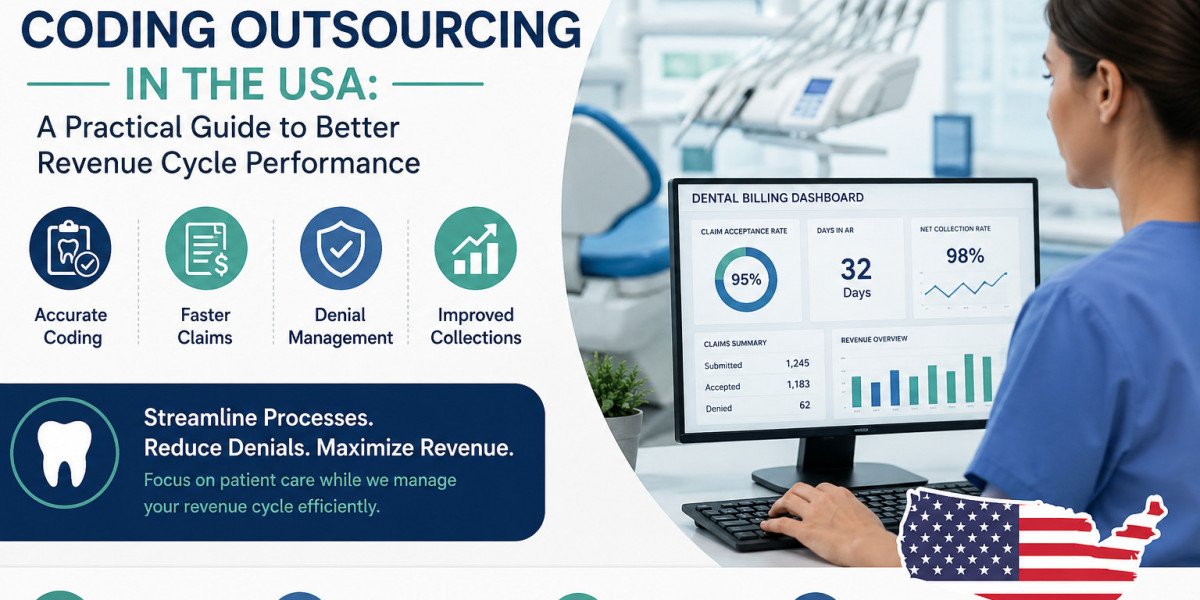

Dental practices have more financial responsibilities than simply submitting claims and collecting payments. Every patient visit can involve eligibility checks, procedure coding, claim submission, payer requirements, payment posting, follow-up, and patient billing. When these activities are handled inconsistently, even a busy dental practice can experience delayed payments, rejected claims, growing accounts receivable, and unnecessary administrative work.
This is why many practices evaluate a dental medical billing company when their internal team struggles to keep up with billing operations. A specialized billing partner can take responsibility for routine revenue cycle activities while allowing dentists and practice staff to spend more time on patient care.
However, choosing a billing partner should not be based only on price. Practices need to understand what a billing company actually does, how its processes affect collections, and whether its team understands dental coding, payer requirements, documentation, and the financial challenges faced by dental providers.
Why Dental Practices Are Paying More Attention to Billing Operations
A dental practice can provide excellent clinical care and still experience revenue problems because of administrative weaknesses.
For example, consider a practice that completes 500 procedures in a month. If a portion of those claims contains coding errors, missing information, eligibility issues, or documentation problems, payments may be delayed or claims may be rejected. Staff members then have to identify the problem, correct the claim, resubmit it, and monitor the payer response.
The problem becomes larger when the practice has a small administrative team.
Common challenges include:
- Incorrect or incomplete claim information
- Eligibility problems discovered after treatment
- Coding inconsistencies
- Delayed claim submission
- Unresolved rejected claims
- Slow insurance follow-up
- Incorrect payment posting
- Growing outstanding accounts receivable
- Difficulty managing patient balances
- Staff spending too much time on administrative tasks
A structured billing process helps prevent these issues from becoming routine.
What Does a Dental Medical Billing Company Do?
A dental medical billing company generally supports the financial and administrative side of a dental practice. The exact scope varies between providers, but services can cover several stages of the revenue cycle.
The objective is not simply to submit claims. A strong process should follow the claim from the initial patient and insurance information through payment and, when necessary, follow-up.
Patient Eligibility and Insurance Verification
Insurance verification is one of the earliest opportunities to prevent billing problems.
Before treatment, the billing team may verify information such as:
- Active insurance coverage
- Patient eligibility
- Benefit limitations
- Deductibles
- Copayments
- Coinsurance
- Annual maximums
- Remaining benefits
- Coverage restrictions
Accurate verification gives the dental office a clearer understanding of the patient's expected responsibility and reduces unpleasant surprises after treatment.
Dental Claim Submission
Claims need accurate patient, provider, procedure, insurance, and supporting information. Small errors can cause unnecessary delays.
A professional billing workflow focuses on reviewing claims before submission and identifying missing or inconsistent information.
The goal is straightforward: submit clean claims promptly and reduce avoidable rework.
Payment Posting
Payment posting is another important part of the revenue cycle.
Insurance payments, contractual adjustments, patient payments, and outstanding balances need to be recorded correctly. If payments are not posted accurately, the practice may have an incorrect picture of its accounts receivable.
Accurate posting also helps staff identify underpayments, unpaid claims, and patient balances that require attention.
Understanding Dental Billing RCM
Dental billing RCM refers to the broader revenue cycle management process surrounding the financial life of a dental service.
It begins before or at the time of patient treatment and continues until the practice receives appropriate reimbursement and resolves the remaining balance.
A typical cycle may include:
Scheduling → Eligibility Verification → Treatment → Documentation → Coding → Claim Submission → Payer Processing → Payment Posting → Denial Follow-Up → Patient Balance Collection
Looking at billing as a complete cycle is important. Fixing only one stage may not solve the underlying problem.
For instance, a practice may have excellent claim submission but poor insurance verification. Claims may still become problematic because services were performed without confirming coverage or benefit limitations.
This is why dental billing companies increasingly focus on the entire financial workflow rather than treating claim submission as an isolated task.
What Should Practices Look for in Dental Billing Companies?
Not every billing provider works the same way. Before selecting a partner, dental practices should evaluate several practical factors.
Experience With Dental Billing
Dental billing has its own workflows, procedures, payer requirements, and coding considerations. A provider familiar with general healthcare billing may not necessarily have sufficient dental billing experience.
Ask whether the company regularly works with dental practices similar to yours.
Clear Reporting
A practice should be able to understand what is happening with its claims and outstanding balances.
Useful reporting may include:
- Claims submitted
- Claims pending
- Claims rejected
- Denials
- Payments received
- Accounts receivable
- Aging balances
- Collection trends
- Outstanding patient balances
Transparent reporting helps dentists and practice managers make decisions based on actual financial information.
Denial and Rejection Management
A billing company should not simply report that a claim was denied. The team should identify why the denial occurred and determine the appropriate next step.
Repeated denials for the same reason can indicate a process problem. For example, if claims repeatedly fail because of missing information, the practice may need to improve its front-end workflow rather than repeatedly correcting claims after submission.
Communication
Outsourcing does not mean losing visibility.
A good billing relationship should provide clear communication between the dental office and billing team. Questions about claims, patient balances, documentation, or payer responses should have a defined process for resolution.
Dental Billing Company Services That Can Support Practice Operations
The scope of dental billing company services can extend beyond traditional claim submission.
Depending on the provider, a practice may receive support for:
- Insurance verification
- Charge entry
- Dental claim submission
- Payment posting
- Rejection management
- Denial follow-up
- Accounts receivable management
- Patient billing support
- Insurance follow-up
- Reporting and analytics
- Credentialing and enrollment support
The value comes from connecting these activities into one workflow.
For example, if a claim is rejected, the issue should be identified, corrected, resubmitted, and monitored. Leaving a rejected claim unresolved for weeks can turn a manageable problem into an aging receivable.
The Connection Between Coding and Dental Revenue
Coding accuracy has a direct relationship with reimbursement.
Procedures must be represented accurately according to the applicable coding requirements and supported by appropriate documentation. Incorrect coding can lead to rejected claims, delayed reimbursement, inaccurate reporting, or compliance concerns.
This is where medical coding services can become relevant for practices and healthcare organizations handling services that fall under medical rather than purely dental billing workflows.
Likewise, organizations that manage broader healthcare administrative operations may use medical billing and coding services to coordinate coding, documentation, claim preparation, and reimbursement activities.
The important point is that coding should never be treated as an afterthought. The information entered during the clinical and administrative workflow ultimately influences the claim that reaches the payer.
When Dental Practices Consider Outsourcing
Outsourcing may make sense when internal resources are stretched or when billing performance becomes difficult to manage.
A practice may consider external support when:
- The billing workload has increased significantly
- Claims are frequently delayed
- A/R is growing
- Staff turnover affects billing continuity
- The practice lacks specialized billing knowledge
- Dentists spend too much time discussing billing issues
- Denials are not being followed up consistently
- Management lacks useful financial reporting
For a growing multi-location dental organization, the challenge can be even greater. Different locations may follow different billing processes, making centralized oversight difficult.
A dedicated billing team can help establish more consistent workflows across locations.
Dental Billing Providers and Technology
Technology has changed how dental billing teams manage claims and financial information.
Modern billing operations may use practice management systems, electronic claim submission, automated eligibility verification, reporting dashboards, and workflow tracking.
Technology can improve efficiency, but it does not eliminate the need for experienced staff.
A system may identify a rejected claim, but someone still needs to understand the reason for rejection and determine the appropriate resolution.
The best approach combines technology with human review.
Credentialing Is Also Part of the Bigger Picture
Credentialing can affect a provider's ability to participate with insurance networks and receive reimbursement appropriately.
Credentialing services may support activities such as provider enrollment, payer applications, recredentialing, and maintaining required information.
For a dental organization expanding into new locations or adding providers, keeping credentialing information current can become an important administrative responsibility.
Credentialing should therefore be viewed as part of the broader administrative infrastructure rather than a completely separate task.
How Better Revenue Cycle Management Can Affect a Dental Practice
The financial impact of a better billing process is not limited to collecting more money.
A more organized revenue cycle can also give practice owners greater visibility into their business.
For example, accurate reporting can help answer questions such as:
- Which claims are still unpaid?
- How old are outstanding balances?
- Which payers generate the most delays?
- Are certain procedures frequently rejected?
- How much revenue remains in insurance A/R?
- How much is currently owed by patients?
- Are billing problems increasing or decreasing?
These answers allow management to identify patterns rather than reacting to individual billing problems.
For practices that also operate within broader healthcare environments, revenue cycle management services can provide a wider framework covering billing, coding, claims, payment posting, denial management, and accounts receivable.
What Makes a Billing Partnership Successful?
Successful outsourcing depends on more than handing invoices and claims to an outside company.
The dental practice and billing provider need clearly defined responsibilities.
Before beginning a partnership, both sides should understand:
- Which billing activities will be outsourced?
- Who handles patient billing questions?
- How are denied claims escalated?
- How frequently will reports be provided?
- Who communicates with insurance companies?
- How are documentation issues handled?
- How will performance be reviewed?
- How quickly should billing questions receive responses?
Clear expectations prevent misunderstandings and make it easier to measure the relationship.
Choosing the Right Dental Billing Partner in the USA
There is no universal billing company that is automatically right for every practice.
A small independent dental office may need a different level of support than a multi-location organization. A specialty practice may also have different billing requirements from a general dental practice.
When comparing dental billing companies in USA, practices should look beyond marketing claims and evaluate experience, communication, reporting, workflow, security practices, and the company's ability to handle the specific needs of the practice.
The right partner should make the billing process easier to understand and manage—not create another layer of complexity.
Frequently Asked Questions
1. What is a dental medical billing company?
A dental medical billing company provides outsourced administrative and financial support related to billing, claims, payments, insurance follow-up, accounts receivable, and other revenue cycle activities. The exact services depend on the provider and the needs of the dental practice.
2. Why do dental practices outsource billing?
Practices may outsource billing to reduce administrative workload, improve claim follow-up, manage accounts receivable, access specialized billing expertise, and allow internal staff to focus more heavily on patient-facing responsibilities.
3. How are dental billing companies different from general medical billing companies?
Dental billing involves dental procedures, dental coding workflows, insurance benefits, and payer requirements specific to dental care. A company with dedicated dental experience may therefore be better positioned to handle the operational details of a dental practice.
4. What services should a dental billing company provide?
Common services can include eligibility verification, claim submission, payment posting, denial management, insurance follow-up, accounts receivable management, reporting, and patient billing support. Some providers also offer credentialing and broader healthcare billing support.
5. Can outsourcing help reduce billing errors?
It can help when the outsourced team follows consistent processes, reviews claims carefully, monitors rejections, and tracks recurring problems. However, results depend on the quality of the provider's workflow and communication with the dental practice.
6. What should a dental practice consider before choosing a billing company?
Practices should evaluate dental billing experience, services offered, reporting, communication, denial management, technology, security procedures, pricing structure, and the provider's ability to support the practice as it grows.
Building a More Reliable Dental Revenue Cycle
Dental billing is ultimately about more than sending claims. It is about creating a reliable process that connects patient information, insurance verification, coding, documentation, claims, payments, and follow-up.
For practices that need broader healthcare financial support, companies such as 247 Medical Billing Services can provide access to medical billing services, medical coding services, medical billing and coding services, revenue cycle management services, and credentialing services as part of a wider administrative support model.
The most important consideration is not simply whether a company can process claims. It is whether the billing process is organized, transparent, responsive, and capable of helping the practice identify problems before they become persistent revenue issues. A well-managed revenue cycle gives dental practices something equally valuable to reimbursement: greater financial visibility and more time to concentrate on patient care.