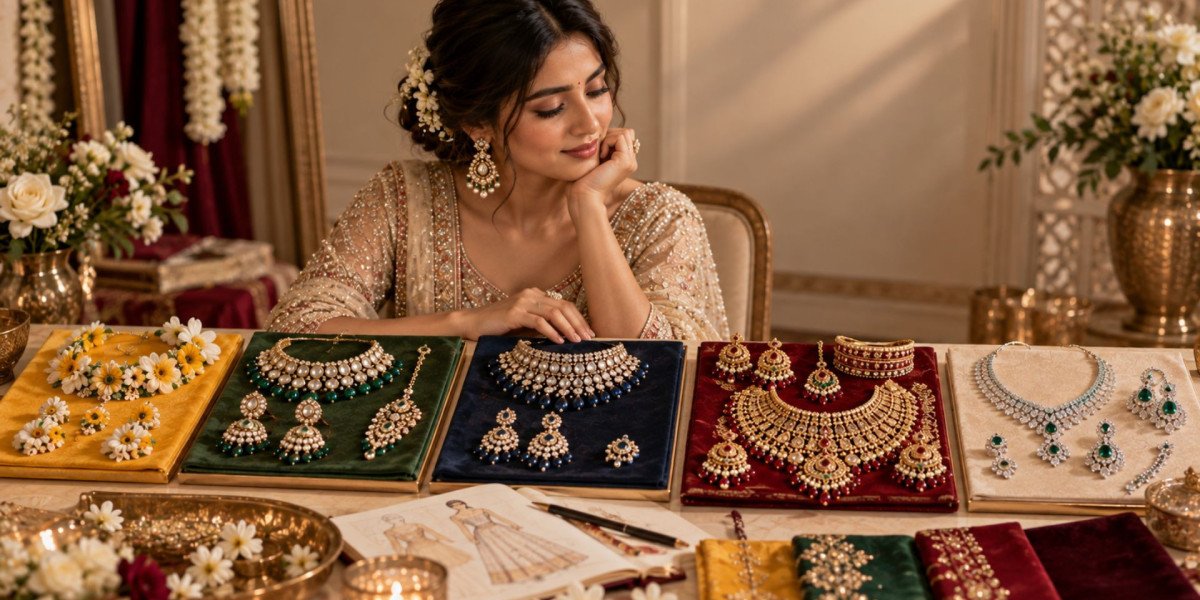

Bridal jewellery should make your wedding look feel complete, not crowded. The right pieces depend on your outfit, wedding function, neckline, skin undertone, hairstyle, comfort and personal style.
Indian weddings rarely revolve around one outfit or one jewellery set. Haldi, Mehendi, Sangeet, Wedding and Reception each have a different mood. Your jewellery should follow those changes instead of repeating the same heavy bridal formula at every event.
A good styling plan also helps you spend with purpose. Instead of buying jewellery because it looks beautiful in a showroom, you first decide where, when and how you will wear it.
What is the best way to plan bridal jewellery for every wedding function?
Start with your wedding calendar, then map each outfit to a jewellery look before buying individual pieces. This gives every function its own identity while helping you reuse selected jewellery across multiple outfits.
A simple bridal jewellery styling plan looks like this:
| Wedding Function | Jewellery Style | Styling Priority |
|---|---|---|
| Haldi | Floral, lightweight gold, beads or colourful pieces | Comfort and freshness |
| Mehendi | Chandbalis, jhumkas, light necklaces, maang tikka | Colour and ease |
| Sangeet | Statement earrings, chokers or layered pieces | Movement and photographs |
| Wedding | Kundan, Polki, Jadau, gold or traditional bridal sets | Tradition and overall balance |
| Reception | Diamonds, emeralds, refined gold or contemporary sets | Elegance and reusability |
The function should influence the jewellery weight, colour and amount of detail. Vogue India also highlights comfort and movement when discussing jewellery for Mehendi and Sangeet, while recommending more polished statement styling for the Reception.
This function-first approach also forms part of the styling process behind Shaadinama, where bridal looks are planned around individual wedding events rather than treating the entire wedding as one occasion.
What jewellery should you wear for Haldi?
Haldi jewellery should feel light, cheerful and easy to wear because the function involves movement, turmeric and close interaction with family and friends. Floral jewellery, colourful beads, lightweight gold and simple statement earrings often work better than elaborate bridal sets.
Your outfit already brings plenty of colour into the look. Yellow, green, pink, orange and pastel outfits pair well with jewellery that adds detail without competing with the outfit.
For Haldi, consider:
- Floral earrings
- Lightweight jhumkas
- Colourful bangles
- Pearl jewellery
- Simple maang tikka
- Lightweight gold pieces
- Beaded necklaces
Avoid choosing jewellery with complicated clasps or pieces you would worry about during the ceremony. The goal is to look bridal without spending the entire function protecting your necklace from turmeric.
How should you style jewellery for Mehendi?
Mehendi jewellery should complement the colour and detail of your outfit while leaving enough attention for your henna. Earrings, maang tikka, layered necklaces and lighter bangles work well when the jewellery does not interfere with the hands.
Your Mehendi outfit might include a sharara, lehenga, saree, cape set or Indo-Western silhouette. Let the outfit decide the jewellery rather than following a fixed Mehendi formula.
For example:
- Printed sharara + colourful chandbalis
- Cape set + statement maang tikka
- Bandhani outfit + enamel jhumkas
- Minimal lehenga + layered pearl necklace
- Embellished neckline + statement earrings instead of a necklace
If your neckline already carries mirror work or heavy embroidery, skip the necklace and let the earrings lead the look.
The same rule applies to hand jewellery. If your Mehendi is still being applied, keep rings and heavy bangles away from the hands. Once the Mehendi is finished and dry, you have more freedom to add bangles, rings or a hathphool.
What jewellery works best for a Sangeet?
Sangeet jewellery should balance glamour with movement. Statement earrings, chokers, layered necklaces and secure bracelets work well because the bride needs jewellery that stays comfortable while dancing and moving.
Vogue India's bridal jewellery experts specifically highlight movement and comfort as important considerations for Sangeet styling.
Your jewellery should also respond to the outfit.
A sequined lehenga might need a clean diamond-style choker and earrings rather than another heavily detailed necklace. A simpler outfit gives you room for a stronger jewellery statement.
Try combinations such as:
- Sequin lehenga + diamond-style earrings + sleek bracelet
- Minimal lehenga + Polki choker + statement earrings
- Corset blouse + layered necklace + earrings
- Sharara + oversized jhumkas + maang tikka
- Monochrome outfit + coloured gemstone necklace
Most importantly, test your jewellery while moving. Sit, walk, turn your head and dance before finalising the look. A necklace that looks perfect while standing still has a nasty habit of becoming uncomfortable after two hours.
How should you style jewellery for your wedding day?
Your wedding jewellery should bring together tradition, outfit design and personal style. The main bridal look often carries the greatest amount of jewellery, but every piece still needs to have a visual purpose.
Start with your main necklace. Then build around it.
If you choose a heavy choker, ask whether you also need a long necklace. If your earrings are large, check whether a heavy necklace competes with them. If your blouse has a high neckline, consider whether a shorter necklace or statement earrings create better balance.
Traditional options include:
- Kundan jewellery
- Polki jewellery
- Jadau jewellery
- Temple jewellery
- Traditional gold jewellery
- Pearl jewellery
- Diamond and gemstone combinations
The right choice depends on your outfit, regional traditions and personal style.
For a red or maroon bridal lehenga, traditional gold, Kundan, Polki and ruby accents often create a cohesive look. Pastel outfits often work well with pearls, diamonds, coloured gemstones or softer gold tones.
Do not copy another bride's complete jewellery look simply because it photographs well. Your face shape, neckline, hairstyle, outfit and personal preferences all change the final result.
How do you match bridal jewellery with your neckline?
Treat your neckline as the frame for your necklace. The more detailed the neckline, the more carefully you need to control the necklace length and visual weight.
A few useful combinations:
- Deep neckline: Choker, layered necklace or longer pendant
- Sweetheart neckline: Choker or curved necklace
- High neckline: Statement earrings or shorter necklace
- Boat neckline: Short necklace or statement earrings
- Off-shoulder neckline: Choker, collar necklace or bold earrings
- Heavy embroidered neckline: Earrings without a necklace
Your hairstyle also matters. Large earrings paired with an open hairstyle create a different effect from the same earrings worn with a sleek bun.
This is why jewellery should not be selected separately from your bridal outfit and hair trial.
How do you choose bridal jewellery according to your skin undertone?
Use your skin undertone as a styling guide rather than a strict rule. Warm, cool and neutral undertones offer a starting point for choosing metal and gemstone colours, while the outfit remains equally important.
Warm undertones often pair naturally with yellow gold and warmer gemstone colours. Cool undertones often work well with white metals and diamond-led designs. Neutral undertones give you more flexibility across warm and cool metal tones.
Shaadinama includes an undertone check as part of its styling process. The jewellery palette is then considered alongside the bride's outfit colours, fabric and function.
This second step matters. A metal might suit your undertone but still look wrong against a particular lehenga. Always check the complete combination before making your final choice.
How do you balance heavy jewellery with a heavily embroidered outfit?
Follow the one-lead rule. If your outfit is heavily embroidered, let one jewellery piece become the main focus and keep the supporting pieces cleaner.
For example, a heavily embroidered blouse with a large choker and oversized earrings might create too much visual competition. Replace one of those elements with something simpler.
Try:
- Heavy necklace + simple earrings
- Statement earrings + no necklace
- Heavy bangles + restrained rings
- Elaborate maang tikka + clean necklace
- Detailed outfit + simple diamond jewellery
The aim is not minimal jewellery. It is controlled jewellery.
How do you style bridal jewellery according to your face shape?
Your face shape helps you select proportions, especially for earrings, maang tikka and necklace length. It should guide your choices without becoming a rigid rule.
Longer earrings often add length to rounder face shapes, while wider or more rounded earrings can complement longer faces. A maang tikka also changes how the forehead and face appear within the overall bridal hairstyle.
Shaadinama's style mapping considers face shape, height and shoulder line before shortlisting function-wise jewellery looks. That makes the process more personalised than selecting jewellery from a generic face-shape chart.
How should your hairstyle affect your bridal jewellery?
Your hairstyle determines how much space your jewellery has around your face and neck. A sleek bun, open waves, braid and traditional bridal hairstyle each create a different frame for earrings and hair jewellery.
For a sleek bun, statement earrings and a maang tikka often stand out clearly. Open hair gives you a softer frame, while a heavily decorated hairstyle needs careful coordination so the jewellery does not compete with the hair accessories.
Before finalising your jewellery, try it with the hairstyle you plan to wear. This small step prevents the classic wedding-week problem where every individual piece looks beautiful but the complete look somehow resembles a jewellery counter during a power cut.
How do you style jewellery for the Reception?
Reception jewellery often works best when it feels refined rather than identical to the wedding-day look. Diamonds, emeralds, polished gold, pearls and contemporary necklace designs suit evening outfits, gowns, sarees and modern lehengas.
Consider:
- Statement diamond earrings with a bracelet
- Emerald earrings with a clean necklace
- Diamond choker with a satin saree
- Pearl necklace with an ivory outfit
- Gold collar necklace with a structured blouse
- Large earrings with no necklace
The Reception is also an excellent opportunity to choose pieces you will wear after the wedding. A versatile diamond or gemstone pair often has more long-term value than another highly specific bridal set.
How do you make your bridal jewellery look personal instead of copied?
Choose one or two elements that reflect your personality, family heritage or cultural background, then build the rest of the jewellery around them. Your bridal look should feel connected to you rather than assembled from the most popular images on Pinterest and Instagram.
You might use an heirloom necklace, a regional jewellery style, a family gemstone, a traditional nath or a particular metal finish as your starting point.
Then introduce modern elements around it.
For example, a traditional Polki necklace might work with contemporary earrings for the Reception. A family gold bangle might sit alongside modern diamond bracelets. A heritage piece might become the centre of the Wedding look while the Mehendi and Sangeet looks remain more contemporary.
This is where personalised styling becomes useful. Instead of asking, “What jewellery is trending?”, ask, “What jewellery makes sense for me, my outfits and my wedding?”
What is the simplest bridal jewellery styling checklist?
Before finalising your jewellery, check the complete look from head to toe. Your necklace, earrings, hair accessories, outfit, hairstyle, neckline and footwear should feel like parts of the same outfit.
Use this final checklist:
- Match jewellery to the function.
- Check the outfit neckline.
- Identify the main jewellery statement.
- Consider your skin undertone.
- Check jewellery against the actual outfit colour.
- Test earrings with your hairstyle.
- Check comfort while sitting and moving.
- Avoid unnecessary duplication between functions.
- Separate investment pieces from trend-led pieces.
- Photograph the complete look before finalising it.
A function-wise lookbook makes this process easier because you see the complete combination instead of judging every jewellery piece separately.
Why does personalised bridal jewellery styling make shopping easier?
Personalised styling turns jewellery shopping into a sequence of decisions based on your wedding rather than a search through endless designs. It brings together your functions, outfits, skin undertone, proportions, preferences and budget before the final jewellery list is created.
That is the approach behind Shaadinama.
The process starts with understanding your wedding events, outfits, preferences and budget. It then moves into style mapping, function-wise shortlisting, outfit coordination, try-on and feedback, followed by a final jewellery checklist.
The result is not simply a collection of jewellery recommendations. It is a coordinated plan for how you will wear each piece, why it belongs in that particular look and where your budget should go.
For a bride planning several wedding functions, that distinction matters. You do not need more jewellery ideas. You need a clear reason behind every jewellery decision.