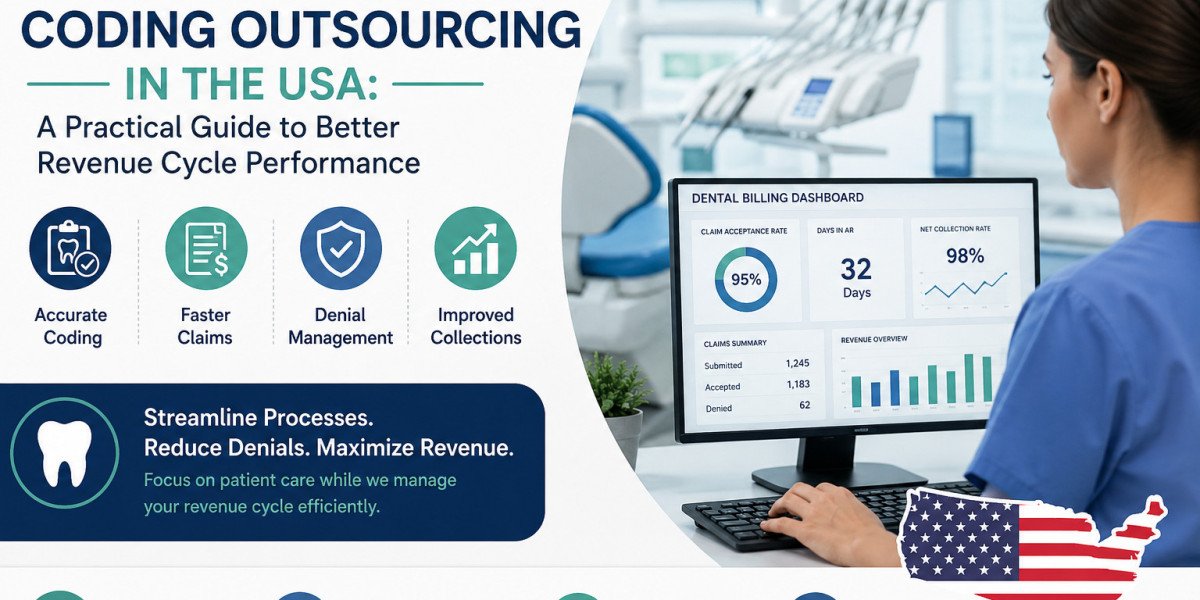

Federally Qualified Health Centers (FQHCs) play an important role in making healthcare accessible to underserved communities across the United States. Many FQHCs provide dental care alongside primary care, behavioral health, pharmacy, and other services. While this integrated model improves access for patients, it also creates a more complex billing environment.
Dental claims from an FQHC cannot always be managed like claims from a traditional private dental practice. Different payer requirements, sliding-fee programs, Medicaid policies, Medicare considerations, encounter rules, coding requirements, and documentation standards can all affect reimbursement.
This is where a well-organized FQHC dental billing process becomes important. A strong billing workflow helps community health centers capture appropriate charges, submit accurate claims, reduce avoidable denials, and maintain a healthier revenue cycle without taking attention away from patient care.
Why FQHC Dental Billing Requires a Different Approach
FQHC dental departments often serve patients with varied insurance coverage and financial circumstances. A single dental department may handle Medicaid, Medicare-related services, commercial insurance, self-pay patients, and patients receiving care through sliding-fee arrangements.
That variety makes revenue cycle management more complicated than simply submitting a claim after an appointment.
For example, a dental provider may complete a procedure correctly, but the claim can still encounter problems because of:
Incorrect CDT coding
Missing documentation
Eligibility changes
Incorrect payer information
Coordination-of-benefits issues
Authorization requirements
Incorrect place-of-service information
Duplicate claims
Missing attachments
Payer-specific billing rules
Inconsistent patient demographics
An effective billing process therefore needs to connect front-office registration, eligibility verification, clinical documentation, coding, claim submission, payment posting, denial management, and accounts receivable follow-up.
Common Revenue Challenges in FQHC Dental Departments
One of the biggest challenges is revenue leakage. A procedure may be performed and documented but never become a clean, reimbursable claim.
Consider a community health center that provides hundreds of dental visits each month. If even a small percentage of procedures are missed during charge capture or incorrectly coded, the financial impact can accumulate quickly.
Several areas deserve particular attention.
Eligibility and Insurance Verification
Dental coverage can vary significantly by payer and patient plan. Coverage for preventive, restorative, periodontal, oral surgery, and other services may have different limitations.
Checking eligibility before treatment can help identify:
Active or inactive coverage
Benefit limitations
Remaining annual maximums
Deductibles and copayments
Frequency limitations
Authorization requirements
Coordination-of-benefits information
When verification is skipped, the billing team may discover coverage problems only after the claim has already been denied.
Accurate Dental Coding
Coding is another major component of FQHC dental billing. Dental procedures generally rely on CDT codes, while diagnosis coding and other billing requirements may also apply depending on the service and payer.
A coding error can change how a claim is interpreted by the payer. For example, selecting an incorrect procedure code, missing a required modifier, or failing to support the procedure with appropriate documentation can create unnecessary claim delays.
Coding teams should therefore understand both dental coding conventions and the specific requirements applicable to the FQHC's payer mix.
The Importance of Documentation
Good documentation is more than a clinical requirement. It supports the financial side of healthcare delivery.
Dental records should clearly support the services reported on the claim. Depending on the procedure and payer, documentation may include clinical notes, radiographs, periodontal findings, treatment plans, or other supporting information.
A useful internal question is simple:
Could an independent reviewer understand why this procedure was medically or dentally necessary by reviewing the documentation?
If the answer is unclear, the claim may be vulnerable to additional review or denial.
Strong documentation also makes appeals more effective when a legitimate claim is challenged by a payer.
How Dental Billing RCM Supports FQHC Financial Performance
Dental billing RCM covers the financial journey from patient registration through final reimbursement.
A well-managed dental billing RCM workflow typically includes:
Patient registration and demographic validation
Insurance eligibility verification
Benefit and authorization review
Charge capture
Dental coding review
Claim creation
Electronic claim submission
Rejection monitoring
Payment posting
Denial analysis
Insurance follow-up
Patient balance management
Accounts receivable reporting
The objective is not simply to submit more claims. The goal is to submit clean, properly supported claims and resolve exceptions quickly.
For FQHCs, this approach can provide greater visibility into where revenue is being lost.
Choosing Among Dental Billing Companies
FQHC leaders considering outside support often compare several dental billing companies before making a decision. Price should not be the only factor.
The right partner should demonstrate an understanding of community health center operations, dental coding, payer requirements, denial management, and the broader healthcare revenue cycle.
When evaluating dental billing companies in USA, FQHC administrators should consider questions such as:
Does the company understand FQHC workflows?
Does it have experience with dental claims?
How does it monitor claim rejections?
What is its denial management process?
How frequently are accounts receivable reviewed?
Can it provide detailed financial reporting?
How are coding discrepancies identified?
Does it support payer follow-up?
How does it protect patient information?
Can the workflow integrate with the organization's existing systems?
A provider may have an impressive technology platform, but practical experience with FQHC dental operations is equally important.
What Effective Dental Billing Company Services Should Cover
The phrase dental billing company services can mean very different things depending on the organization.
Some providers focus primarily on claim submission, while others support the entire revenue cycle.
For an FQHC, useful services may include:
Charge Entry and Claim Submission
Every completed service needs to move accurately from the clinical record into the billing system. Charge-entry reviews can identify missing or inconsistent information before claims reach the payer.
Denial Management
Denials should not be treated as isolated administrative tasks. Repeated denials can reveal deeper process problems.
For example, if claims are repeatedly denied because of missing authorization, the solution may be improving the authorization workflow rather than simply appealing every individual claim.
Accounts Receivable Follow-Up
Unpaid claims require timely attention. Aging reports can help identify accounts that need immediate follow-up and reveal whether reimbursement problems are concentrated around particular payers, procedures, or claim types.
Payment Posting and Reconciliation
Accurate payment posting gives the organization a clearer picture of what was billed, what was paid, what was adjusted, and what remains outstanding.
Reporting and Performance Monitoring
Useful reporting can include:
Clean claim rate
Denial rate
Days in accounts receivable
Aging by payer
Collection rate
Outstanding balances
Rejection trends
Underpayment trends
These metrics allow FQHC leadership to move from simply reviewing revenue to understanding the causes behind revenue performance.
Combining Dental and Medical Billing Operations
Many FQHCs operate integrated healthcare environments where dental services exist alongside medical and behavioral health departments. That makes coordination particularly valuable.
A specialized medical billing services team can support broader healthcare billing workflows, while medical coding services can help maintain coding accuracy across eligible medical encounters.
For organizations managing both sides of the operation, medical billing and coding services can create a more coordinated approach to documentation, charge capture, claim review, and payer follow-up.
This does not mean dental billing should be treated exactly like medical billing. Dental procedures have their own coding and payer considerations. Instead, the advantage comes from coordinating the financial infrastructure while maintaining specialty-specific expertise.
Credentialing Can Affect Dental Revenue Too
Credentialing is another area that deserves attention.
A provider can deliver high-quality dental care, but reimbursement can become complicated when enrollment information is incomplete, outdated, or inconsistent with payer records.
Well-managed credentialing services can help organizations maintain provider enrollment information, monitor revalidation requirements, and address administrative issues that could interfere with claims.
For a growing FQHC, keeping payer enrollment aligned with the active provider roster is especially important. A change in provider status, location, specialty, or payer participation can have downstream billing consequences.
Why Outsourcing Can Make Sense for Some FQHCs
Maintaining an experienced internal dental billing team can be challenging. Recruiting skilled billing professionals, keeping staff trained on changing payer policies, managing claim volume, and monitoring accounts receivable all require time and resources.
Outsourcing can provide access to specialized staff without requiring an FQHC to build every capability internally.
However, outsourcing should not be viewed as simply transferring billing work to another company. The strongest relationships involve measurable processes, regular communication, transparent reporting, and clearly defined responsibilities.
For example, leadership should be able to understand why denials increased last month, which payers are creating the most delays, and what corrective actions are being taken.
A Practical Example of Better FQHC Dental Revenue Management
Imagine an FQHC discovers that its dental department has a growing number of unpaid claims older than 90 days.
Instead of immediately increasing collection efforts, the billing team analyzes the accounts and discovers that a significant portion of the claims are being denied for eligibility and authorization-related reasons.
The organization then changes its workflow by strengthening pre-service eligibility checks, creating an authorization checklist, and reviewing high-risk claims before submission.
Over time, the number of preventable denials declines.
This illustrates an important principle: revenue improvement often comes from fixing the process that creates the problem rather than repeatedly correcting the same claim after it fails.
Building a More Reliable FQHC Dental Billing Strategy
A sustainable billing strategy should combine people, processes, technology, and accountability.
FQHCs can strengthen their approach by:
Reviewing payer-specific dental requirements regularly
Auditing a sample of claims for coding accuracy
Monitoring rejected claims daily
Categorizing denials by root cause
Reviewing aging accounts consistently
Tracking underpayments
Improving front-end insurance verification
Maintaining accurate provider enrollment records
Establishing clear billing performance benchmarks
Training staff when payer requirements change
These steps can turn billing data into practical operational information.
The Role of Experienced Billing Partners
As FQHCs expand dental services, managing reimbursement becomes increasingly important. A capable partner can support the administrative side while the organization remains focused on providing accessible care.
Companies such as 247 Medical Billing Services can fit into this broader model by supporting healthcare organizations with medical billing services, medical coding services, medical billing and coding services, and revenue cycle management services. Supporting areas such as credentialing services can also help organizations maintain the administrative foundation needed for a functioning revenue cycle.
The key is to choose a billing partner based on relevant experience, transparency, reporting capabilities, compliance practices, and the ability to understand the organization's specific payer and operational environment.
Final Thoughts
FQHC dental billing is not simply about sending claims to insurance companies. It is a connected process that begins with accurate patient information and eligibility verification and continues through coding, documentation, claim submission, payment posting, denial resolution, and accounts receivable management.
For community health centers, even small gaps in this process can create significant revenue leakage over time.
A disciplined approach to FQHC dental billing helps organizations identify those gaps, reduce preventable billing problems, and build a more predictable revenue cycle. Whether the work is handled internally or through one of the dental billing providers available in the USA, the focus should remain the same: accurate claims, timely reimbursement, clear reporting, and sustainable financial performance.
Frequently Asked Questions
1. What is FQHC dental billing?
FQHC dental billing is the process of managing claims and reimbursement for dental services provided through a Federally Qualified Health Center. It involves eligibility verification, coding, documentation, claim submission, payment posting, denial management, and accounts receivable follow-up.
2. Why is dental billing different for FQHCs?
FQHCs may work with multiple payer types and serve patients with different coverage and financial circumstances. Their dental departments may also operate within an integrated healthcare environment, making billing workflows more complex than those of a conventional private dental practice.
3. What should FQHCs look for in dental billing providers?
FQHCs should evaluate experience with dental claims, payer requirements, coding, denial management, accounts receivable, reporting, compliance, and healthcare workflows. Understanding the organization's specific payer mix is also important.
4. Can outsourcing improve FQHC dental billing?
Outsourcing may help an FQHC access specialized billing expertise, improve claim follow-up, and strengthen revenue cycle monitoring. Results depend on the provider's experience, processes, communication, and ability to work effectively with the health center.
5. How can FQHCs reduce dental claim denials?
Preventive measures include verifying eligibility, checking authorization requirements, validating coding, maintaining complete documentation, reviewing claims before submission, monitoring payer rejections, and analyzing denials by root cause.
6. How does dental billing RCM affect FQHC financial performance?
Dental billing RCM connects patient registration, billing, coding, claims, payments, denials, and accounts receivable. When these processes work together, FQHCs can identify revenue leakage earlier, reduce avoidable delays, and gain better visibility into financial performance.