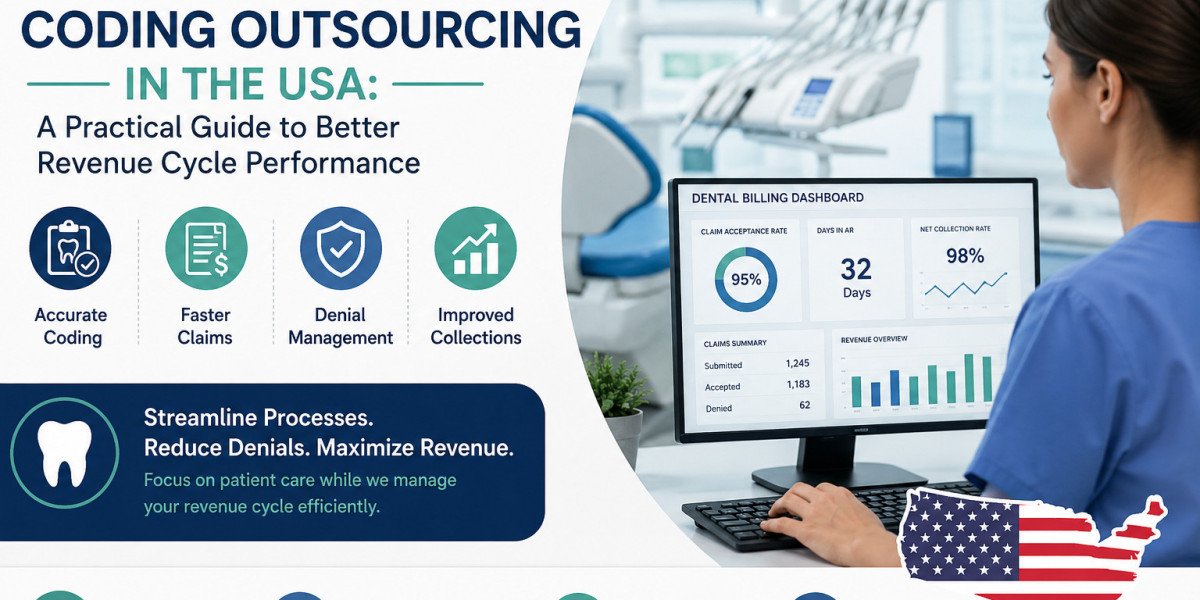

Running a dental practice involves much more than treating patients. Behind every appointment is a chain of administrative work involving insurance verification, claim submission, coding, payment posting, denial follow-up, patient balances, and compliance. When even one part of that process breaks down, a practice can lose revenue without immediately realizing where the problem started.
For dental practices in Tennessee, selecting the right dental billing company TN can make a meaningful difference in financial performance. A capable billing partner does more than submit claims. It helps organize the revenue cycle, reduce avoidable errors, monitor unpaid claims, and give the practice better visibility into its financial health.
The challenge is knowing what separates a dependable billing partner from a company that simply processes claims. Understanding the services, technology, expertise, and reporting capabilities available can help dentists make a more informed decision.
Why Dental Billing Has Become More Complicated
Dental billing may appear straightforward from the outside, but reimbursement depends on accurate documentation, correct coding, eligibility, payer requirements, and timely claim handling.
A typical claim may involve:
- Patient eligibility and benefit verification
- CDT procedure coding
- Documentation review
- Claim creation and submission
- Attachments and supporting records
- Insurance follow-up
- Denial management
- Payment posting
- Patient statement processing
- Accounts receivable follow-up
Consider a patient who receives a crown. The clinical procedure may be completed successfully, but the financial process does not end when the patient leaves the office. The claim still needs accurate coding, appropriate documentation, insurance processing, and follow-up.
If the claim is rejected because of missing information, the practice has to spend additional staff time correcting it. Multiply that situation by dozens or hundreds of claims each month, and the administrative burden can become significant.
This is one reason dental practices increasingly evaluate professional dental billing companies rather than handling every revenue cycle task internally.
What Should a Dental Billing Company Actually Handle?
A good billing partner should support the complete financial workflow rather than focusing exclusively on claim submission.
Insurance Verification and Eligibility
Eligibility problems are a common source of avoidable billing issues. Verifying coverage before treatment can help staff understand whether a patient's plan is active, what benefits are available, and whether limitations may apply.
Effective verification can also reduce uncomfortable conversations with patients later when an expected insurance payment does not materialize.
Dental Claim Submission
Claims need accurate patient information, provider details, procedure codes, fees, and supporting documentation. A billing company should have established processes for identifying missing information before claims are submitted.
Clean claims generally require less rework, allowing staff to spend more time on patients rather than correcting preventable billing errors.
Payment Posting
Payment posting is another area that deserves attention. Insurance payments, contractual adjustments, patient payments, and remaining balances should be recorded accurately.
Incorrect posting can make accounts receivable reports unreliable. In turn, the practice may struggle to identify which claims actually need follow-up.
Denial and Rejection Management
Not every denied claim represents the same problem. Some may result from eligibility issues, coding discrepancies, missing documentation, timely filing concerns, or payer-specific requirements.
A strong billing process does not simply resubmit every denial. It identifies the reason for the denial and determines the appropriate next step.
Why Dental Billing RCM Matters
Dental billing RCM is broader than traditional claim processing. Revenue cycle management connects the financial activities that begin before treatment and continue until the account is resolved.
A well-managed cycle may include:
- Scheduling and patient information collection
- Insurance verification
- Treatment and procedure documentation
- Coding and claim preparation
- Claim submission
- Payment processing
- Denial resolution
- Accounts receivable follow-up
- Patient balance management
- Financial reporting
Looking at these activities as one connected process helps practices identify where revenue is being delayed or lost.
For example, if a practice has a high number of unpaid claims, the problem may not be its follow-up team. The underlying issue could be inaccurate eligibility information collected at the beginning of the process.
That is why experienced dental billing providers examine the entire revenue cycle rather than concentrating on one task.
Dental Billing Companies in USA: What Practices Should Compare
The market includes a wide range of dental billing companies in USA, from specialized dental billing firms to broader healthcare revenue cycle organizations.
Before choosing a company, dental practices should compare several factors.
1. Dental-Specific Experience
Dental billing is not identical to medical billing. Procedure codes, payer policies, documentation expectations, and benefit structures can differ.
Ask whether the company regularly works with dental practices and understands common dental procedures, claim issues, and payer workflows.
2. Transparency in Reporting
A practice should not have to wait until the end of the month to discover that its accounts receivable has increased.
Useful reporting can include:
- Claims submitted
- Claims accepted and rejected
- Outstanding accounts receivable
- Aging by payer
- Denial trends
- Payments received
- Collection performance
- Unresolved claims
- Days in accounts receivable
Clear reporting allows dentists and practice managers to identify trends instead of relying on assumptions.
3. Communication
Outsourcing does not mean losing visibility.
The billing company should establish clear communication procedures so office managers know who to contact about claims, denials, patient accounts, or reporting questions.
4. Technology and Security
Modern billing operations depend heavily on practice management systems, electronic claim submission, automated eligibility tools, and secure data handling.
Practices should ask what technology the billing provider uses and how patient information is protected.
5. Denial Follow-Up
A company may advertise fast claim submission, but submission speed alone does not guarantee strong collections.
Ask how denied and underpaid claims are identified, prioritized, appealed, and tracked.
The Role of Accurate Coding in Dental Revenue
Coding accuracy has a direct relationship with claims processing. Even a small coding mistake can lead to a rejected or denied claim.
Dental practices should therefore evaluate whether their billing partner has appropriate coding expertise and quality-control procedures.
This is particularly important for practices that provide a combination of dental and medical procedures. In such environments, the financial workflow can become more complicated because different coding and payer requirements may apply.
For broader healthcare organizations, medical coding services and medical billing services can support administrative functions outside the traditional dental workflow. When an organization requires both disciplines, having a coordinated approach can reduce communication gaps.
Similarly, organizations that need broader medical billing and coding services may benefit from working with a provider familiar with both clinical documentation and reimbursement processes.
When Outsourcing Makes Sense for a Dental Practice
Not every dental practice needs the same level of outside support.
Outsourcing may become worth considering when:
- Billing staff are overwhelmed by claim volume.
- Accounts receivable continues to grow.
- Denials are not being followed up consistently.
- The dentist cannot easily see billing performance.
- Staff turnover disrupts revenue cycle operations.
- Claims are frequently submitted with errors.
- Insurance follow-up consumes too much staff time.
- The practice is opening another location.
- Administrative costs are increasing.
For a growing practice, outsourcing can also provide additional capacity without immediately hiring and training a larger internal billing department.
The goal should not simply be to reduce headcount. The better objective is to create a more consistent and measurable financial process.
Beyond Claims: Credentialing and Revenue Cycle Support
A practice's financial performance can be affected before the first claim is ever submitted. Provider enrollment and payer participation can influence whether services are reimbursed correctly.
That is where credentialing services can become valuable. Credentialing support may involve organizing provider information, maintaining enrollment records, monitoring expirations, and assisting with payer-related administrative requirements.
For organizations managing multiple healthcare services, broader revenue cycle management services can connect billing, coding, credentialing, eligibility, claims, payment posting, and accounts receivable processes under a coordinated strategy.
This broader perspective can be especially useful when a healthcare organization operates across multiple locations or specialties.
A Practical Example: Where Revenue Can Slip Away
Imagine a Tennessee dental practice submitting 500 insurance claims in a month.
Suppose a portion of those claims are rejected because of incorrect patient information or missing documentation. Another group remains unpaid because follow-up is delayed. A smaller number are underpaid but never reviewed.
The practice may still appear busy and profitable because appointments continue to increase.
However, revenue leakage is occurring quietly inside the billing process.
A structured billing review could reveal:
- Which payers generate the most denials
- Which procedures experience frequent payment discrepancies
- How long unpaid claims remain outstanding
- Whether eligibility errors are recurring
- Where staff spend excessive administrative time
This type of analysis changes billing from a routine back-office function into a measurable business process.
Questions to Ask Before Selecting a Dental Billing Partner
Before signing an agreement, practice owners should ask practical questions rather than relying only on sales presentations.
Consider asking:
- How much dental billing experience does your team have?
- Which practice management systems do you support?
- How do you monitor rejected claims?
- What is your denial follow-up process?
- How frequently will we receive financial reports?
- Who will handle payer follow-up?
- How do you protect patient information?
- Can your team support multiple locations?
- How are coding errors identified?
- What happens to unresolved accounts?
- How will your team communicate with our office?
The answers can reveal how deeply the company understands revenue cycle operations.
Choosing a Partner Based on Results, Not Promises
The best dental billing company services are not necessarily those with the longest list of features. What matters is whether those services address the practice's actual financial problems.
A small dental office may primarily need reliable claims management and accounts receivable follow-up. A larger organization may require credentialing, coding support, reporting, denial analytics, and comprehensive revenue cycle management.
The right solution should therefore be based on the practice's workflow, payer mix, claim volume, staffing structure, and growth plans.
For organizations seeking broader healthcare revenue cycle support, 247 Medical Billing Services offers a range of administrative capabilities that can include medical billing services, medical coding services, medical billing and coding services, revenue cycle management services, and credentialing services. These capabilities can be considered as part of a broader strategy when a healthcare organization needs coordinated financial and administrative support.
Ultimately, outsourcing should make the revenue cycle easier to understand and manage—not create another layer of complexity.
Final Thoughts
Choosing a dental billing company TN should be treated as a business decision, not simply an administrative one. The right partner can help a practice improve claim accuracy, maintain consistent follow-up, understand accounts receivable, and create greater visibility into financial performance.
Dental practices should look beyond promises of faster billing and evaluate experience, communication, reporting, technology, coding knowledge, denial management, and security.
When those elements work together, billing becomes more predictable. Staff can spend less time chasing administrative problems, practice leaders can make decisions using clearer financial information, and dentists can remain focused on patient care.
The most valuable billing relationship is ultimately one that helps the practice understand where its revenue is coming from, where it is being delayed, and what can be done to improve the process.
Frequently Asked Questions
1. What does a dental billing company do?
A dental billing company typically manages administrative revenue cycle activities such as insurance verification, claim submission, payment posting, denial follow-up, accounts receivable management, and financial reporting.
2. Why should a Tennessee dental practice consider outsourcing billing?
Outsourcing may help when internal staff are struggling with claim volume, insurance follow-up, denials, or growing accounts receivable. It can also provide specialized expertise without requiring the practice to build a larger internal billing team.
3. How are dental billing companies different from general medical billing companies?
Dental billing requires knowledge of dental procedures, CDT coding, dental insurance benefits, and payer-specific dental workflows. Some organizations support both dental and medical billing, but practices should verify their experience with the specific services they provide.
4. What should a practice look for in dental billing providers?
Important factors include dental-specific experience, transparent reporting, reliable communication, coding knowledge, denial management, technology integration, data security, and a clearly defined accounts receivable process.
5. Can a billing company help reduce claim denials?
Yes. A structured billing process can identify common causes of denials, improve claim preparation, monitor payer responses, and ensure unresolved claims receive appropriate follow-up.
6. Is outsourcing dental billing suitable for small practices?
It can be. Smaller practices may benefit when billing responsibilities consume too much staff time or when the practice lacks dedicated revenue cycle expertise. The appropriate model depends on claim volume, staffing, payer mix, and the practice's administrative needs.