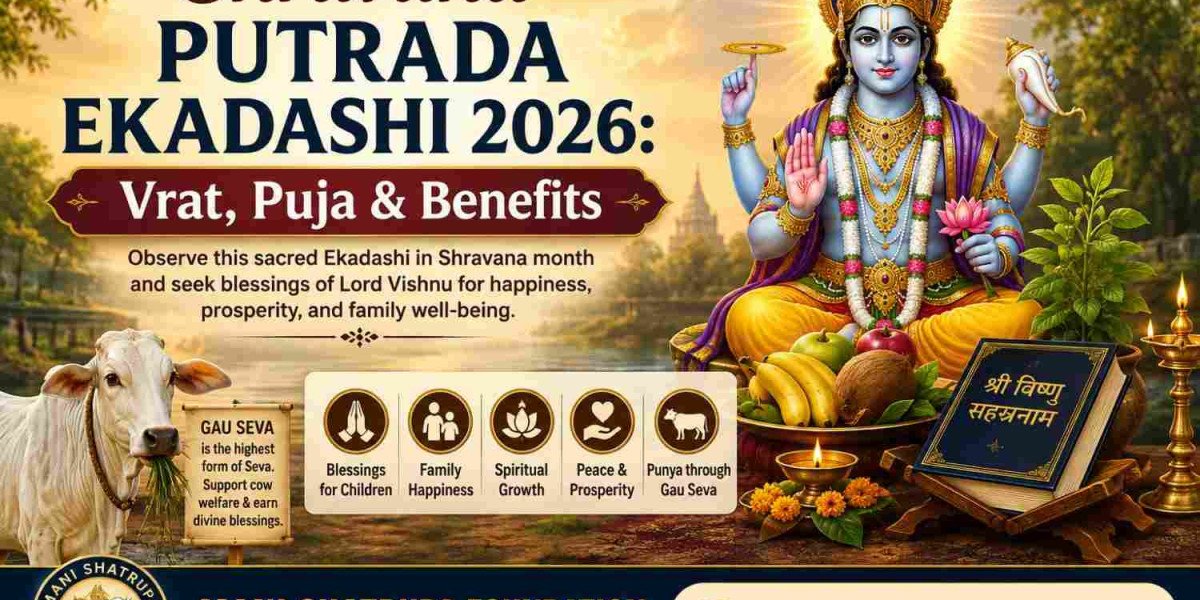

Shravana Putrada Ekadashi is an auspicious Hindu fasting day that is celebrated on the occasion of Lord Vishnu. It is observed during the Shukla Paksha month of Shravana and is of particular significance for the devotees who pray for happiness in the family, well-being of children, prosperity, and spiritual growth. This is a day of fasting, prayers, Vishnu worship, charity, and self-control.
This is a time for people looking for Putrada Ekadashi 2026 to learn about its religious importance, the traditions of vrat, the procedure of puja, the rules of fasting,g and to offer meaningful seva.
What is Shravana Putrada Ekadashi?
Shravana Putrada Ekadashi is one of the Ekadashi fasts celebrated in honour of Lord Vishnu. In Sanskrit, “Putrada” translates to “bestower of children”, and hence the vrat is especially linked with the prayer for children and the welfare of the family.
Devotees practice it by abstaining from certain items of food, chanting Vishnu mantras, performing prayers, hearing Ekadashi vrat katha, and being peaceful and devotional.
The importance of the day is not just in fasting. One of the main purposes of Ekadashi is to help the devotees to use their senses judiciously, to minimize activities in the world, spend more time on spiritual pursuits, and show kindness to others.
Putrada Ekadashi 2026 Date and Importance
For those who are planning to celebrate Putrada Ekadashi 2026, it's important to verify the date in their local Panchang,g as the celebration of Ekadashi may vary from tradition to tradition and place to place.
The date for Shravana Putrada Ekadashi in most North Indian places is August 23, 2026. In some Vaishnava practices, the vrat is commemorated the next day. Hence, the fasting and Parana timings should be checked based on the religious calendar of their locality.
The power of the vrat is not in following the routine and performance mechanically, but in the sincerity of devotion. The day is a time for the devotees to pray for good health in the family, spiritual growth, and strength to lead a compassionate life.
Putrada Ekadashi has religious importance. Putrada Ekadashi is significant for religious reasons.
Ekadashi is considered to be the most auspicious day according to Hindu religious belief for the worship of Lord Vishnu. Putrada Ekadashi is also linked to prayers for the welfare of the children and family.
The faithful believe that by devoutly following the rules, they can benefit from:
Increase their faith in Lord Vishnu
Prayers are the best way to bring happiness into the family.
Pray for children's blessings
Develop self-control and discipline
Encourage positive thoughts
Show compassion, love, and kindness
Take time to reflect spiritually
The vrat should be done with sincerity and faith. It's not only a ritual for getting material benefits, but it's also an opportunity to be purified and devoted in the inner person.
Story Behind Shravana Putrada Ekadashi
The vrat katha of Putrada Ekadashi is about a king who was unhappy for not having any child. He was wealthy, powerful, and had a prosperous kingdom, but he didn't feel complete until he had an heir. After getting advice, the king heard about the importance of Putrada Ekadashi in spiritual matters. He practised the vrat with devotion and offered sincere devotion to Lord Vishnu.
The traditional tale says that the king was blessed by God and thus got what he desired – a child.
The story is intended to educate the devotees about the importance of sincere prayer, faith, patience, and devotion in spiritual life. It also reminds people that wealth is no guarantee of happiness!
How to observe Shravana Putrada Ekadashi Vrat through step-by-step guidance.
The devotees can keep the vrat as per their family vrat and circumstances.
1. Prepare Yourself
Get up early in the morning of Ekadashi, bathe, change clothes, and put up a clean place for worship.
Start the day with a prayer and get a sankalp to observe the fast sincerely.
2. Worship Lord Vishnu
Set up an image/ideal of Lord Vishnu in the puja area. Light a diya and present flowers, fruits, water, and tulsi leaves as per tradition.
You can chant:
Om Namo Bhagavate Vasudevaya.
Vishnu Sahasranama or other Vishnu prayers can be recited by the devotees.
3. Observe the Fast
There are various ways in which the devotees fast. Some people fast strictly, some eat fruits, some eat milk, some drink water, and some eat the permitted foods of the vrat.
The way of fasting should vary according to one's religion and physical strength. If you are unable to do a strict fast, you can pray, meditate, do charity, and devotional work.
4. Listen to the Ekadashi Vrat Katha
Reading or listening to the Putrada Ekadashi vrat katha is an important part of the vrat.
It enables devotees to understand the spiritual message of the vrat and enhance their faith.
5. Perform Charity
Giving is a good way to celebrate Ekadashi. Worshipers can bring in donations of food, clothing, and medicine or other items that could be helpful to those who are in need.
Compassion can also take the form of animal welfare and Gau Seva.
6. Give the Vrat to Parana
Generally, the fast is done during the prescribed Parana period and ends at Dwadashi. The actual date may vary based on geographic region and customs, so it is best to refer to the local Panchang for the date.
During Putrada Ekadashi, what food can be eaten?
Fasting foods are different in different regions and families. Some of the more typical choices include:
Fresh fruits
Milk
Curd
Coconut
Dry fruits
Nuts
Sabudana
Potatoes
Certain fasting flours
Rock salt
Generally, foods like grains, beans,s and other foods that are forbidden by the devotee's tradition are not eaten.
Those with a particular diet or health need should consider their health and select a suitable mode of fasting.
Putrada Ekadashi Puja Samagri
Even if it is a simple puja, there is no need for expensive materials. Devotees may arrange:
Lord Vishnu idol/picture
Tulsi leaves
Flowers
Diya
Incense
Fruits
Coconut
Clean water
Akshat
Panchamrit, if desired
As per tradition, the yellow cloth.
Sincere devotion is the most important.
The benefits of Shravana Putrada Ekadashi Vrat are immense.
According to tradition, Shravana Putrada Ekadashi has several benefits for the soul and devotees.
Family Happiness
A large number of devotees keep this vrat to achieve peace, bliss, and prosperity in the family.
Blessings for Children
Couples and families might celebrate Putrada Ekadashi since it has a tradition of being a celebration dedicated to children and children's welfare; they might then pray for the children and their welfare with sincerity.
Spiritual Growth
Devotees can spend more time on spiritual activities by fasting, praying, reading the scriptures, and chanting mantras.
Improved Self-Discipline
There is a need to have control over food, habits, thoughts, and actions after taking a vrat. This can help promote discipline and focus.
Compassion and Charity
Supporting others and caring for animals can contribute to the meaningfulness of the observance. When you perform acts of seva, you remind yourself that you can act spiritually in a practical manner.
Gau Sevindh Putrada Ekadashi.
Gau Seva is one of the important charitable activities that can be performed during Shravana Putrada Ekadashi. If you would like to donate to cows, you can do so through the following means:
Green fodder
Dry fodder
Clean drinking water
Medicines
Veterinary care
Shelter and maintenance
Rehabilitation and rescue assistance is provided.
Any amount of money makes a difference to cows in need of better care.
Instead of only being devoted to prayer, one can do something good for others, animals, and the environment during Ekadashi.
Dos and Don'ts
Dos
Maintain cleanliness.
Spend time in devotion to Lord Vishnu.
Chant Vishnu mantras.
Read/Listen to vrat katha.
Do service and charity.
Have calm thoughts and actions.
Follow the Ekadashi rituals of your family.
Fasten the fast at the proper time, during the Parana.
Don'ts
Try to refrain from prohibited items during the vrat time.
Don't get into an unnecessary argument or negative behaviour.
Minimize the amount of material distractions.
You should not do a hard fast if it is not appropriate for your health.
Don't neglect the need for medical or dietary needs.
Conclusion
Shravana Putrada Ekadashi is a holy day that unites devotion, fasting, prayer, family dreams, charity, and self-control. Devotees get yet another chance to worship Lord Vishnu and do some fruitful spiritual pursuits during Putrada Ekadashi 2026.
The vrat can be made more meaningful by performing Gau Seva, donating food, and helping animals in need. Compassion and selfless service deepen true devotion in prayer.
Manu Shatrupa Foundation promotes the well-being of living beings and upholds the values of compassion and care, inviting devotees to take actions that embody these spiritual principles.
Frequently Asked Questions
1. Shravana Putrada Ekadashi is what?
Shravana Putrada Ekadashi is Vishnu's Ekadashi celebrated on the same night in Shukla Paksha of Shravana. It's usually reserved for prayers for the children, the happiness of the family, and the blessings of the spirit.
2. What is Putrada Ekadashi 2026 Date?
The typical observance in most places in Northern India is on August 23, 2026. It may be celebrated on August 24 in some Vaishnava panchakrams, so please refer to the panchang of your locality.
3. Why is Putrada Ekadashi important?
Devotees pray for children, family welfare, and spiritual progress, and it is traditionally believed to be important.
4. Is it possible for unmarried people to attend Putrada Ekadashi?
Yes. Ekadashi is a devotional day for all those who want to serve Lord Vishnu and practice austerity.
5. Is it allowed to do Gau Seva on Ekadashi?
Yes. Giving fodder, medicine, water, or other essentials for the good care of cows can be very significant seva.
6. What is the mantra one can chant on Putrada Ekadashi?
One of Vishnu's mantras is the one that is chanted often: “Om Namo Bhagavate Vasudevaya.” Other Vishnu prayers can be chanted by the devotees as per their traditions.
7. At what time does the Putrada Ekadashi fast end?
The fast is usually observed for a period of Parana and is broken on Dwadashi. The exact timing varies according to geographical area and religious practice.











