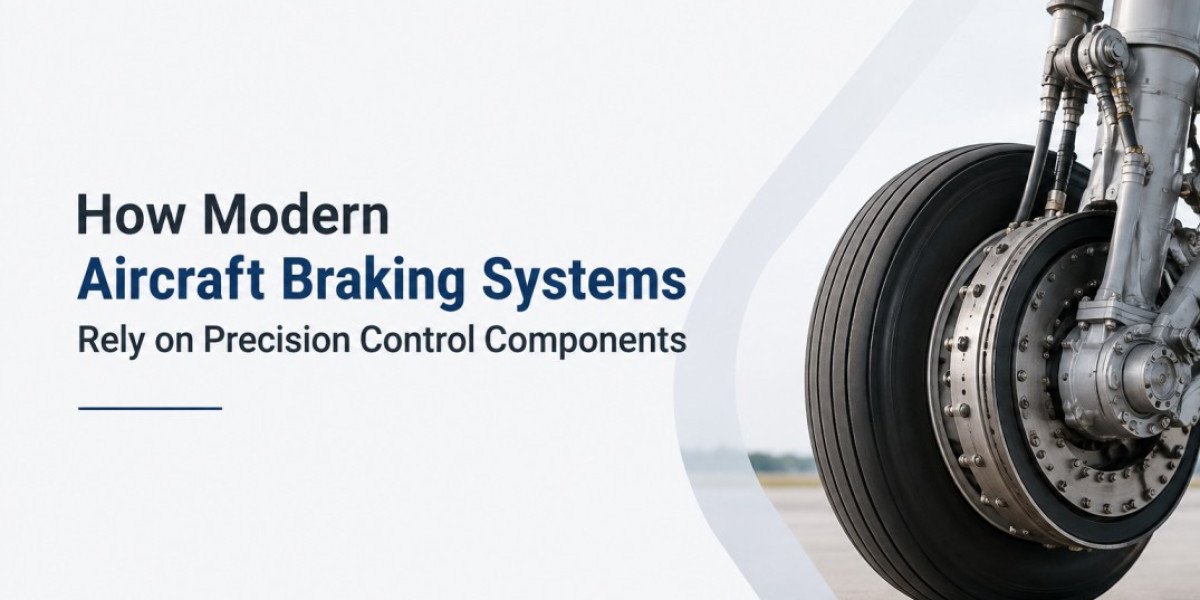

Aircraft braking systems are among the most critical safety mechanisms in aviation. Every successful landing depends on the ability of an aircraft to decelerate efficiently and maintain directional control while operating under varying runway and environmental conditions. As aviation technology continues to evolve, modern braking systems have become more advanced, integrating sophisticated control mechanisms, hydraulic systems, and precision-engineered components that work together to ensure reliable performance. Recent advancements in carbon brakes, brake control electronics, and integrated monitoring systems have further improved stopping capability and operational efficiency.
The Evolution of Aircraft Braking Systems
Aircraft braking technology has progressed significantly from traditional mechanical designs to highly responsive hydraulic and electronically controlled systems. Modern commercial and business aircraft rely on braking systems that provide accurate force distribution, reduced wear, and improved heat management. These systems are designed to support safe operations during landing, taxiing, and emergency stopping situations.
The growing complexity of aircraft has increased the need for advanced control mechanisms that can transmit motion, regulate braking inputs, and maintain consistent performance. Precision control components now play a vital role in ensuring that braking commands are accurately translated into mechanical action throughout the aircraft.
Why Precision Control Components Matter
While brake assemblies receive much of the attention, the performance of an aircraft braking system depends on numerous supporting components. Control cables, actuators, gearboxes, and related motion-control devices help transfer pilot or system commands to the appropriate mechanisms.
Modern aerospace control systems are engineered to minimize backlash, improve responsiveness, and operate reliably in demanding environments. Precision mechanical actuators and control assemblies are commonly used across aircraft systems, including braking, landing gear, steering, and cockpit controls. These components are designed to deliver accurate motion transmission while maintaining durability under repeated operational cycles.
The Role of Control Cables in Braking Operations
Control cables remain an important part of many aerospace motion-control applications. Advanced ball-bearing control cables are used in various aircraft systems and can support brake control functions where dependable force transmission is required.
These specialized cables are engineered to provide smooth operation, high efficiency, and minimal maintenance requirements. Their ability to maintain performance in extreme temperatures and challenging operating conditions makes them valuable for aviation applications. Precision control cable assemblies can also help improve system responsiveness while reducing operational wear over time.
Supporting Safety Through Reliable Motion Control
Aircraft braking systems must function flawlessly every time an aircraft lands. This requirement extends beyond the brake units themselves to include the control components that enable accurate operation. Mechanical actuators, motion-control assemblies, and cable systems contribute to overall braking reliability by ensuring that commands are transmitted efficiently throughout the system.
Manufacturers continue to develop advanced control solutions that meet strict aerospace standards for performance, endurance, and environmental resistance. Many of these components undergo rigorous testing to verify their ability to operate under vibration, temperature variations, and other demanding conditions encountered in aviation environments.
The Future of Aircraft Braking Technology
The aviation industry continues to invest in technologies that improve aircraft safety, operational efficiency, and maintenance performance. Future braking systems are expected to feature greater integration with digital monitoring platforms, enhanced predictive maintenance capabilities, and more efficient control architectures.
As these innovations emerge, the importance of precision-engineered control components will continue to grow. Reliable actuators, control cables, and motion-control assemblies will remain essential for ensuring that modern aircraft braking systems perform consistently throughout their service life. By combining advanced braking technologies with high-quality aerospace components, the industry can continue to enhance safety and operational reliability for aircraft worldwide.