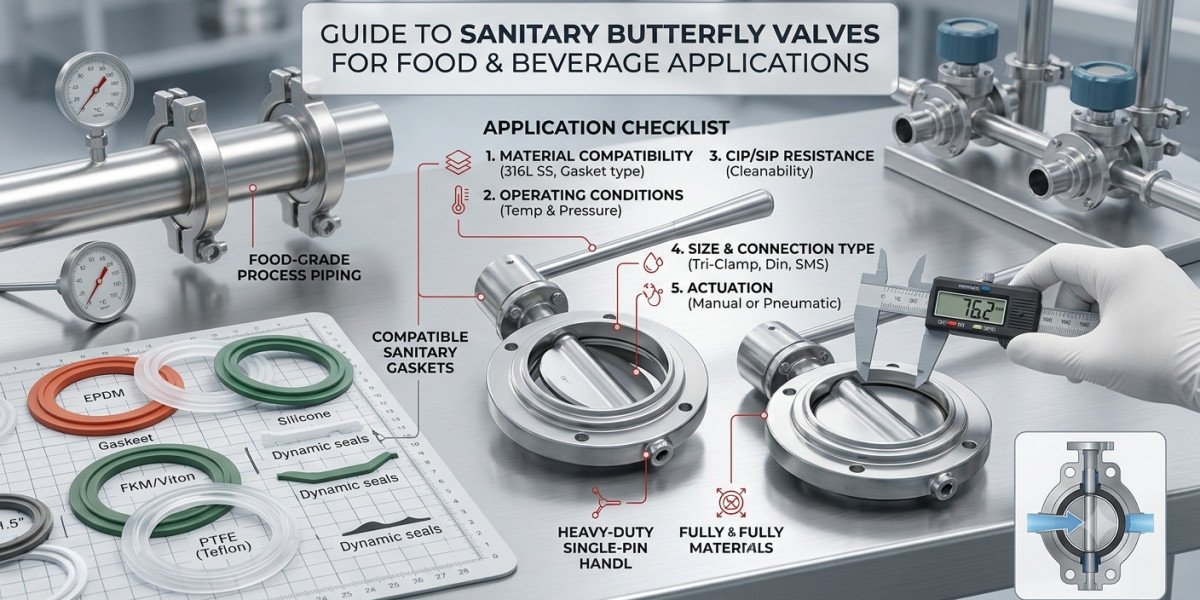

Maintaining hygiene and efficient flow control is essential in food and beverage manufacturing. Every component in a processing system must meet strict sanitary standards to ensure product safety, minimize contamination, and support smooth production. Among the most critical flow-control devices are Sanitary Butterfly Valves, which combine reliable performance with hygienic design. These valves are widely used in processing plants because they are easy to operate, simple to clean, and capable of maintaining leak-free performance under demanding production conditions. Understanding how sanitary butterfly valves work and what features to look for can help businesses build safer and more efficient processing systems.
Why Sanitary Butterfly Valves Are Ideal for Food and Beverage Processing
Sanitary Butterfly Valves are specifically designed for applications where cleanliness is a top priority. They use a rotating disc to regulate fluid flow with a simple quarter-turn operation, allowing operators to open or close pipelines quickly and efficiently.
Most sanitary butterfly valves are manufactured from 304 or 316 stainless steel, both known for their excellent corrosion resistance and durability. Their polished internal surfaces help reduce product buildup and bacterial growth, making them suitable for applications involving milk, beverages, syrups, edible oils, and other food-grade products.
According to the U.S. Food and Drug Administration (FDA), food processing equipment should be designed to facilitate thorough cleaning and minimize contamination risks. Similarly, 3-A Sanitary Standards, Inc. establishes hygienic equipment standards that help ensure food and dairy processing systems remain safe and easy to sanitize. These standards emphasize the importance of sanitary valves that support clean production environments.
Another advantage of sanitary butterfly valves is their compatibility with Clean-in-Place (CIP) and Sterilization-in-Place (SIP) systems. These automated cleaning processes help manufacturers maintain high hygiene standards while reducing production downtime.
Key Features to Consider When Choosing Sanitary Butterfly Valves
Selecting the right valve requires evaluating several important performance characteristics.
Stainless Steel Construction
High-quality stainless steel provides outstanding resistance to corrosion, moisture, and cleaning chemicals. Grade 316 stainless steel is especially beneficial in applications involving acidic food products or aggressive cleaning solutions.
Hygienic Design
Smooth internal surfaces and precision manufacturing eliminate crevices where bacteria or residue could accumulate. This hygienic design improves cleaning efficiency and supports compliance with food safety regulations.
Reliable Sealing Performance
Sanitary butterfly valves commonly use seat materials such as EPDM, silicone, PTFE, or Viton. These materials provide dependable leak-proof sealing while maintaining compatibility with various temperatures, pressures, and processing fluids.
Easy Maintenance
The simple quarter-turn mechanism allows for quick operation and easy disassembly during inspections or routine maintenance. Faster maintenance reduces production interruptions and helps facilities maintain continuous operations.
Industrial maintenance research indicates that unexpected equipment failures can lead to significant financial losses due to production downtime. Regular inspection and preventive maintenance of sanitary valves help improve reliability while extending equipment life.
Applications and Long-Term Benefits
Sanitary Butterfly Valves are widely used throughout the food and beverage industry because of their hygienic design and dependable performance.
Dairy processing facilities rely on these valves to transport milk, cream, yogurt, and cheese products while maintaining strict sanitary conditions. Beverage manufacturers use them in the production of bottled water, juices, soft drinks, and alcoholic beverages where product purity is essential. Food processing plants also install sanitary butterfly valves for handling liquid ingredients, sauces, syrups, and edible oils.
Beyond hygiene, these valves provide several long-term operational benefits.
Their lightweight construction reduces installation costs and lowers actuator requirements compared to many other valve types. Efficient flow regulation minimizes pressure loss, helping optimize overall system performance. Durable stainless steel construction extends service life while reducing maintenance and replacement expenses.
According to industry market research, the global sanitary valve market continues to expand due to rising food safety regulations, increased pharmaceutical production, and growing investments in hygienic processing technologies. This trend highlights the increasing importance of reliable sanitary flow-control solutions in modern manufacturing.
Routine inspections remain an important part of valve maintenance. Monitoring valve discs, seals, stems, and actuators helps identify wear before it leads to leaks or equipment failure. A proactive maintenance program improves operational reliability while supporting consistent product quality.
Conclusion
Choosing the right Sanitary Butterfly Valves is essential for building safe, efficient, and hygienic food and beverage processing systems. Their corrosion-resistant stainless steel construction, hygienic design, dependable sealing performance, and easy maintenance make them a valuable investment for modern production facilities.
Whether used in dairy processing, beverage manufacturing, or food production, high-quality sanitary butterfly valves help improve efficiency, reduce downtime, protect product quality, and support compliance with strict industry standards. Investing in reliable sanitary valves today helps ensure cleaner operations and long-term success in food and beverage manufacturing.